
Bug Exterminator · By Kai Horner, owner of Kekoa Pest Control · Published · Updated
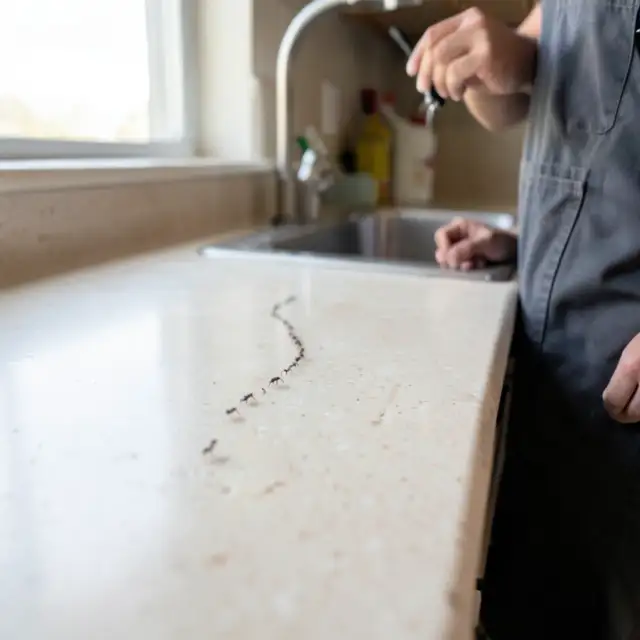
You sprayed the trail on Monday, and by Thursday they were back in the same spot. That is not bad luck, and it is not the product failing. It is how ant colonies work. This post explains what is going on and how it fits with bug exterminator work in Tempe and Chandler.
Why do ants keep coming back after you spray?
The ants on your counter are a small slice of the colony. They are workers on a supply run. The queen and the brood are somewhere protected, often outdoors, under a slab, in mulch or in a wall. Spray kills the workers you can see and leaves the nest intact, so it simply sends more. Here are the usual reasons a trail refills:
- The nest was never touched. Contact spray stops at the surface.
- The reason for coming is still there. Food, grease or water remains in reach.
- The route remains open. A crack by the window frame takes only moments to reuse.
- The scent remains. Trails need cleaning, not just spraying.
- Repellent pushes them sideways. Ants may avoid the sprayed strip and simply find a new line.
University of Arizona Extension says it directly: killing foraging ants is not an effective management strategy. Its advice is to clean the trail with soap and water, or vacuum the foragers, and then work out why they are present.
Start by finding out what they want
In a dry climate, ants are often after water as much as food. The university notes ants move indoors here in search of water, and that they come in for food from early spring through late fall, when normal food is scarce outside. Before you buy anything, spend ten minutes following the trail in both directions.
Check these places:
- Under the kitchen and bathroom sinks
- Around the dishwasher and refrigerator line
- Pet bowls and dropped kibble
- Trash cans and recycling
- Potted plants on sills
- Sticky shelves, syrup bottles and honey jars
- Any drip at an outdoor tap near the wall
Fix the attraction first. Fixing a leak can do more than any treatment.
Which ant you have changes the answer
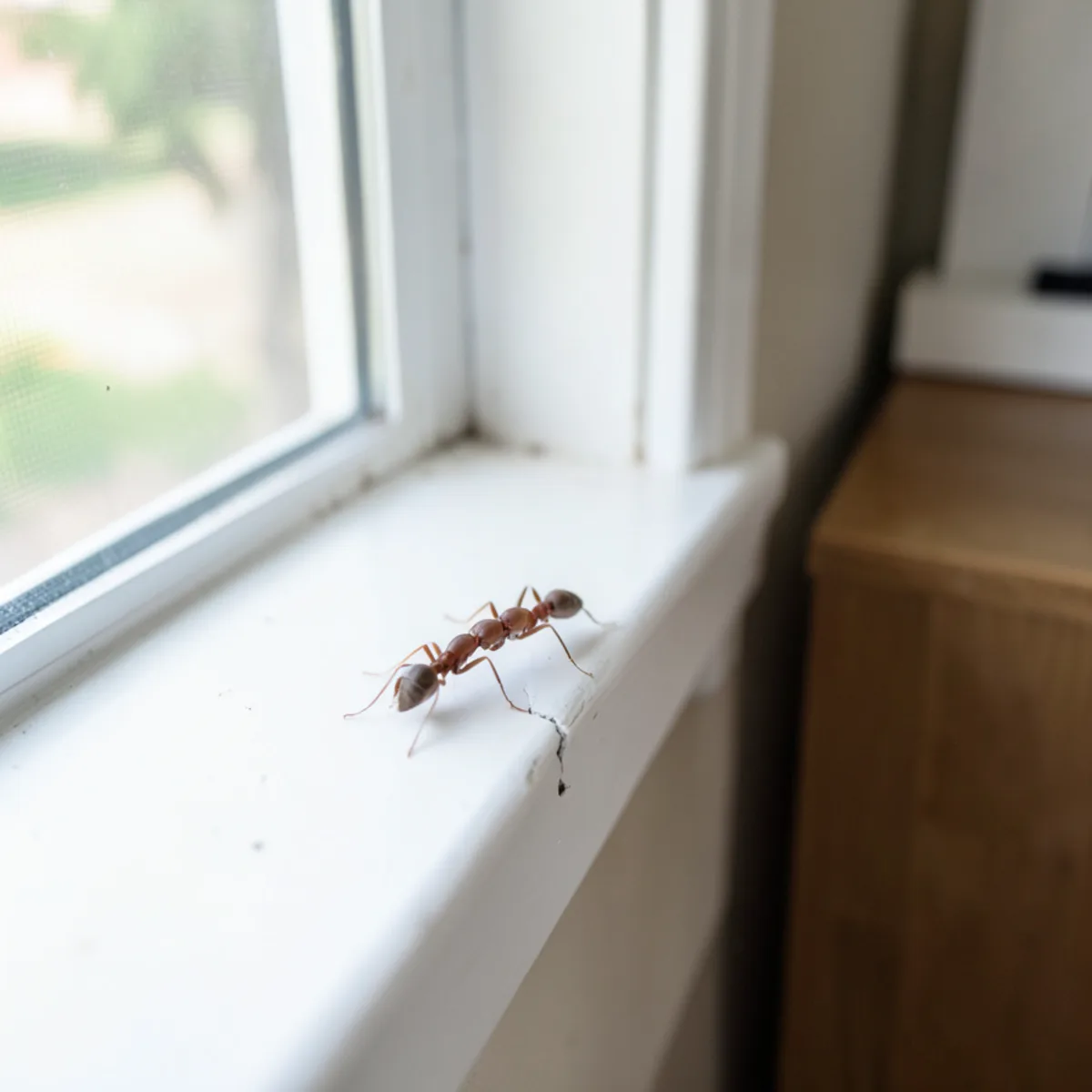
Baits are not interchangeable. The university points out that baits use different attractants, so one product will not control every species. Identify the ant, then read the label to confirm it covers that species. Your county Cooperative Extension office or a pest professional can help with identification.
| Ant | What it wants | Where to look | Notes |
|---|---|---|---|
| Southern fire ant | Seeds and insects, and it stings | Bare ground, turf next to pavement | Baits in small amounts applied at colonies |
| Thief ant | Grease, cheese, meat, not sweets | Tiny trails, packaged food, cracks | Can get into sealed-looking packaging |
| Carpenter ant | Moist, softened wood | Leaks, porch posts, window frames | Nest must be found, may be outside within 300 feet |
| Sugar-feeding house ants | Sweets and water | Kitchens, bathrooms, sills | Good candidates for sweet bait |
Two of those need a closer look. A carpenter ant indoors does not prove a nest indoors. The university says it may simply be foraging, and that outdoor colonies typically forage in spring and summer only, so sightings outside those months deserve more attention. Check where water has softened wood: porch pillars, tubs, sinks, roof leaks and poorly sealed window and door frames.
Thief ants are small enough to get into packaged food, and the university says not to eat anything they have reached. Indoors they nest behind woodwork, baseboards and masonry. Sweet bait will not interest them.
If you are stung and react badly to fire ants, the university's guidance is to call Poison Help at 1-800-222-1222, or 911 if the reaction is serious.
Spray, bait, vacuum or seal: what each one does
Each option solves a different part of the problem. Knowing the limits saves money on products that were never going to finish the job.
| Method | What it does well | Where it falls short |
|---|---|---|
| Contact spray | Kills the ants you can see, quickly | Colony survives, and the university says over-application can just move pests to another spot |
| Bait | Reaches the colony if workers carry it home | Slow, and it must suit the species |
| Soap and water, or a vacuum | Clears foragers and the trail at almost no cost | Does nothing to the colony |
| Sealing | Closes a known route | The university admits ants can use almost any hole |
| Fixing a leak | Removes the reason for the visit | May need a plumber |
How ant trail treatment should be done
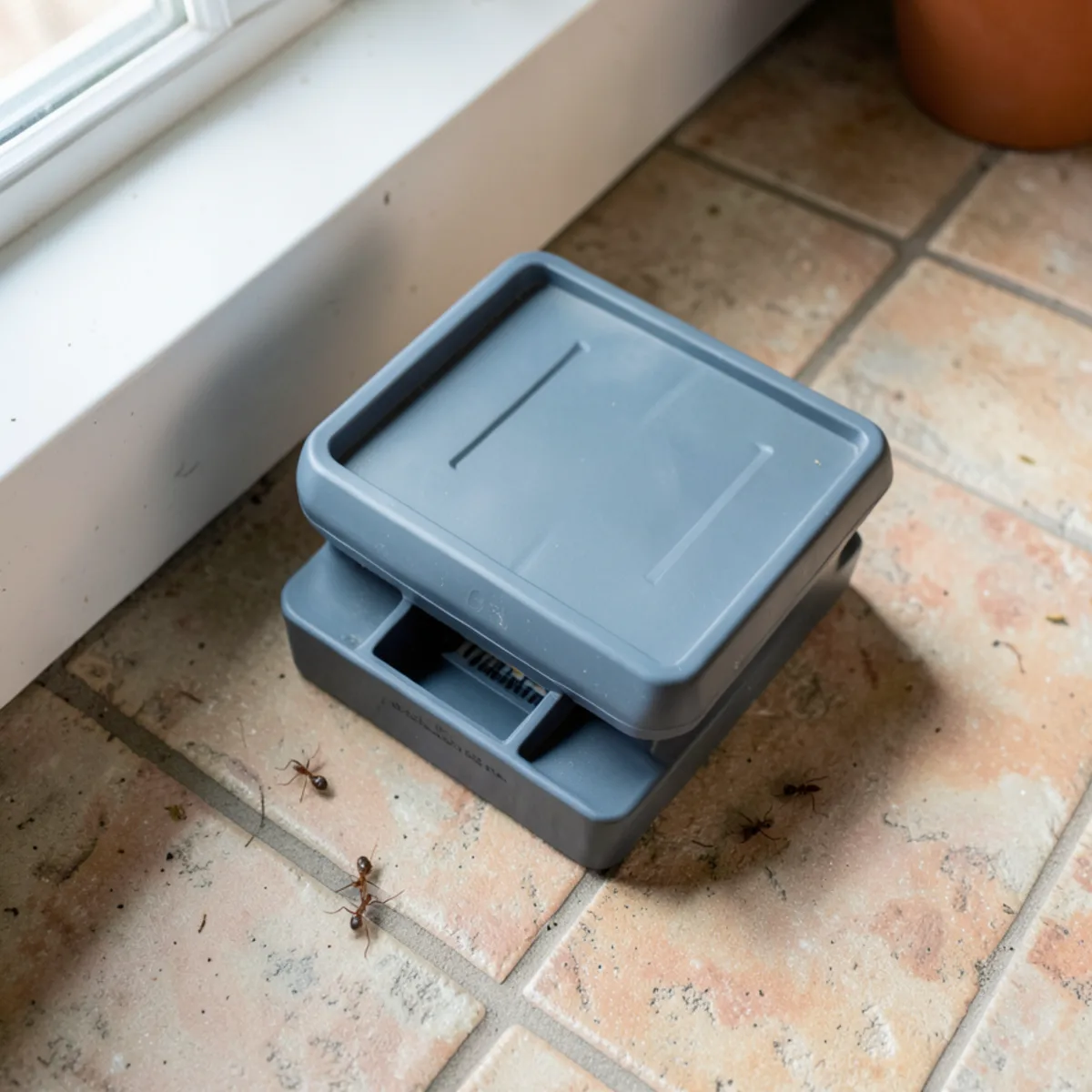
Baiting asks you to do something that feels wrong: leave the ants alone. Workers have to reach the bait and carry it back, so do not spray along the same route.
- Clean up competing food, and leave one trail undisturbed.
- Place bait beside the trail, not on it, and not where pets or kids reach.
- Do not spray anywhere near it.
- Watch for heavy feeding. That is a good sign, so resist the urge to wipe them away.
- Expect the numbers to drop over days rather than hours.
- Once they are gone, clean the trail and seal the crack.
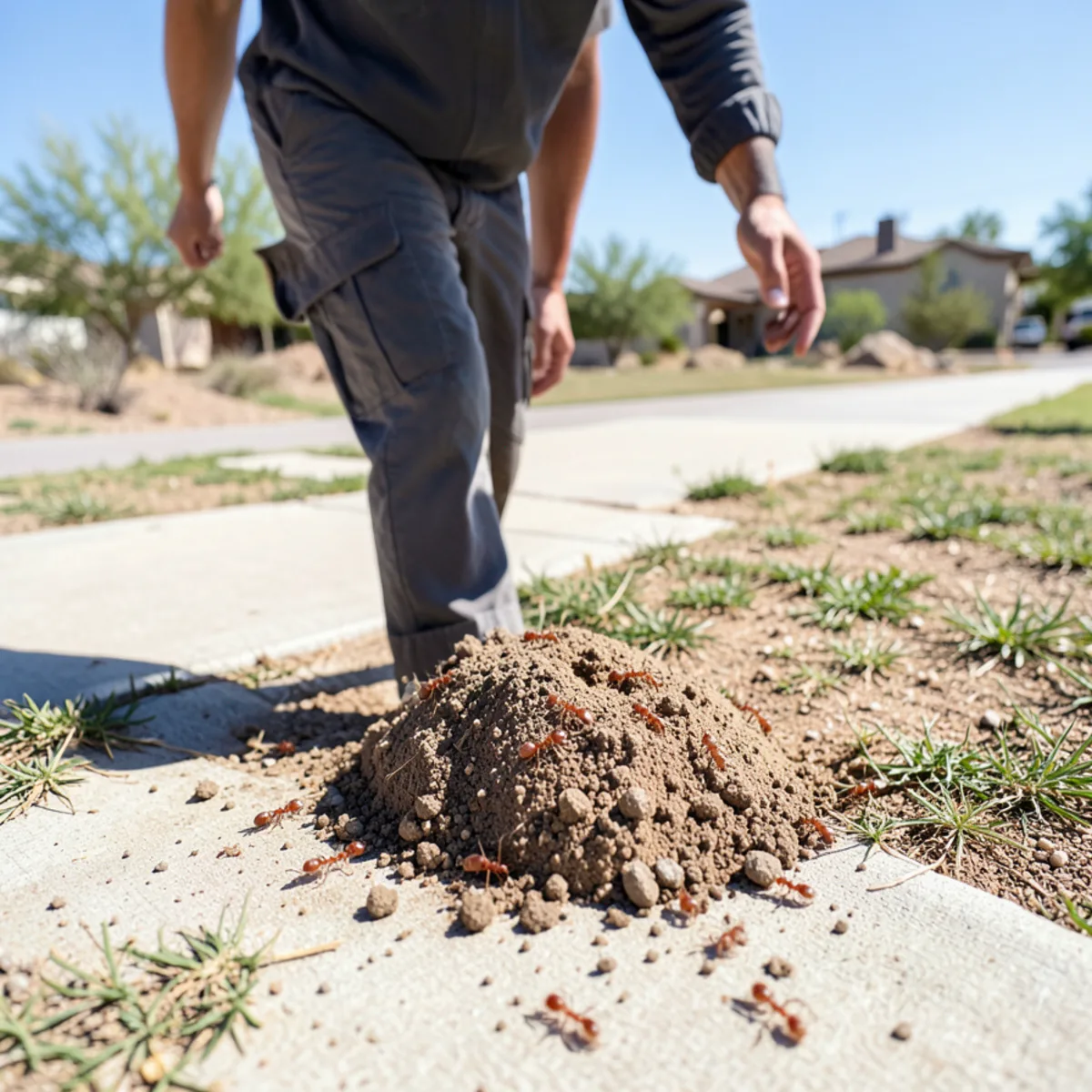
For fire ants outdoors, the university says baits applied in small amounts directly to colonies are extremely effective, and light irrigation afterward helps. Follow the label each time.
Following a trail back outside
The university's advice is to try to trail foragers back to the colony, and a slow ten-minute walk often gets you closer than another product would.
- Find where the line leaves the house: a crack, a pipe, a window frame or a door.
- Pick it up outside and follow it along lawn and sidewalk edges, and through nearby plants.
- Lift mulch and check under rocks, around walkways and along the foundation.
- For carpenter ants, look for decayed wood within 300 feet, such as old firewood, stumps or landscape timbers.
- Mark what you find, so you can describe it when you ask for help.
Bare ground deserves a mention in Valley yards. The university warns that an herbicide that strips an area bare can create the exposed ground southern fire ants love, and says healthy turf is the most effective way to discourage them, though it will not end them. It adds that managing colonies in the yard lowers the chance of satellite nests near or under the home.
Stopping the next wave
Once the trail is gone, turn your attention to the house itself. Ants can get through almost any hole, the university admits, so aim for fewer gaps rather than none. It lists these key steps:
- Seal around air conditioning units, windows, doors, pipes and outlets.
- Store food in airtight containers.
- Repair plumbing and roof leaks.
- Prune limbs and shrubs touching the house.
- Keep firewood off the ground and away from the foundation.
- Keep organic mulch off the wood siding.
How Kai would approach ants that will not quit
Kai's view is that a repeat ant problem is a question, not a sign you need a stronger can of spray. Which ant is it, where is it going, and what is it after? Those answers decide what comes next, and sometimes the answer is a plumbing repair.
Customers say he explains what he is doing and how to prevent problems, and that he treats inside and out. If you have tried the steps above and ants still march in, read the page on ant control. It helps to note where the trail begins and ends before you call.
Ants back again after all that? Call (209) 563-1650 and tell Kai where the trail runs.
Sources
About the author
Kai Horner owns and runs Kekoa Pest Control, a family-owned pest and weed control business based in Tempe, AZ, serving the East Valley since 2022. More about Kai