
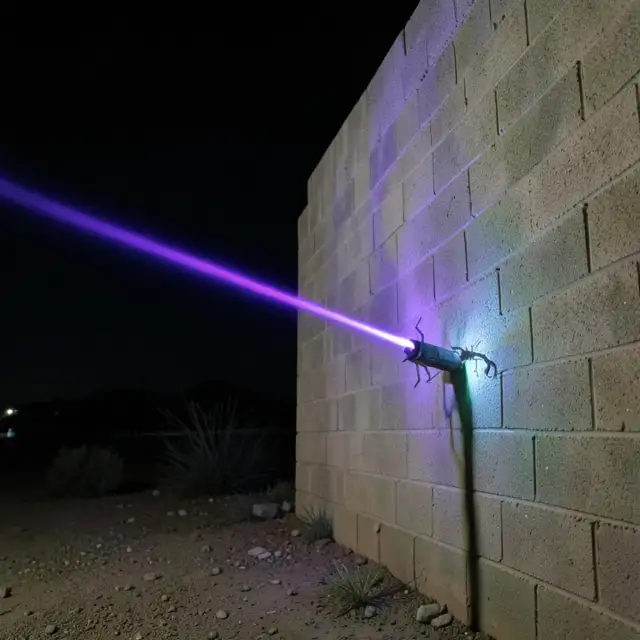
Scorpion Control · By Kai Horner, owner of Kekoa Pest Control · Published · Updated
Scorpions spend the day where you cannot see them, which is why a home can look clean for months and still have a colony in the wall. A UV light is the one cheap tool that changes that. University of Arizona Extension recommends it directly, both indoors before bedtime and outdoors in summer. It belongs in any serious scorpion control plan, but its job is narrow, and people tend to expect too much from it.
Here is the plain verdict: a hunt is worth a few evenings of your time. It is not a treatment. No published figure we found says how much a hunt lowers scorpion numbers on a property, so be wary of anyone who quotes one.
What scorpion black light hunting actually finds
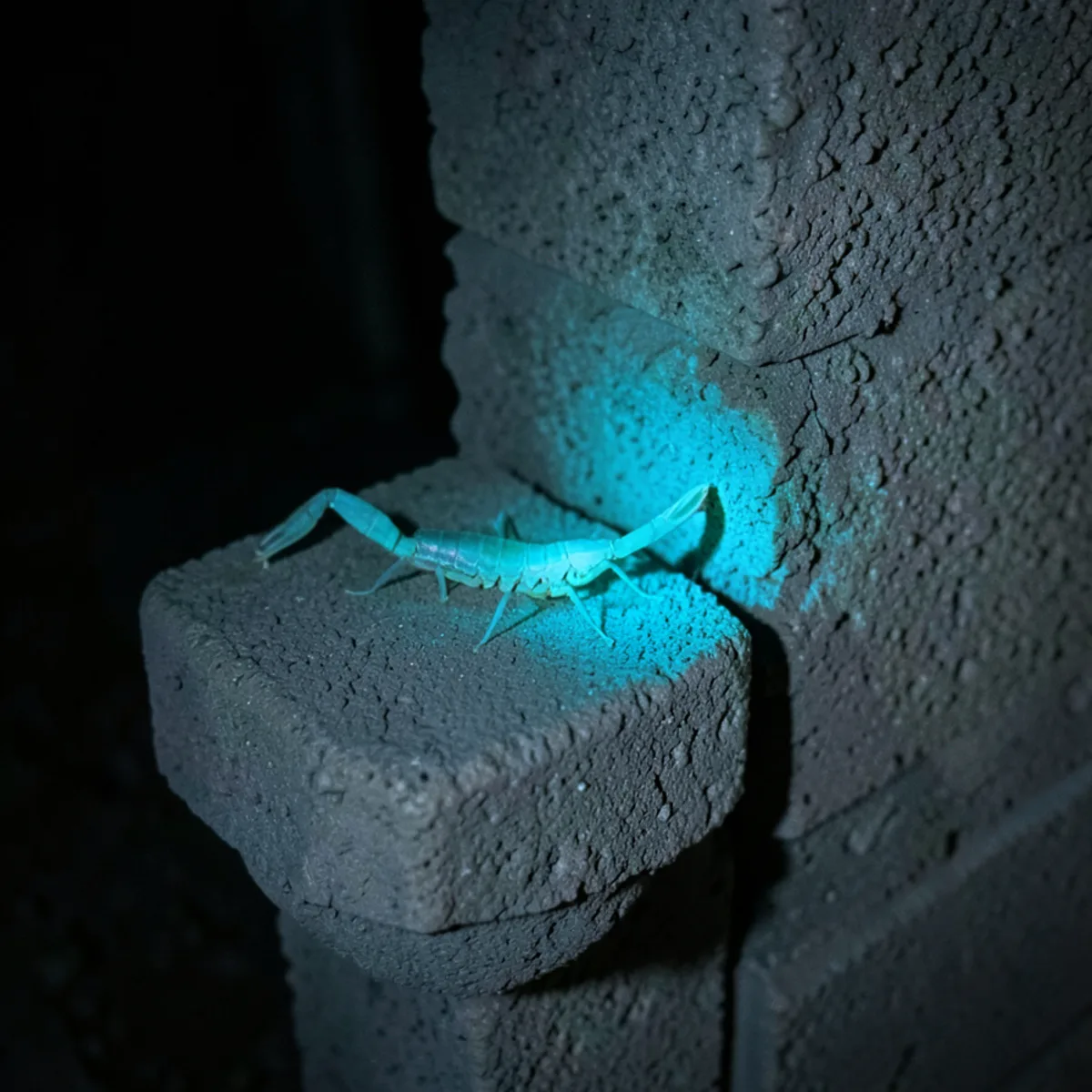
A night walk answers four useful questions:
- Do you have scorpions at all? A UV light settles that within a few warm nights.
- Roughly how many? One a night is very different from eight on one wall.
- Where are they traveling? A pattern shows up along walls, gates and door lines.
- Are they small as well as large? Very small scorpions suggest they are breeding near you, not just passing through.
What it misses is everything behind a surface. University of Arizona research found bark scorpions overwhelmingly prefer hollow block walls for shelter. They also use bark, ground cover and burrows. A hunt sees the ones that came out that night. Tracking data in the same publication puts nightly foraging near buildings under 35 yards, often only far enough to find water or cover. So the ones you find are probably living close by.
Why a count runs low
Treat any number as a floor. Extension notes that males usually travel farther than females and that pregnant females move the least, so the wall tends to show you the wanderers, not the whole group. Bark scorpions are not territorial and often share shelter, sometimes in dense numbers when food and water are plentiful. A female carrying young on her back is worth writing down. The young usually leave within one to three weeks of birth, and Extension puts the average brood across scorpions at about 25 to 35.
How much does a hunt lower the numbers?
Only by what you collect. If you take six off a wall tonight, that is six fewer. But the wall holds an unknown number, and neighboring walls hold more. Repeat hunts can bring down what you see near a house, especially around pool areas and doors, and Extension does suggest repeating them several times over summer.
The honest comparison looks like this:
| What you want | Does a hunt deliver? |
|---|---|
| Confirm you have scorpions | Yes |
| Map their routes | Yes |
| Reduce them near doors in the short term | Partly |
| Clear them from block walls | No |
| Stop them coming inside | No. Sealing does that. |
| Know whether a treatment is working | Yes, if you keep counts |
That last row is underrated. Count on the same route on similar nights, write it down, and you have your own before-and-after data for any treatment or sealing work.
Running your own UV scorpion hunt
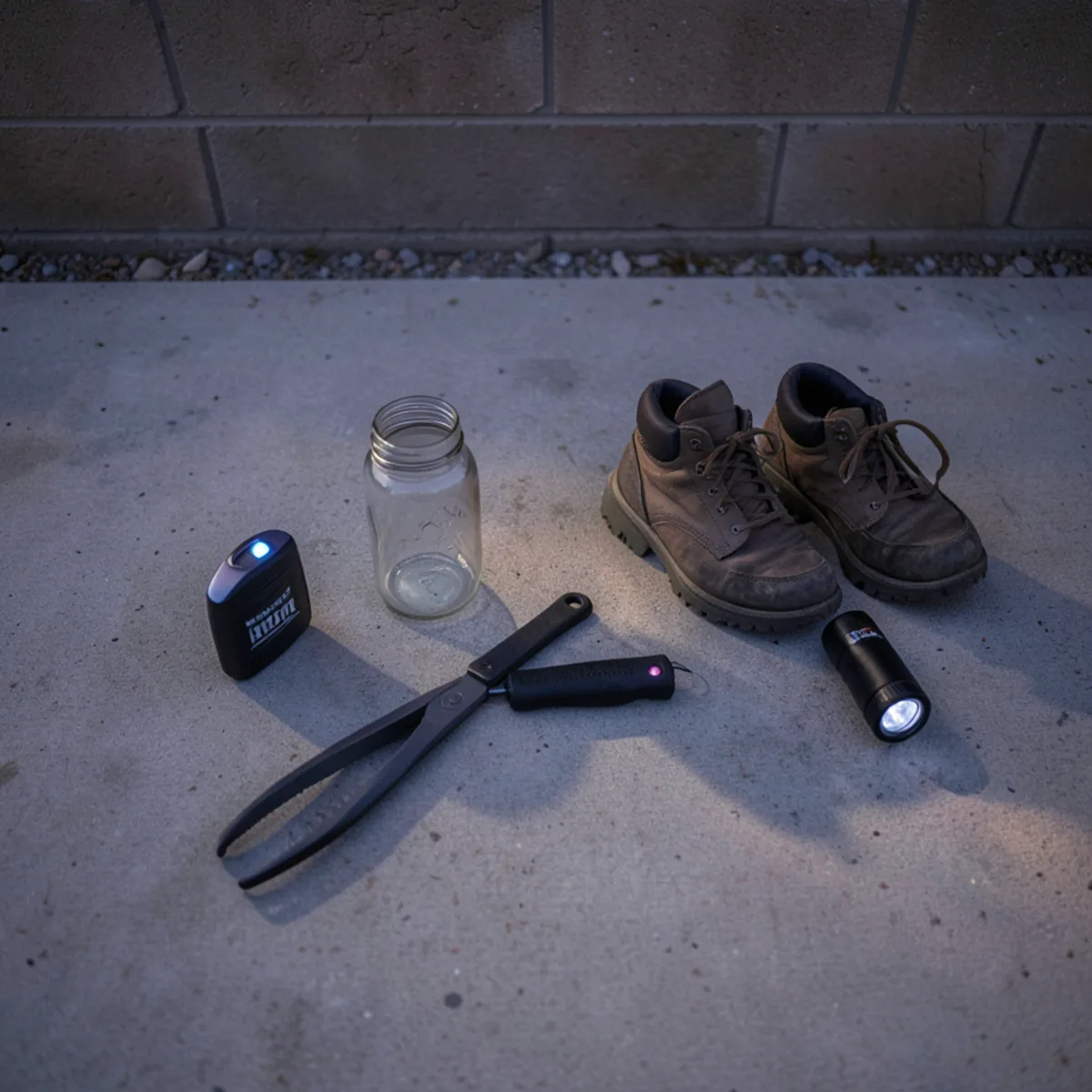
Timing does most of the work. The Extension publication places most movement in two windows, 7 to 11 p.m. and 3 a.m. until sunrise, and calls nights over 70 degrees ideal. From November through March, bark scorpions are less active and cluster in protected spots, so a winter hunt can come up empty and prove nothing.
- Wear boots and long pants. Closed shoes are not optional.
- Carry long tongs and a sealed container. Never use your hands.
- Start at the house and work outward along the foundation.
- Sweep walls slowly from the ground to the cap. They climb.
- Check gate posts, pool edges, tree trunks, patio furniture and ramada posts.
- Do a walk indoors too, before bed, along baseboards and in bathrooms.
- Keep kids and pets inside until you are done.
- Do not fish a scorpion out of a pool or spa by hand. Extension says they can survive under water and recover enough to sting.
- Keep the beam out of people's eyes.
Keep a simple log: date, temperature, route and count. Note where each cluster was. After three or four outings, you will know your yard better than most inspection reports could tell you.
A DIY hunt or a paid night inspection?
The two are not rivals. They answer slightly different questions, and many households will only ever need the first.
| Question | Your own hunt | A paid inspection |
|---|---|---|
| What it takes | A UV light, tongs, boots and a few evenings | One booked visit. Ask the price first |
| How much ground it covers | Several nights, so more of the season | One night, so a snapshot |
| What it tells you | Where they show up on your walls | Likely entry points, plus what the pattern means |
| Weather risk | You choose the warm, still nights | Depends on the booked date |
| Where it falls short | Easy to miss the gap they are using | A cool night can undercount |
Start with your own walks if you only want to know whether you have a problem. Pay for a second opinion when you have counts and no idea what to change.
What to do with what you find
Results point to the next step.
- Zero or one over several warm nights: Keep up basic sealing and check again next summer.
- A few on outer walls: Tighten door sweeps, screen weep openings and clear harborage.
- Many on one wall or near doors: Look for a nearby shelter or water source, and consider a treatment plan.
- Any regularly indoors: Extension's advice is to bring in a professional with scorpion experience.
Extension also notes that 98 percent of reported scorpion exposures in its cited data happened in or around homes. So indoor sightings deserve more weight than outdoor ones.
How Kai would use a night inspection
Kai treats the light as an information tool. A black light scorpion inspection looks at walls, gates, the foundation line and likely entry points after dark. Whether he can do one at your address depends on the property, so ask him when you call. Bring whatever log you have. Counts and locations from your own walks make any conversation shorter and more useful.
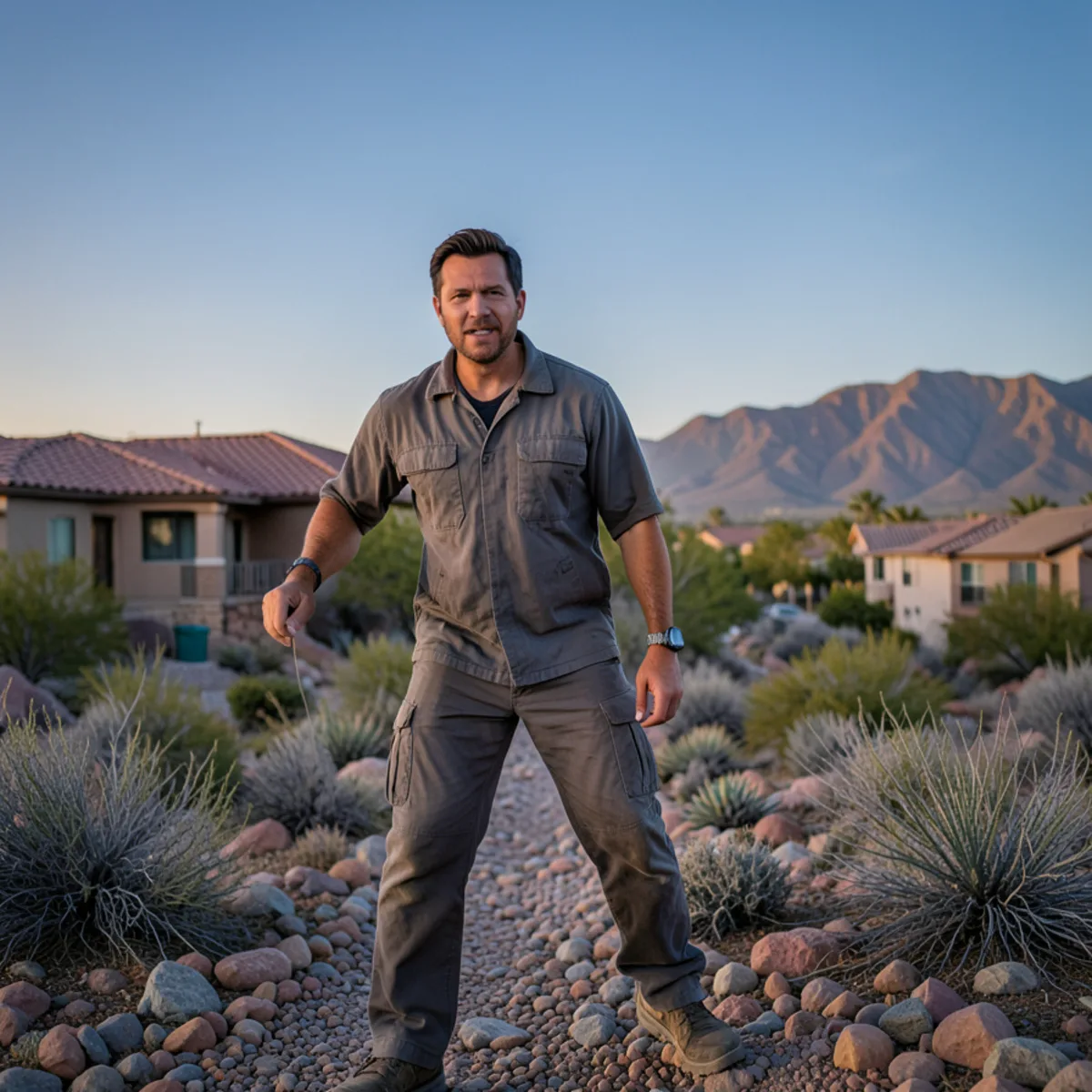
Location shifts the odds. Lots backing onto open desert, like many around Scottsdale and the foothills near Gold Canyon, have natural habitat right behind the wall. Gold Canyon is a long way from Tempe for one person, so check the schedule by phone first.
Do not assume a green yard is off the hook, though. Extension says homes with irrigated landscapes can hold far more scorpions than desert wild land. A lush lot with drip lines and old block walls deserves the same walk as a foothill home.
A sting during a hunt means a call to Poison Help at 1-800-222-1222, or to 911 if it is an emergency.
Got a count you are not sure about? Call (209) 563-1650 and talk it through with Kai.
Sources
About the author
Kai Horner owns and runs Kekoa Pest Control, a family-owned pest and weed control business based in Tempe, AZ, serving the East Valley since 2022. More about Kai