
Bug Exterminator · By Kai Horner, owner of Kekoa Pest Control · Published · Updated
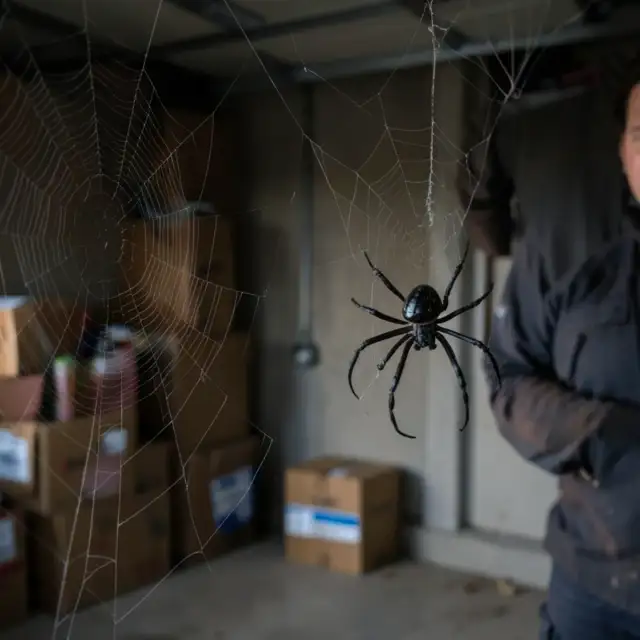
Most Tempe homes have a black widow or two somewhere. They rarely announce themselves. You find one when you move a box, reach behind a hose bib or lift a pot that has not moved since spring. If you already want one gone, our black widow control page covers that side of it. This post is about why the spider picked your property.
How common are black widows in Arizona yards?
Pinal County Extension calls them pretty common in the low desert, and the University of Arizona lists the western black widow as one of the state's two most common venomous spiders, along with the Arizona recluse.
Identifying the adult female is easy. She is about half an inch long, shiny black, with a red or orange hourglass under the abdomen. Her legs reach about one and a half to two inches across. Males are much smaller and patterned in cream, tan and brown. Young ones start pale and go through striped stages, so a spider without the black gloss can still be a widow.
Extension describes them as shy and secretive. They live in seldom-disturbed spots and stay out of sight by day. Most people meet one through bad luck and not because it came looking.
Widow or something else?
A few spiders get confused with her. Extension's descriptions separate them quickly.
| Spider | What sets it apart | Web or hiding place |
|---|---|---|
| Adult female widow | Glossy black, red or orange hourglass underneath | Messy, stiff web low and out of the way |
| Male or young widow | Cream, tan or brown striping, smaller | Same kind of web |
| Arizona brown spider | Two-toned tan and gray, dark violin mark, about nickel size with legs | Loose white silk under wood or dead cactus |
| Orb weaver | No hourglass, and it sits out in the open | Neat round web in the yard |
The size of the spider does not settle the risk. Pinal County Extension says all stages of both sexes are venomous, so do not handle a pale one because it looks harmless.
Where black widows hide around a Tempe home
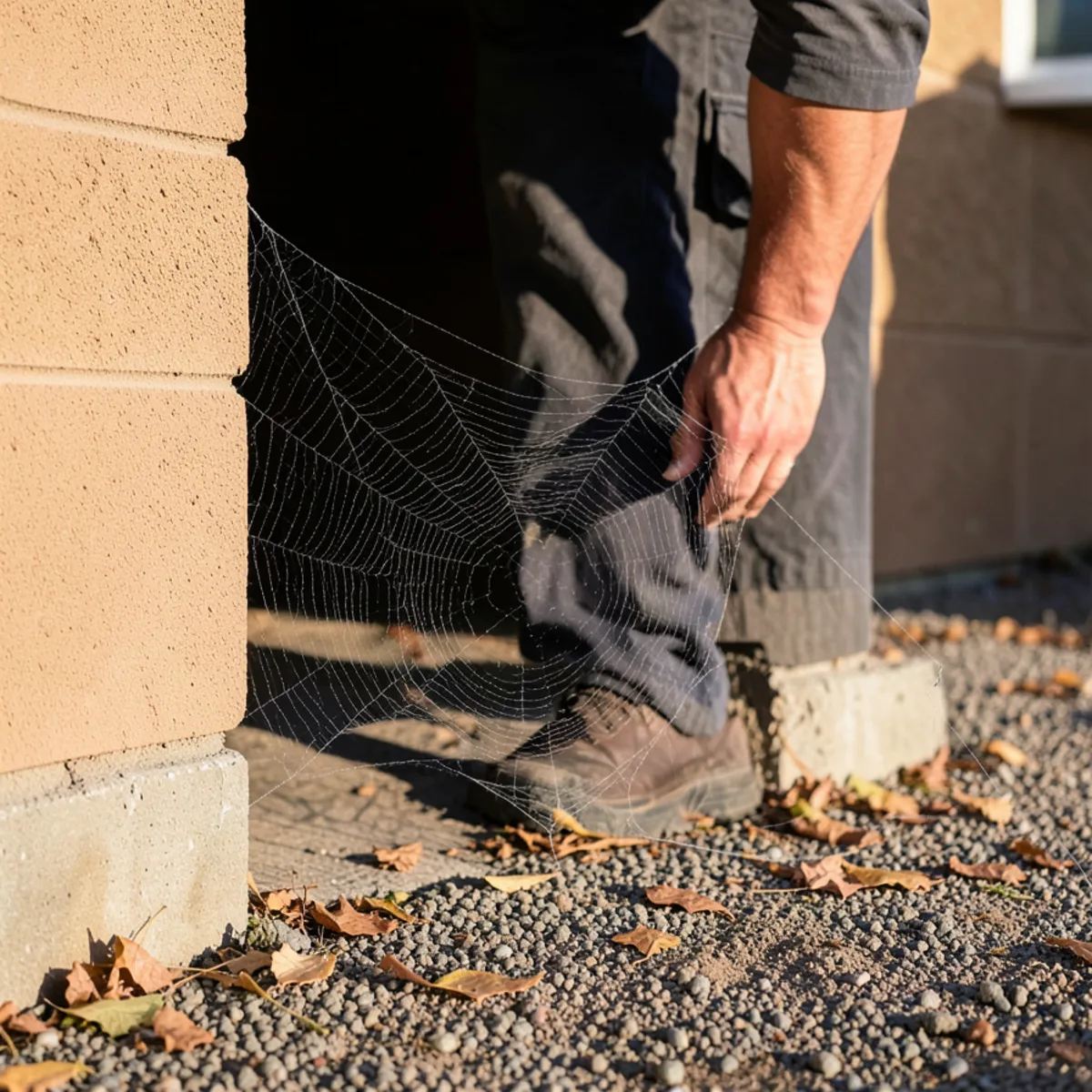
Think about what the spider wants: a dark corner, an anchor for an untidy web, a bit of shelter from Tempe's summer sun and a steady supply of insects walking past. Extension names sheds, garages, areas under parked cars and flower pots. The same logic points to a few other spots around Valley homes.
| Spot | Why it suits her | How to check |
|---|---|---|
| Garage corners and shelves | Dark, still, full of boxes | Move items with gloves on, use a flashlight |
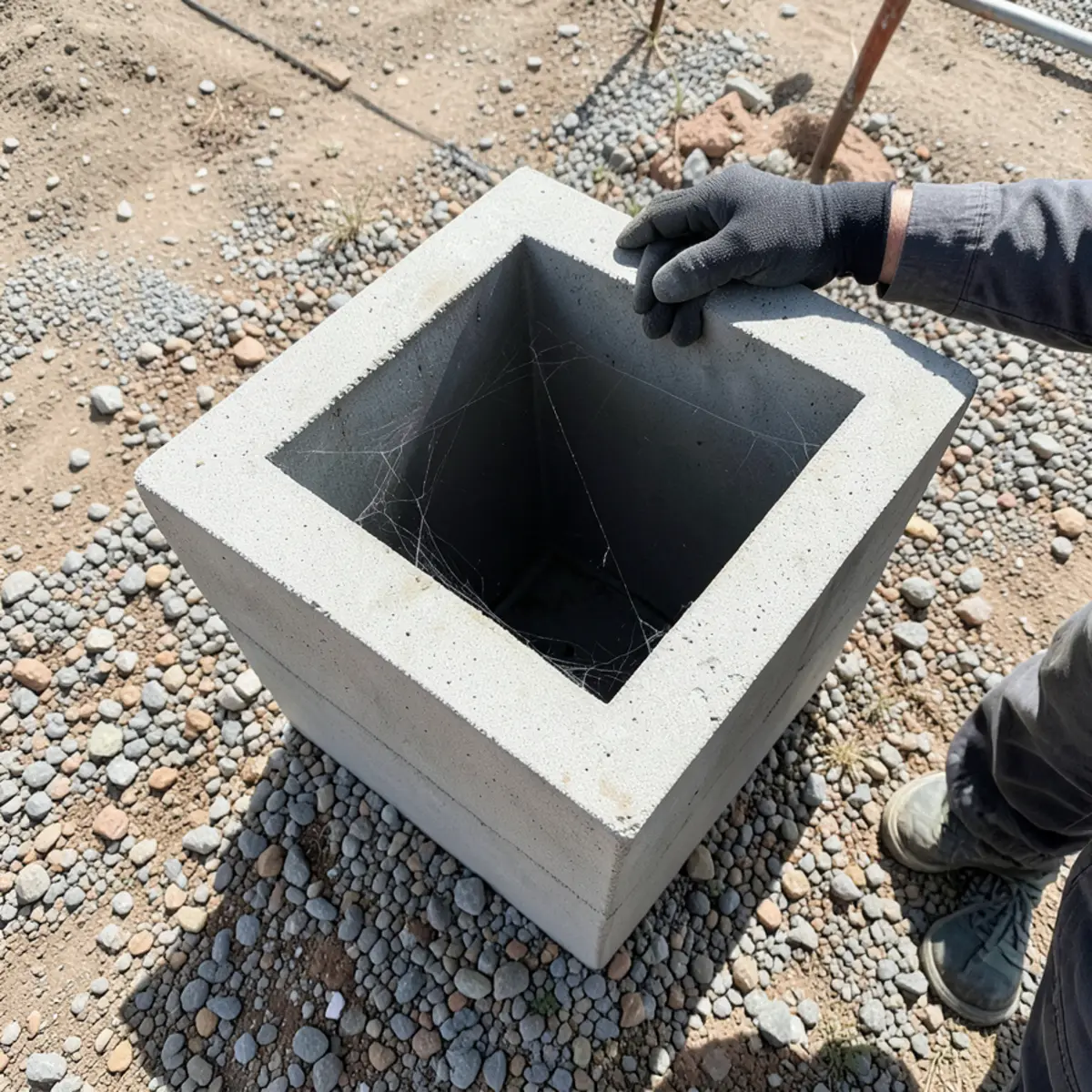
| Water and irrigation boxes | Shade, cool air, few visitors | Lift the lid with a tool, look before reaching in |
| Block wall bases and gaps | Cracks at ground level, crickets nearby | Look low at dusk, keep debris clear |
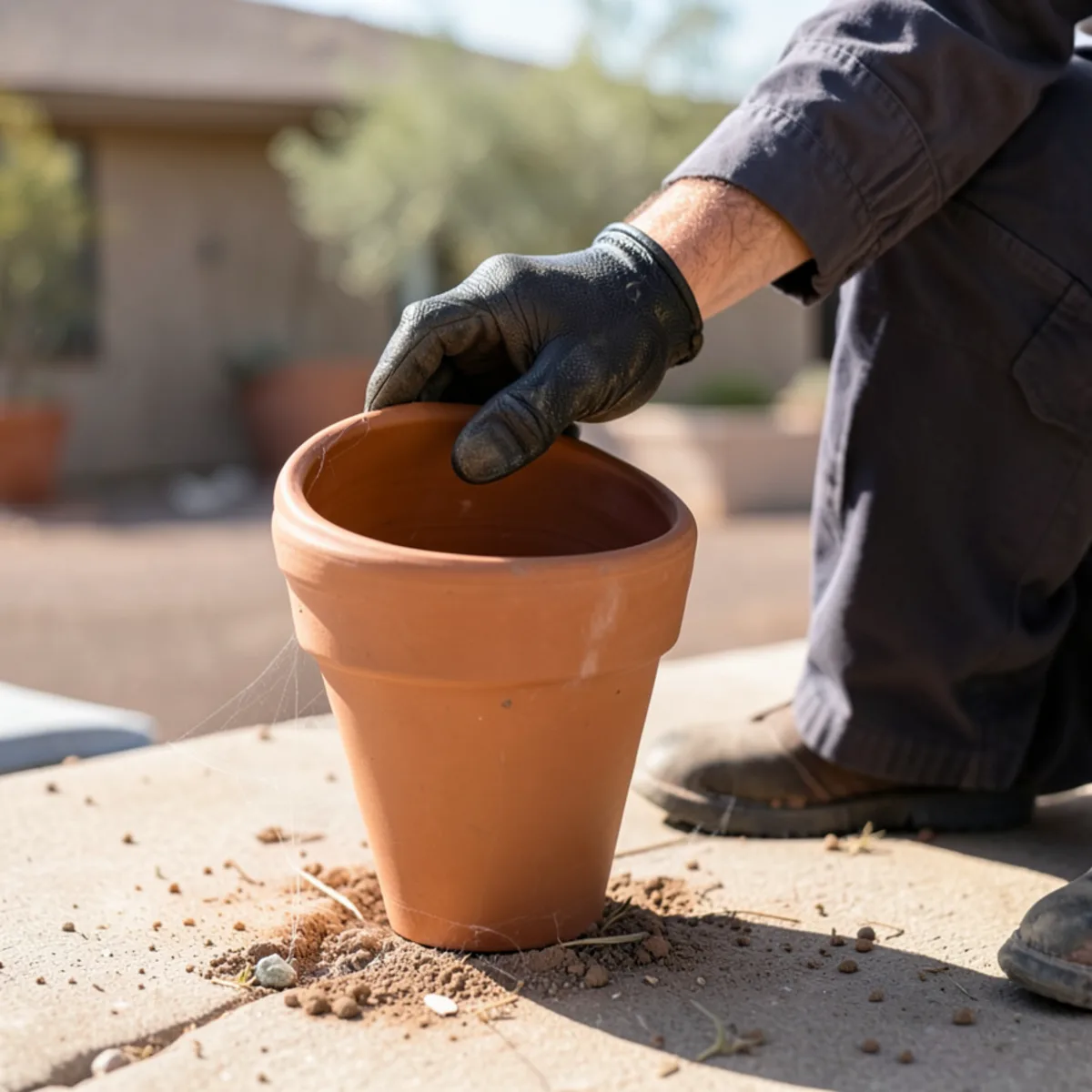
| Patio furniture and pots | Undersides stay shaded | Tilt and look before you grip |
| Wood piles and stored lumber | Layers of quiet shelter | Wear gloves and long sleeves |
| Outdoor light fixtures | Insects gather there | Check after dark |
Widows are not commonly found deep indoors, according to Pinal County Extension, but garages and entry areas count as borderline. Extension still suggests shaking out clothing before dressing if it was left in a storage area.
Why they keep coming back to the same spots
Spiders follow food. University of Arizona Extension puts it directly: the more insects there are in a building, the more likely it is to have spiders living there. Remove the webs and leave the crickets, and another spider has a reason to move in.
Season matters. Egg sacs are most often found from May to October, and a female guarding one is most likely to bite if threatened. Tan, papery sacs in a web should be treated with respect, because each may hold several hundred eggs. That is the time of year to be careful when moving things.
You may also be carrying them in. University of Arizona Extension says spiders reach a house in two ways: they come in on firewood, boxes and stored goods, or they walk through a crack after insects or warmth. So a garage of old cardboard from a move can stock itself.
A garage routine that keeps widows down
These are general trade habits, and they work because they end the quiet that widows need.
- Move stored items every few months so nothing sits undisturbed all year.
- Keep things on shelves, off the floor and away from the wall.
- Swap cardboard for lidded bins, which leave fewer gaps to anchor a web.
- Store shoes, gloves and kids' outdoor toys up high or in a closed bin.
- Check under the car's bumper and wheel wells if it sits for weeks.
How to clear webs without getting bitten
Work slowly, and plan your reach before you make it. University of Arizona Extension advises gloves and a long-sleeved shirt in spider-prone areas.
- Put on gloves, long sleeves and closed shoes.
- Use a flashlight, even in daytime.
- Knock down webs with a long broom or vacuum wand, keeping your face well back.
- Remove or crush any egg sacs without touching them directly. Bag and bin everything.
- Clear the clutter that held the web, or that spot will fill again.
- Trim weeds and dense plants along the foundation.
After that come the long-term fixes from Extension's pest-proofing guide: reduce clutter in garages and storage, move firewood and debris away from the building, fit tight screens and door sweeps, seal cracks and swap outdoor bulbs for low-UV ones so fewer insects gather.
After any bite, phone 1-800-222-1222 straight away, as the Banner Poison and Drug Information Center advises. University of Arizona Extension adds that keeping the spider, if that can be done without risk, helps with identification.
Extension's sheet adds a note for tight spaces: in crawlspaces or attics, wear a hooded sweatshirt and tuck your pants into your socks.
Why a can of spray is not the first tool
Pinal County Extension says the most useful tool it has found is a long-handled brush, which gives you reach and knocks down both web and spider. It says sprays work fairly well, but they take a while, and the spider may try to escape in the meantime. That leaves a venomous spider moving somewhere you cannot see. Brushing it down to a hard surface and dealing with it there is more direct.
Know what you are dealing with if someone is bitten. Extension describes the venom as a nerve toxin that can cause progressive muscle pain and sometimes difficulty breathing. The bite itself may feel like anything from a pin prick to a sharp stab, and some people do not notice it. It says bites are generally not fatal but should be treated as dangerous, so make the Poison Help call even if the bite seems minor.
How Kai handles widows on a property
Widows are a removal job and a prey job at once. A web in a garage corner is the visible part. The crickets, roaches and other insects feeding it are the reason it is there, which is why this usually sits within general bug exterminator work inside and outside the house.
Customers describe visits that cover the inside and outside of the house, with Kai explaining how to head off trouble. For spiders, that talk often comes down to storage habits. He can point out which corners stay undisturbed and what might change. Keep in mind that spiders are predators. Nobody can promise a yard without any, and Extension considers most spiders useful. The realistic goal is no widows where people put their hands.
There is a trade-off on chemical work too. Spiders are harder to reach with a perimeter treatment than the insects they feed on, and a web hides in places a treatment does not touch. That makes the prey and the storage changes the part that lasts. Treatment helps most when it goes along with clearing out those corners.
We cover pest control in Tempe and next-door Guadalupe from the Tempe base. If kids, pets or older relatives use the garage, mention that when you call.
Found a shiny black spider where it should not be? Call (209) 563-1650 and Kai will tell you what he would do about it.
Sources
About the author
Kai Horner owns and runs Kekoa Pest Control, a family-owned pest and weed control business based in Tempe, AZ, serving the East Valley since 2022. More about Kai