
Scorpion Control · By Kai Horner, owner of Kekoa Pest Control · Published · Updated
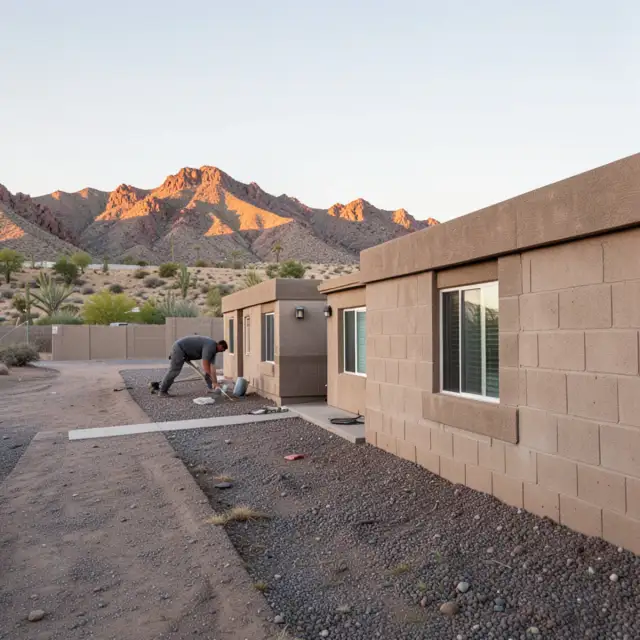
Buy a new house at the last street before open desert and you may meet the previous residents. Finding scorpions in a home with fresh paint surprises people, but it follows a clear logic. If you have just started to look into scorpion control, the first thing to learn is why your address has the problem at all.
Why grading stirs scorpions up
University of Arizona Extension says scorpions are often found in newly developed areas, roughly those under three years old, where construction has disturbed their territory. Its scorpion publication adds that they frequently relocate when earth movement changes the ground around them.
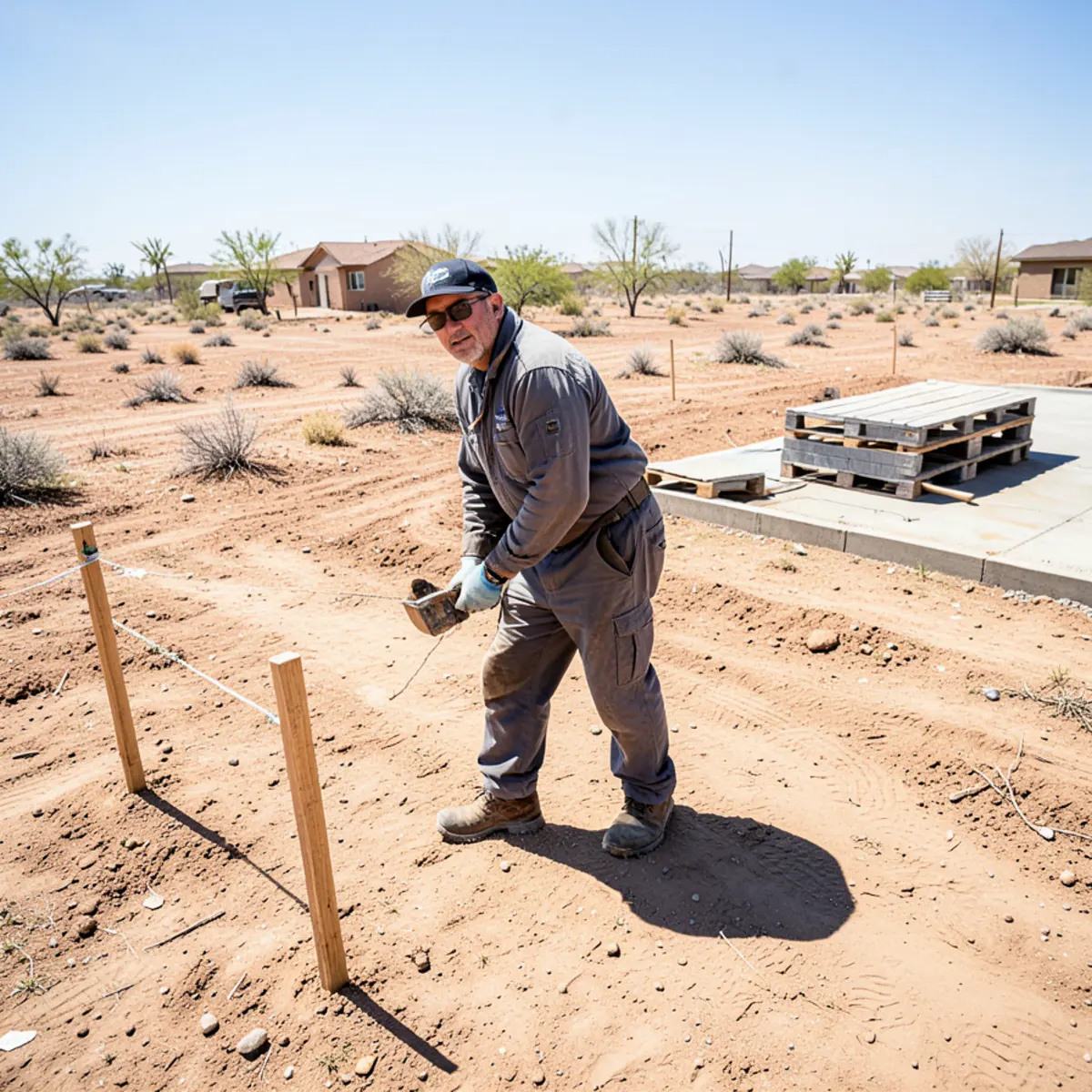
Think about what a subdivision does to that ground. Bulldozers strip the rock, brush and burrows the animals were sheltering in. The survivors move, and they do not have to go far. Researchers have recorded a bark scorpion traveling up to 114 yards, under full light, which is well past the width of a lot. Each new phase of grading can send another group toward the houses that are already standing.
Homes near normally dry washes get a second hit. Extension says they can see an influx during summer rains and after irrigation, when water carries or drives scorpions downstream.
Why scorpions in new construction Arizona homes stay
A new house would seem to have fewer gaps. It often has new ones. Settling, unfinished trim and hurried fit-out can leave the same weak spots an old house has, and a brand-new block wall is exactly what a bark scorpion wants.
In research cited by Extension, 95 percent of bark scorpions preferred hollow block walls over other refuges around buildings. New subdivisions tend to arrive with plenty of block fencing. Then come drip lines, sod and shrubs. Extension says irrigated landscapes around homes can support much higher numbers than wild desert, so the yard you just planted may hold more scorpions in five years than the empty lot did.
So the story has two stages. Early on, displaced scorpions arrive from the disturbed ground. Later, your own yard grows them.
What a desert-edge house goes through, year by year
The timing below is general trade judgment, and every lot runs a little differently. Use it as a guide to what deserves attention now.
| Stage | Where scorpions come from | Where to put your effort |
|---|---|---|
| Next lot still being graded | Displaced animals on the move | Doors, garage seal, night checks |
| First summer in the house | Survivors plus monsoon wash flow | Weep screed, pipe gaps, shoes off the floor |
| Yard and irrigation go in | Moisture and insects move toward the walls | Drips, rock and boards against the house |
| Yard matures | Your own wall and shrubs | Block wall, pruning, regular checks |
Winter deserves a line of its own. Extension says bark scorpions cluster in protected spaces in the coolest months, and that groups turn up when block walls come down or walls are opened. If you are adding a pool, a gate or a patio wall in January, wear gloves and look before you grab.
What to check in a new-build house
Start with the places Extension says bark scorpions come in: under and around poorly fitted doors, through window vents and through weep openings at the base of the wall.
| Spot | What to look for | What to do |
|---|---|---|
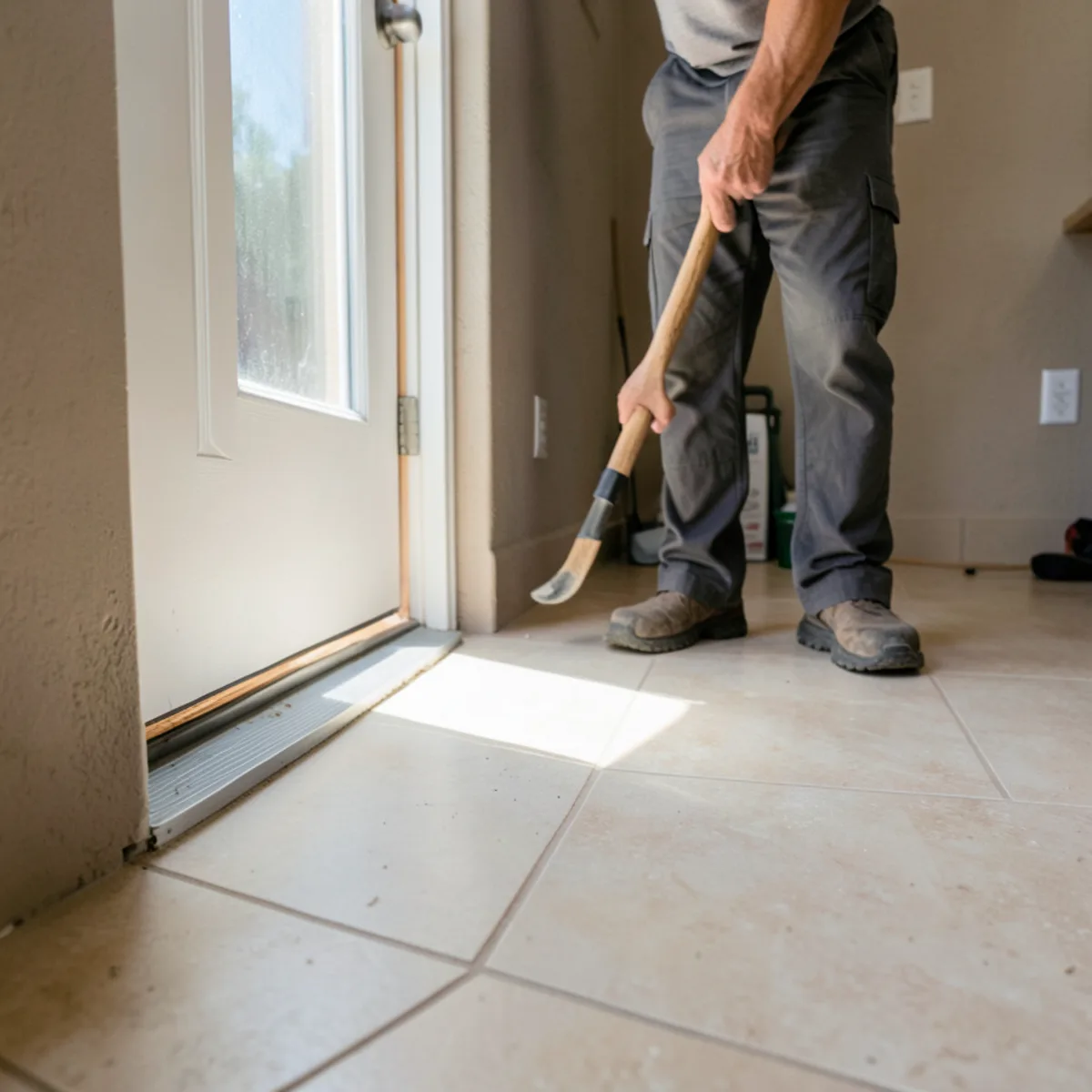
| Exterior doors | Light visible around the door from inside | Adjust the threshold, fit a tight sweep and weather-stripping |
| Garage door | Worn or uneven bottom seal | Replace the seal, close gaps at the corners |
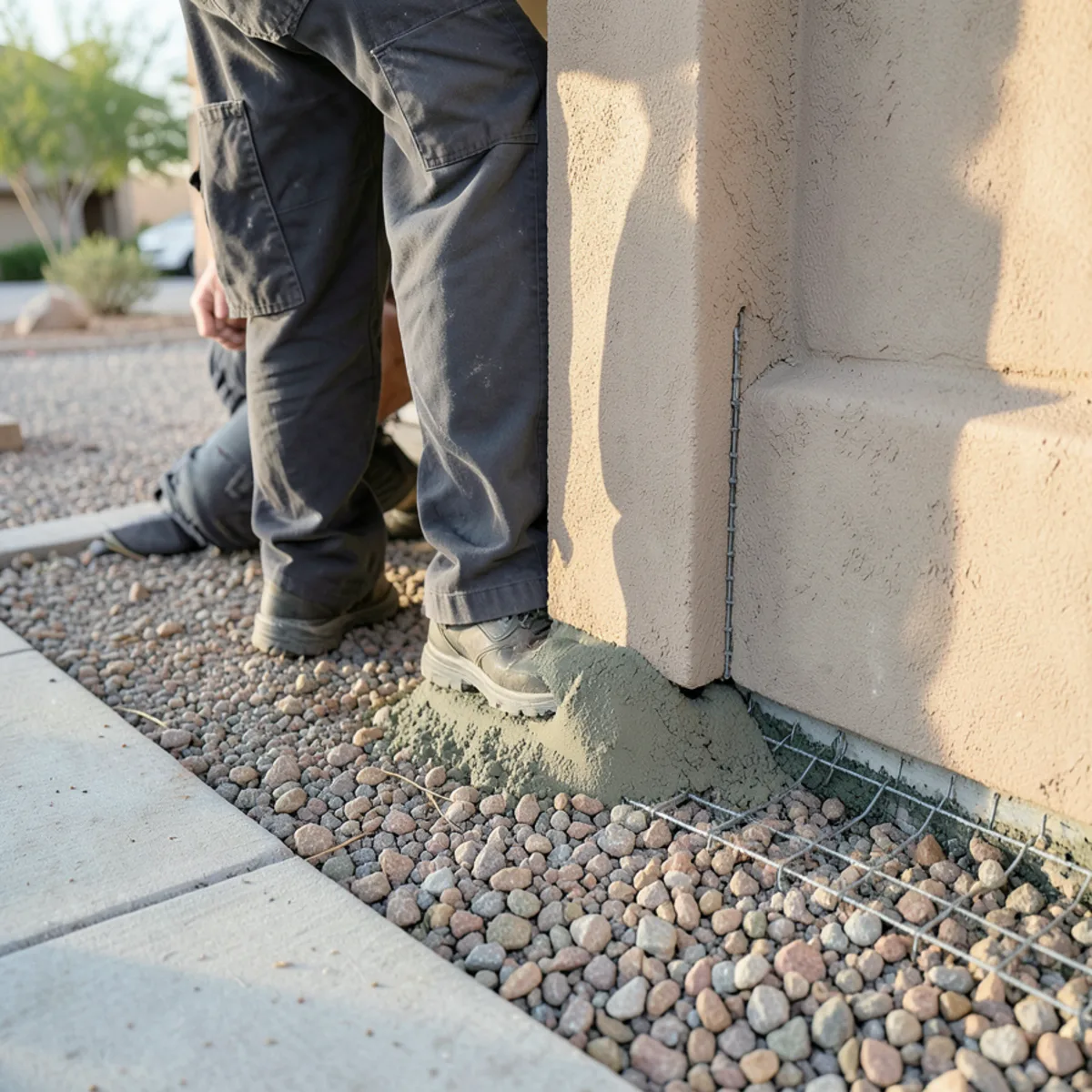
| Weep screed | Open line at the slab | Screen with coarse steel mesh, never plug it |
| Pipes and wires | Gaps at hose bibs, AC lines, cable entries | Caulk or seal around each penetration |
| Inside the walls | Loose electrical plates, pipe collars | Seal around them so voids do not open into rooms |
| Block fence | Open caps and hollow courses | Cap and stucco where possible |
| Yard | Rocks, lumber, leftover pavers against the house | Clear them away from walls |
The door test from Extension is simple: stand inside in daylight and see whether any light comes in around the door. If it does, a scorpion can use that gap.
Not every scorpion on a new lot is a bark scorpion
Sandy lots beside open desert can turn up species you would rarely see in an older neighborhood, and the difference matters for how you respond. University of Arizona Extension describes them this way.
| Scorpion | Size and build | Where you find it | Concern |
|---|---|---|---|
| Arizona bark | 2 to 3 inches, slender tail and pincers | Climbing walls, block, wall voids | The only one of medical concern |
| Stripe-tailed | Under 3 inches, bulky pincers and tail | Short burrows in sandy soil, under objects | Mild venom |
| Yellow ground | Under 3 inches, delicate pincers, wide tail | Short burrows in sandy soil | Mild venom |
| Giant hairy | Often over 5 inches, heavy body | Under rocks, shallow burrows | Mild venom, and it eats bark scorpions |
A scorpion on your stucco or ceiling is the one to take seriously, since bark scorpions climb well. Do not rely on a quick look to rule it out. Extension says the burrowing species are often mistaken for bark scorpions, so treat any scorpion in the house with care.
Before you close: questions for a desert-edge lot
Most of this is easier to ask before the walkthrough ends. These are general judgment, and the answers will shape your first summer more than the floor plan will.
- Is the land behind you staying open, or is another phase coming?
- Does a wash run near the lot, and which way does it drain?
- Has the weep screed been left open, and can it be screened?
- Does daylight show under any exterior door or the garage door?
- Who owns the block fence, and does the HOA restrict capping or stucco?
- What have neighbors found since they moved in?
Practical habits for the first summers
Until you know how your lot behaves, change a few routines. These come from University of Arizona guidance and cost almost nothing.
- Wear shoes or slippers at night, inside and out.
- Keep shoes off the floor, and shake them out if they were left in the garage.
- Hang towels and clothes. Damp pool towels are especially attractive to scorpions looking for moisture.
- Check with a black light several times in summer, between 8 and 11 p.m.
- Show kids what a scorpion looks like, and ask them to fetch an adult.
- Do not lift a scorpion out of a new pool by hand. Extension says they can survive in chlorinated water and recover enough to defend themselves.
If someone is stung, University of Arizona Extension says to call Poison Help at 1-800-222-1222. It calls for 911 or the nearest hospital for children under 9 or under 70 pounds.
How Kai looks at a desert-edge house
On a house like this, spraying alone will disappoint you. Extension says scorpions cannot be managed with pesticides alone, and that the most effective step is pest-proofing the structure. Kai's first questions tend to be practical: where the scorpions have turned up, what sits behind the house and what is being graded nearby.
There is a trade-off in where the money goes. Capping and stuccoing a long block fence is a big job, and part of that fence may be shared with neighbors or under HOA rules. Tight doors, screened weep screed and sealed pipe gaps cost far less and protect the rooms you sleep in. Start with the house itself, then decide if the fence is worth it once you know how your lot behaves.
Sealing work depends on the property. What a house needs, and whether it suits a visit from Kai, varies with how it was built, so read about scorpion proofing and ask on the phone whether it is something he takes on for your home. Customers do report that regular visits made a real difference for scorpions after a move-in, and that treating inside and out is part of the routine.
The far East Valley is where this comes up most. Newer streets in San Tan Valley and Queen Creek are still pushing out into desert and farmland. Kai works from Tempe, so ask how scheduling looks for your street.
Just moved in and already found one? Call (209) 563-1650 and tell Kai what you saw and where.
Sources
About the author
Kai Horner owns and runs Kekoa Pest Control, a family-owned pest and weed control business based in Tempe, AZ, serving the East Valley since 2022. More about Kai