
Weed Control · By Kai Horner, owner of Kekoa Pest Control · Published · Updated
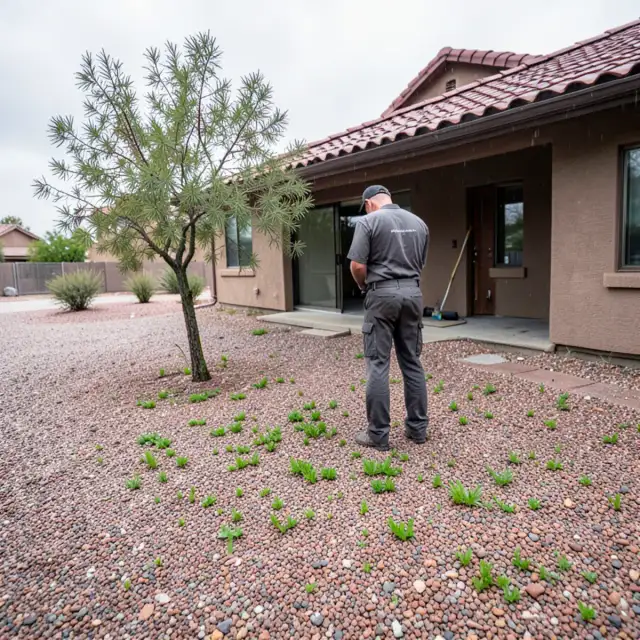
Valley weeds run on two clocks: the warm-season germination that starts in March, and the rain that wakes up seed at almost any time. A yard that seems clean in December can turn green after one soaking storm. Good weed control follows both clocks, with a barrier placed ahead of the warm season and spot work after each rain.
University of Arizona data from low desert trials gives the outline. Summer weeds began germinating in March, peaked in June and kept coming through October. That one sentence explains why a single spray in May disappoints people.
A month-by-month weed control schedule for Arizona's low desert
Dates assume the Phoenix area. Higher ground runs later. Always follow the product label, which can limit timing and repeat use.
| Month | Gravel yards | Lawns and planted beds |
|---|---|---|
| January | Spot spray winter weeds while small. | Hand pull in beds. Keep off wet, overseeded lawns. |
| February | Pre-emergent late in the month, before soil warms. | Check the label against your grass before any pre-emergent. |
| March | Water the barrier in if no rain came. Spot spray survivors. | Watch edges and bare patches for the first summer weeds. |
| April | Clear winter weeds before they finish seeding. | Hand pull in beds. Tune up irrigation. |
| May | Inspect edges, walls and drip lines. | Thin lawn lets weeds in, so fix dry spots. |
| June | Consider a second pre-emergent if the label allows. | Spot treat spurge before it mats. |
| July | Spot spray after the first monsoon rain. | Same, and avoid spraying stressed plants in peak heat. |
| August | Second round after storms. Watch washes and side yards. | Hand pull new growth early. |
| September | Knock down summer weeds before they seed. Start the fall barrier. | Plan any overseeding, since seed and barrier conflict. |
| October | Finish the fall barrier. Last cleanup of summer growth. | Overseed or hold off on pre-emergent. |
| November | Spot treat what is already up. A late barrier only catches later flushes. | Keep leaves out of gravel, since debris feeds weed seed. |
| December | Quick walk after any rain. | Light hand pulling only. |
The February barrier and why it has to be early
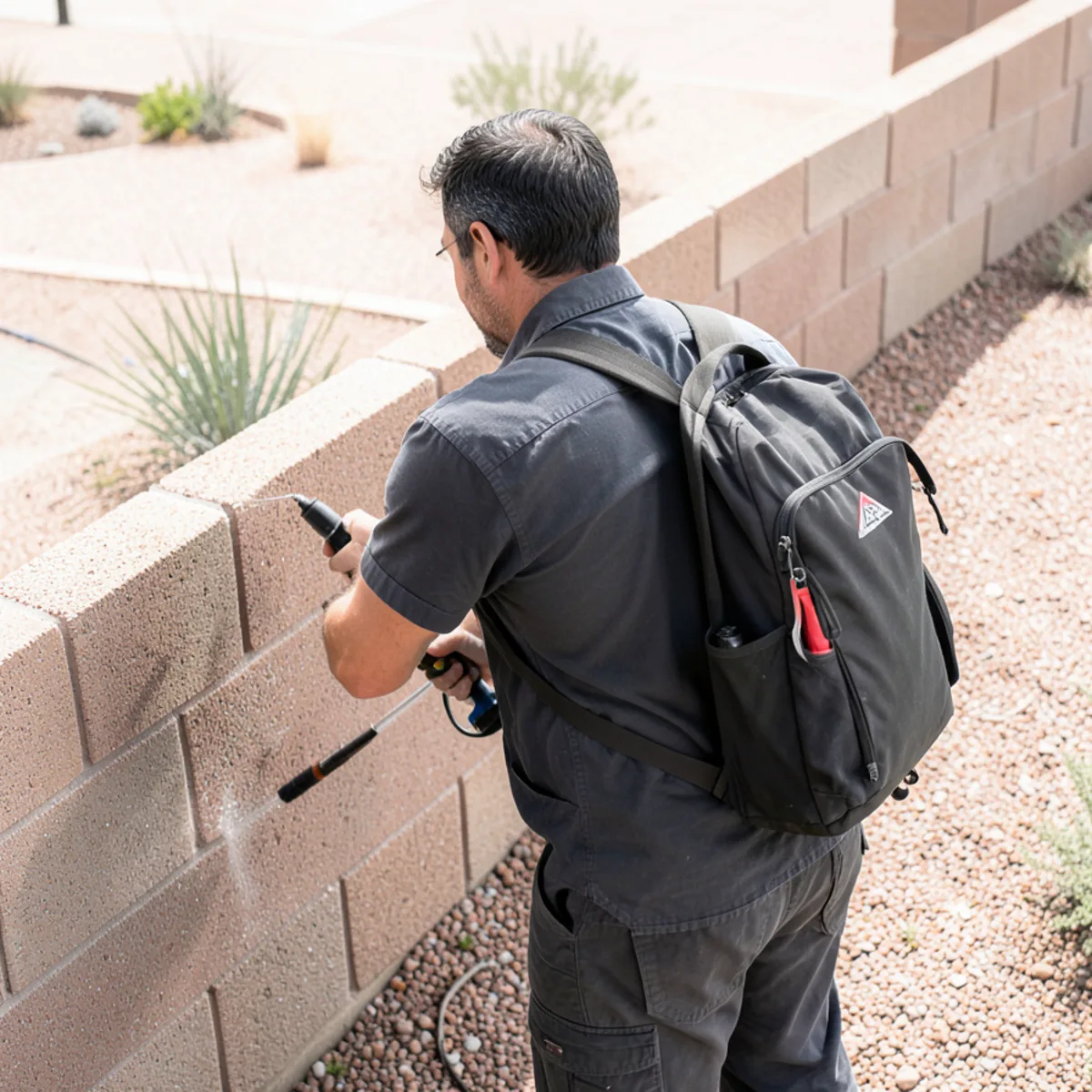
University of Arizona turf guidance gives a clear trigger: apply when soil at a depth of 2 inches reaches 50 degrees. For Phoenix it lists a window of about February 25 to March 5, and it offers pecan bud break as a rule of thumb. Yuma runs earlier. A University of Arizona weed specialist puts the logic plainly: better a month early than a minute late.
The reason is mechanical. Most pre-emergent products do not kill seeds. They act on germinating seedlings as roots and shoots grow through the treated layer, and plants already established often survive. Once the weed is up, the chance has passed.
Water matters too. Turf guidance says these products need irrigation or rain to move into the soil, with the allowed wait ranging from a couple of days to several weeks by product. One University of Arizona trial used about half an inch of water. Gravel yards without sprinklers may need a hose or a forecast of rain.
Monsoon flushes and summer spot work
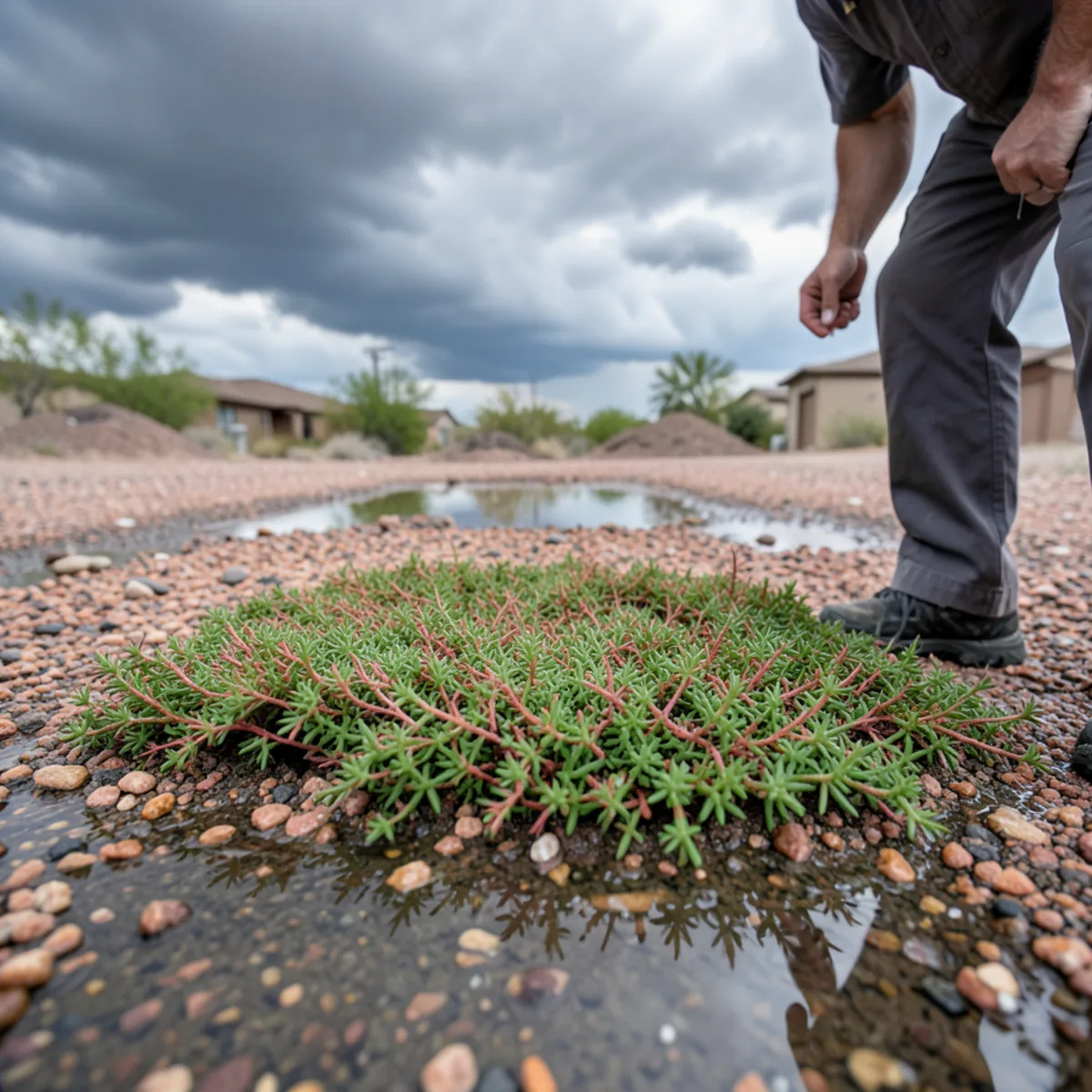
Summer weeds in the low desert include spurge, purslane, southwest cupgrass, crabgrass, stinkgrass and foxtails. A storm in July can bring them all up within days, and warm soil keeps them growing fast. Three habits keep this manageable:
- Treat within a week or two of the rain, while plants are small.
- Follow block walls, driveway edges and drip lines first. Runoff collects there.
- Do not rake or dig through gravel after a barrier goes down. University of Arizona work shows deeper mixing dilutes the product and reduces control.
The barrier also fades. Research from the same Extension summary shows control declines with time, which is why a June or July reapplication may be needed where the label allows it. Our post-emergent weed control page explains what happens on a spot-spray visit.
Why spurge sets the summer pace
Spurge is the weed that makes the calendar feel unfair. University of Arizona Extension says that under ideal conditions some spurges finish their lifecycle in as few as two weeks and produce up to 500 seeds per square foot. A patch missed in July can have seeded before August's storm arrives.
Its seed travels by wind and ants, and it clings to shoes and tools, so wash off a hoe after working a patch, and do not rake pulled plants across the soil. Spurge flowers also make nectar for ants that defend the plant, which is a good reason for gloves and a look before you kneel. Some kinds root as they spread, so pulling a mat leaves pieces behind.
Fall: stop the seed bank
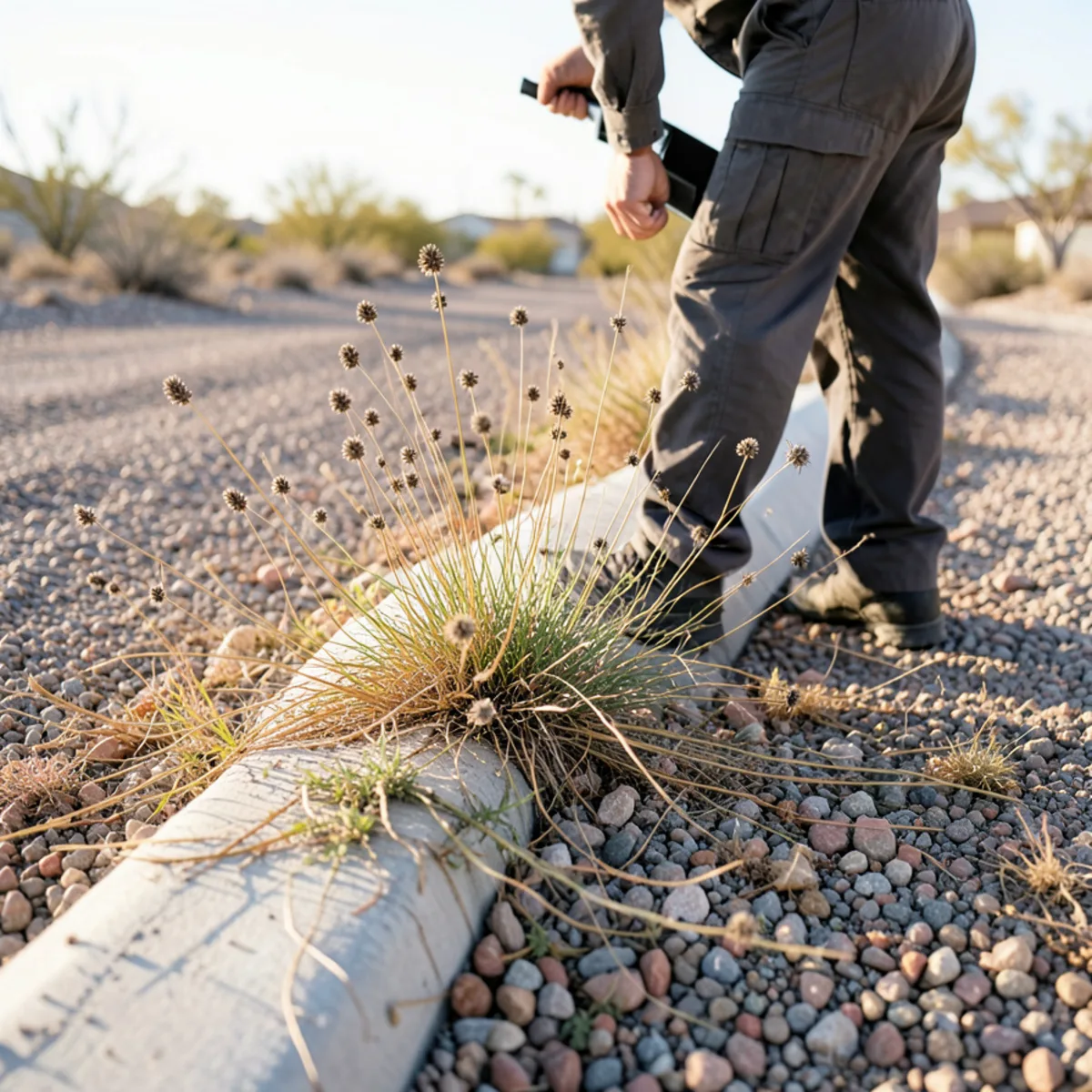
Late summer is when next year's weeds get made. University of Arizona turf research notes that summer annuals grow from abundant seed produced in late summer. Killing a plant before it sets seed saves you years of germination in that spot.
Fall rain then starts the cool-season flush. Mustards, London rocket and mallow are common winter weeds in Valley yards. A fall barrier in September or October, before cool-season rain, is a common trade practice, and timing depends on the weather and the label. Lawns getting overseeded with winter ryegrass are the exception, because a barrier can stop the grass seed too.
Gravel, lawn or mixed: what each yard really needs
The calendar above splits two columns for a reason. The work differs in effort as much as in timing.
| Yard type | Main job | Most common mistake | Time of year that matters |
|---|---|---|---|
| Gravel, no sprinklers | Barrier plus spot work | Barrier never gets watered in | Late February and July |
| Gravel with drip | Same, with extra checks at emitters | Ignoring the damp ring around each emitter | After each storm |
| Bermuda lawn, not overseeded | Thick turf and a spring barrier | Thin, dry patches let weeds in | March through May |
| Lawn overseeded with rye | Hand work, label check | Barrier stops the rye seed | September and October |
| Mixed beds and rock | Spot work around plants | Spray drifting onto plants you want | Spring and monsoon |
A short yard log makes next year easier. Note the date a barrier went down, when it got rain or irrigation, what came through and where. After two seasons you know whether your problem is timing, coverage or a seed source next door.
How Kai fits weeds into a yard plan
Reviews mention weeds being handled along with pests, so yard work can run alongside regular visits. His approach is simple: see what is growing, ask what kind of ground cover and irrigation the yard has, then match the visit to the season. He treats gravel and turf differently because the risks to the plants you want are different.
The trade-off is between steady small work and rare big clean-ups. A barrier and a few spot passes take planning, and in a dry year some of that effort will look unnecessary. Waiting until the yard looks bad costs less up front, but it lets seed drop and sets up a harder next season. For a yard you rarely look at, regular passes usually win. For a small yard you enjoy walking, hand pulling after rain may be all you need.
A note on who may do this work. Arizona's exemption for ordinary landscape maintenance under A.R.S. 3-3613 does not cover pre-emergent herbicides or anyone advertising weed management as a primary service. As general advice, confirm that anyone spraying your yard holds the right license category with the Arizona Department of Agriculture.
Yards in Chandler and Mesa follow this same calendar. To get the next step on your own yard, call (209) 563-1650.
Sources
- University of Arizona Turfgrass: Preemergence timing and summer annual weeds (Turf Tips, February 1997)
- University of Arizona Turfgrass: Preemergence control in low desert valleys (January 1994)
- University of Arizona Cooperative Extension: Preemergence Herbicides (2022)
- University of Arizona Extension, AZ1572: Managing Spurge in the Landscape, Garden and Turf
- Arizona Revised Statutes 3-3613: Weed management exemption and limits
About the author
Kai Horner owns and runs Kekoa Pest Control, a family-owned pest and weed control business based in Tempe, AZ, serving the East Valley since 2022. More about Kai