
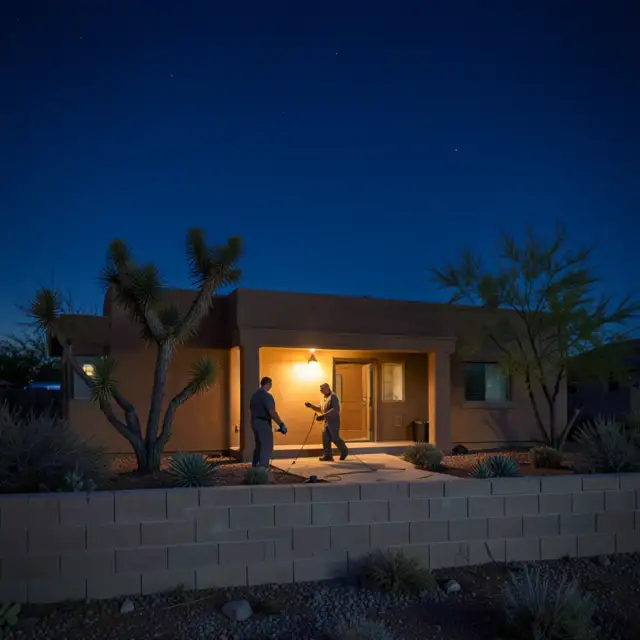
Kissing Bug Control in Tempe, AZ
Kissing bug control in Arizona, from Tempe to the desert edge, means dealing with where the bugs come from: pack rat nests, porch lights and gaps around the home. These large conenose bugs fly in at night, mostly May through July. Scope varies by lot, so phone Kai and he will say honestly if this is work for him.
- 5.0★ on Google (54 reviews)
- Family owned, owner operated
- Serving since 2022
You are far likelier to meet one of these bugs near open desert than on a central Tempe block. People who find them tend to live near open desert or a pack rat nest, and they usually turn up in early summer. This page is part of biting pest control, and it covers what the bugs are, why they show up, and what a visit looks at. The honest first step is confirming what you found, since a lot of large insects get mistaken for them.
What kissing bugs look like, and what they are not
University of Arizona Extension describes large, dark brown or black true bugs, half an inch to over an inch long. They go by several names: conenose bugs, triatomine bugs, Hualapai tigers. Arizona has seven species, and Triatoma rubida, with reddish markings along the edges of its abdomen, is the most abundant.
They are not bed bugs. Bed bugs are the size of an apple seed and cannot fly. Adult kissing bugs fly well, and they usually breed outdoors. Young ones cannot fly and have to crawl to a meal. Other Arizona insects can look similar, so get an identification before you worry.
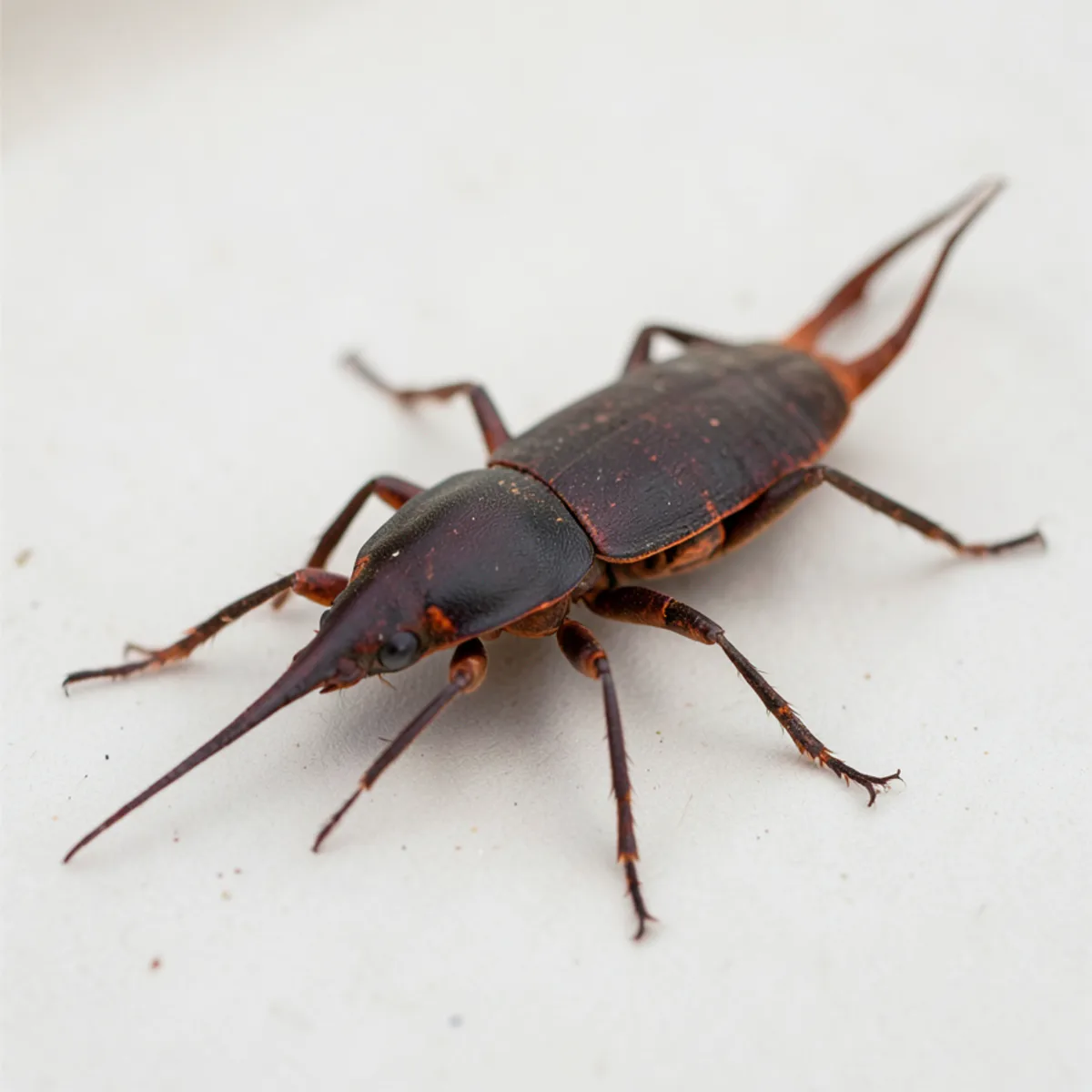
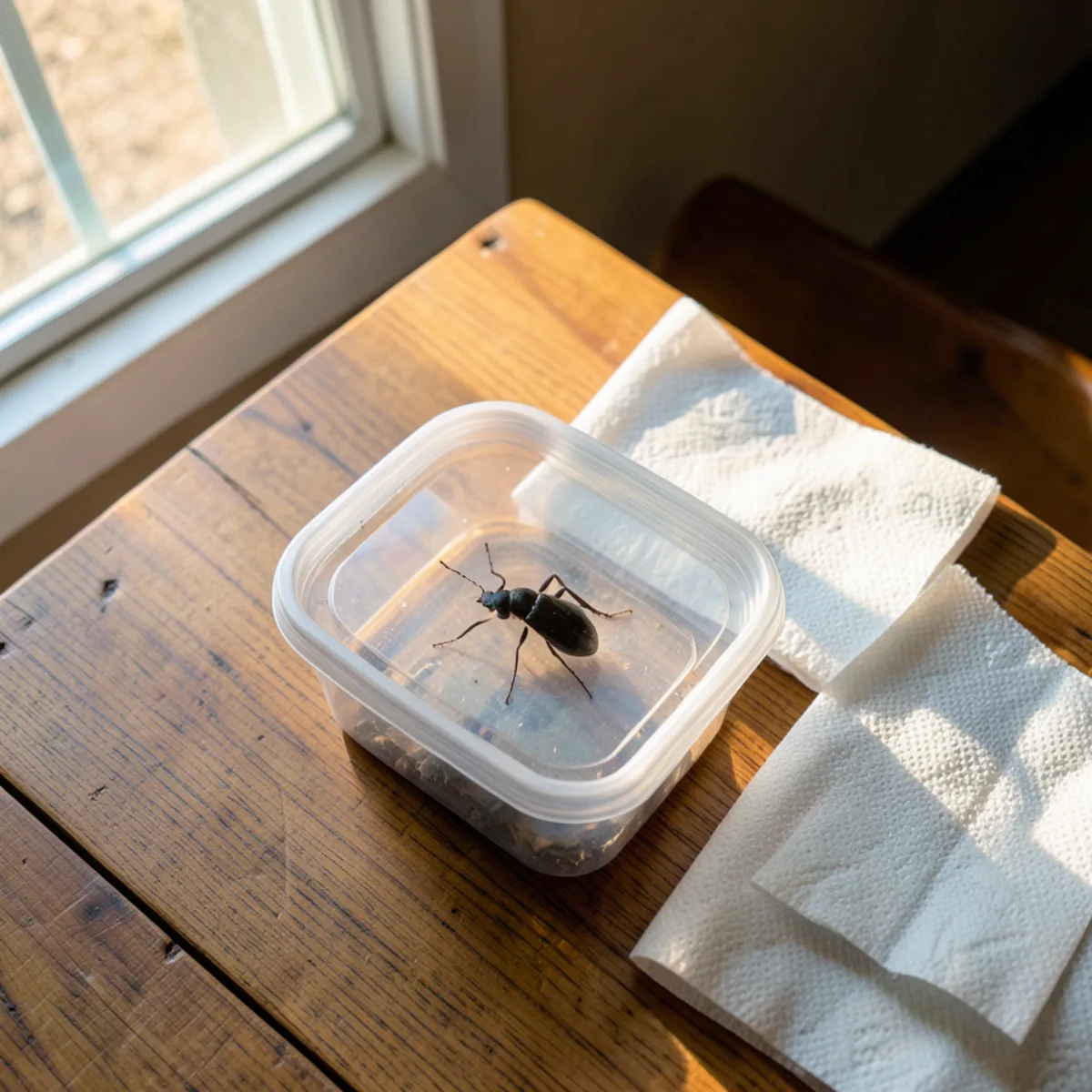
If you find one, trap it under a cup and slide it into a sealed container. Keep it. Save the bug rather than crushing it.
Why kissing bugs end up in Arizona homes
Three things drive it.
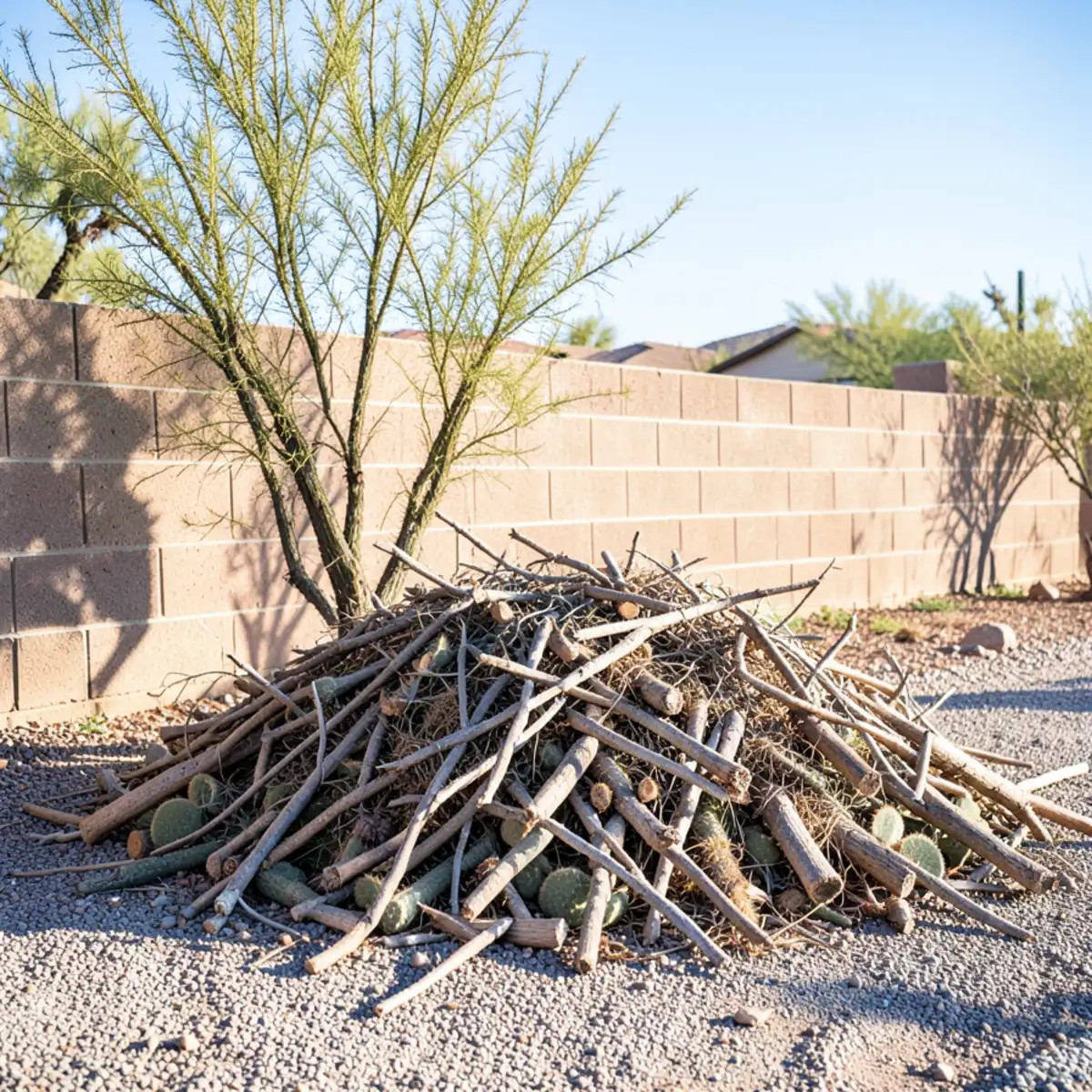
Pack rat nests. Extension says middens are common breeding sites. If a nest is under or against a home, the bugs can crawl in through cracks. Doghouses and chicken coops can host them too.
Night lights. Adults disperse mostly May through July and fly toward porch lights after dark. At dawn they look for shelter from sun and heat, and a doorway gap or a crack by a window screen will do.
Open desert. Extension says T. rubida is most prevalent in the foothill regions around Phoenix and Tucson. Expect more of this on a desert lot than on a block in central Tempe.
Once inside, the bugs seek low light. Extension mentions furniture, closets, and between mattresses as favorite hiding places, and says fed bugs often sit among bedding and drapes in the morning.
What kissing bug control in Arizona involves
Extension calls pest-proofing the best preventive measure. A spray alone does not address it, since the bugs fly in from outside. Here is how the options compare. This is general guidance, not a list of what Kai offers.
| Step | Why it helps | Limit |
|---|---|---|
| Vacuuming visible bugs indoors | Removes them immediately | Does nothing about the source |
| Sealing cracks, door sweeps, screens | Blocks the route in | Needs regular checks |
| Clearing nests close to the house | Removes the breeding site | Extension says leave distant nests alone |
| Changing porch lights | LED lights attract fewer bugs, per Extension | Reduces, does not stop, arrivals |
| Clearing lumber and debris piles | Removes shelter | Needs ongoing yard care |
| Treating nest sites | A professional step Extension mentions | Ask first; depends on the property |
What a job would and would not include
This is an unconfirmed offer, so none of it is a promise of service. Where Kai takes one on, the likely scope is narrow:
- Identifying the saved bug, where the evidence allows.
- Checking bedrooms, closets and furniture near the bed.
- Walking doors, screens, vents and foundation gaps.
- Searching for pack rat nests close to the house.
- Listing what to fix, and who should fix it.
Nest removal, trapping and sealing are separate decisions, made with you afterward.
Rules that shape kissing bug work
CDC says no insecticides are approved specifically for triatomine bugs in the United States, and tells people to talk with a pest control expert before using any against them. That is a good reason not to reach for a can. CDC's own short list for homes is to seal cracks and gaps around windows, walls, roofs and doors. Pack rats add a second rule: Extension says native woodrats are nongame mammals protected by state law, with control allowed in some cases, so identify the animal before touching a nest. Pest work for hire needs an Arizona license; check any business using the Pest Management Division lookup.
What would a kissing bug visit check?
Whether Kai takes this on depends on the property, and he will say so when you call. If he does:
- He identifies the bug you saved, or tells you if he cannot.
- He checks sleeping areas, closets and furniture near the bed.
- He walks the foundation, doors, window screens and vents for gaps.
- He looks for pack rat nests under, against or near the house, including at cactus bases and in rock piles.
- He checks pet bedding, doghouses and any coops.
- He tells you what he found, what to fix first, and what would need a rodent job or repairs.
You get a clear yes or no on the bug if the evidence allows, a list of nests and gaps, and a sensible order of work. If pack rats turn out to be the source, the rodent side becomes its own job, and he will explain what that involves.
Prefer to write? Request a quote
Calling is fastest. If you are on a job or at work, leave your details and Kai will get back to you.
Kissing bug bites, Chagas and who to ask
This is a health question, so go to your doctor and to the agencies. Kai is not a medical source. Here is what they say, in brief.
Poison Help takes bite and sting calls at 1-800-222-1222, and it says to dial 911 first if someone collapses, has a seizure or has trouble breathing. Nobody can identify a bite without the insect, so keep the bug for your doctor to see.
CDC says Chagas disease spreads mainly through the droppings of the bugs, and describes infection happening when droppings reach a cut, a bite wound, the eyes or the mouth. It says only a healthcare provider can diagnose the disease, and that these bugs rarely infest homes in the United States because houses are well sealed. If you are worried, ask your provider.
How much does kissing bug work cost?
There is no set Kekoa price, and scope varies a lot. It depends on the size of the lot, how many nests sit close to the house, how much sealing is needed, and whether repairs are involved. A confirmed single bug on a screened porch is a small conversation. Multiple nests against a foundation are a bigger one.
On a central Tempe block, the answer is often an identification and a short list of door sweeps. At the desert edge, a long perimeter, rock features, doghouses and coops all add walking. Distance counts as well, since Kai works alone from Wesleyan Drive and far-out lots are a planned trip. Nest work that follows is a rodent job with its own cost, and screens or weather stripping may be a handyman's bill rather than his.
Timing matters too. Extension suggests checking dark, quiet indoor areas from mid-spring to mid-fall, and adults live into mid to late autumn. Most of the prevention work is best finished before May. After a clean-up, keep watching through the summer.
Why talk it through with Kekoa, and where Kai works
- You get a straight answer from the owner about whether he will take it on.
- According to reviewers, he makes sure you understand the work and how to stop it recurring.
- He treats inside and outside, and sets rodent traps too, so the nest side is not an afterthought.
- There is no sales gimmick here, which matters on a topic that scares people.
- Reviewers call him knowledgeable, which helps when you are holding a strange bug in a jar.
- Monthly customers report a list of chemicals used, so ask for one if anything gets applied.
The bugs are likeliest on the desert edge, including Gold Canyon, Fountain Hills and north Scottsdale, and Kai is based in Tempe. If it was a tiny apple seed bug and not a big one, see bed bug control, or book a bed bug inspection.
5.0★ from 54 Google reviews
What customers say about kissing bug control with Kai
“We’ve been so impressed with our pest control service! Kai is always professional, punctual, and extremely knowledgeable. He takes time to explain what he’s doing and makes sure we understand how to prevent future issues.”
“When we moved into our home, we had a scorpion infestation.These guys knocked it out in no time haven't seen a scorpion since! (With regular monthly service)”
“He responds to emergency situations immediately! And the best part of working with Kai is that he is the most genuine, friendly and competent contractor we have worked with in our 18 years in Sun Lakes!”
Kissing Bug Control: common questions
Are kissing bugs found around Tempe?
Yes, they occur in the area, though more often near desert than in the middle of town. University of Arizona Extension says Triatoma rubida is found across Arizona and is most common in the foothill regions of Phoenix and Tucson. Homes near open desert, washes or a pack rat nest are the likeliest in the East Valley.
How are kissing bugs connected to pack rats?
Pack rat nests are where they often breed. University of Arizona Extension describes middens as common breeding sites, and the bugs feed on the rats. If a midden sits against a home, bugs can crawl in through cracks. That makes the nest search around your foundation, shrubs and cactus the most useful step in the East Valley.
How do I identify a kissing bug?
Look for a large, dark brown or black bug, half an inch to over an inch long, with a narrow cone shaped head. Triatoma rubida has reddish side markings on the abdomen. Other Arizona bugs look alike, so keep it in a sealed container. Kai can look at it, or Extension and health officials can advise.
What should I do if one bit me?
Your doctor is the right person for that question, not a pest control company. Poison Help answers bite and sting calls at 1-800-222-1222, and it says to dial 911 first if someone collapses or has trouble breathing. Save the bug in a sealed container so your doctor can see it. Kai can help with the insects afterward.
Does finding a kissing bug mean I have Chagas disease?
Not by itself. CDC says Chagas spreads mainly through the bugs' droppings, when they reach a bite wound, a cut, the eyes or the mouth, and that only a healthcare provider can diagnose it. CDC also says these bugs rarely infest U.S. homes. If a bug has you worried, in Tempe or anywhere else, talk to your provider rather than guessing.
Do I need to remove every pack rat nest on my land?
No. University of Arizona Extension advises removing only nests close to homes. Nests farther away give the bugs an alternative place to live, which can discourage them from moving in. On a large desert lot in Gold Canyon or Fountain Hills, that is a real point: focus on what sits under, against or near the house.
Where we offer this
- TempeCentral blocks see few of these bugs, so the first job is confirming what you found.
- Gold CanyonYards here are often the desert itself, with rock and cholla where pack rats nest.
- Fountain HillsHomes climb from 1,520 to 3,000 feet, into the foothill ground Extension names for these bugs.
- ScottsdaleThe McDowell Sonoran Preserve fills a third of the city and backs onto north-end homes.
- Cave CreekFoothill lots with horses and outbuildings give bugs shelter, and town rules limit outdoor lighting.
- CarefreeBoulder outcrops and thick desert plants surround low-density homes in the upper Sonoran.
- PhoenixAhwatukee lots beside 16,000-acre South Mountain are the city's likeliest ground for them.
- Apache JunctionSkirted homes at the foot of the Superstitions give rats a sheltered nest near the bedroom.
- San Tan ValleyNew tracts back onto a regional park of over 10,000 acres of Sonoran Desert scrub.
Talk to Kai about kissing bug control
Call first. You will reach the owner, not a call center.
Kekoa Pest Control, 2407 E Wesleyan Dr, Tempe, AZ 85282, (209) 563-1650
- 5.0★ on Google (54 reviews)
- Family owned, owner operated
- Serving since 2022