
Rodent Control · By Kai Horner, owner of Kekoa Pest Control · Published · Updated
A pile of sticks under the prickly pear can sit there for years before anyone gives it a second look. Then the truck will not start, or a stink rises from under the shed. This post covers finding a nest and clearing it properly, and how it fits with rodent control near the desert edge in Gold Canyon, Scottsdale and similar places.
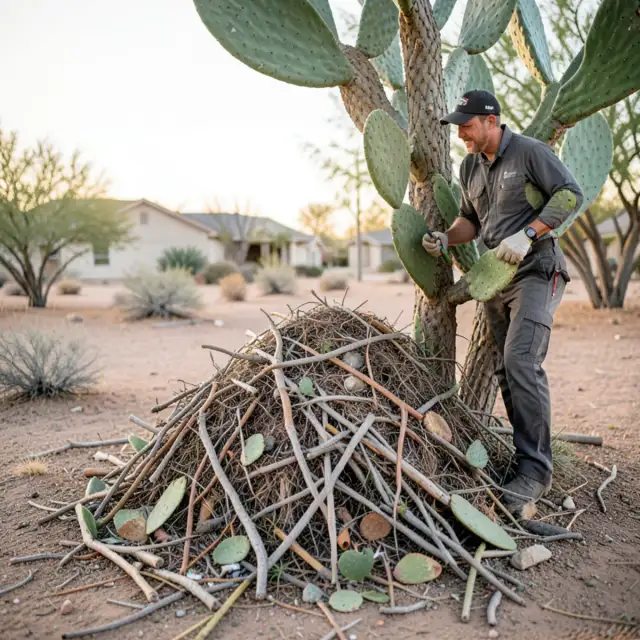
What a pack rat midden looks like
A midden is the rat's house, pantry and toilet in one pile. University of Arizona Extension describes several chambers filled with stored food and debris. Ground dens can reach 3 to 5 feet in height and diameter, though a small one in a yard is often much less. The mix of materials gives it away.
- Sticks, twigs and cactus joints, often stacked loosely
- Bits of plastic, paper and foil
- Shiny finds such as coins, keys and jewelry
- Blunt droppings, 1/2 to 3/4 inch long
- A strong smell, since layers of urine and feces build up
Pack rats are native, solitary and nocturnal. They have a furred tail, large eyes and ears, and a clean look, which is how to tell them from a roof rat.
Where to find pack rats in Arizona yards
Start low and work outward. These rats prefer ground-level shelter with something sharp or solid overhead, and in the desert they use cactus spines as armor. Walk the property in daylight with gloves on and a flashlight.
| Place | What to look for |
|---|---|
| Cholla and prickly pear | Debris at the base, chewed pads, tunnels |
| Rock piles and retaining walls | Sticks packed into crevices |
| Under sheds and decks | Debris at gaps, droppings at the edge |
| Against the house | Piles at the foundation or AC unit |
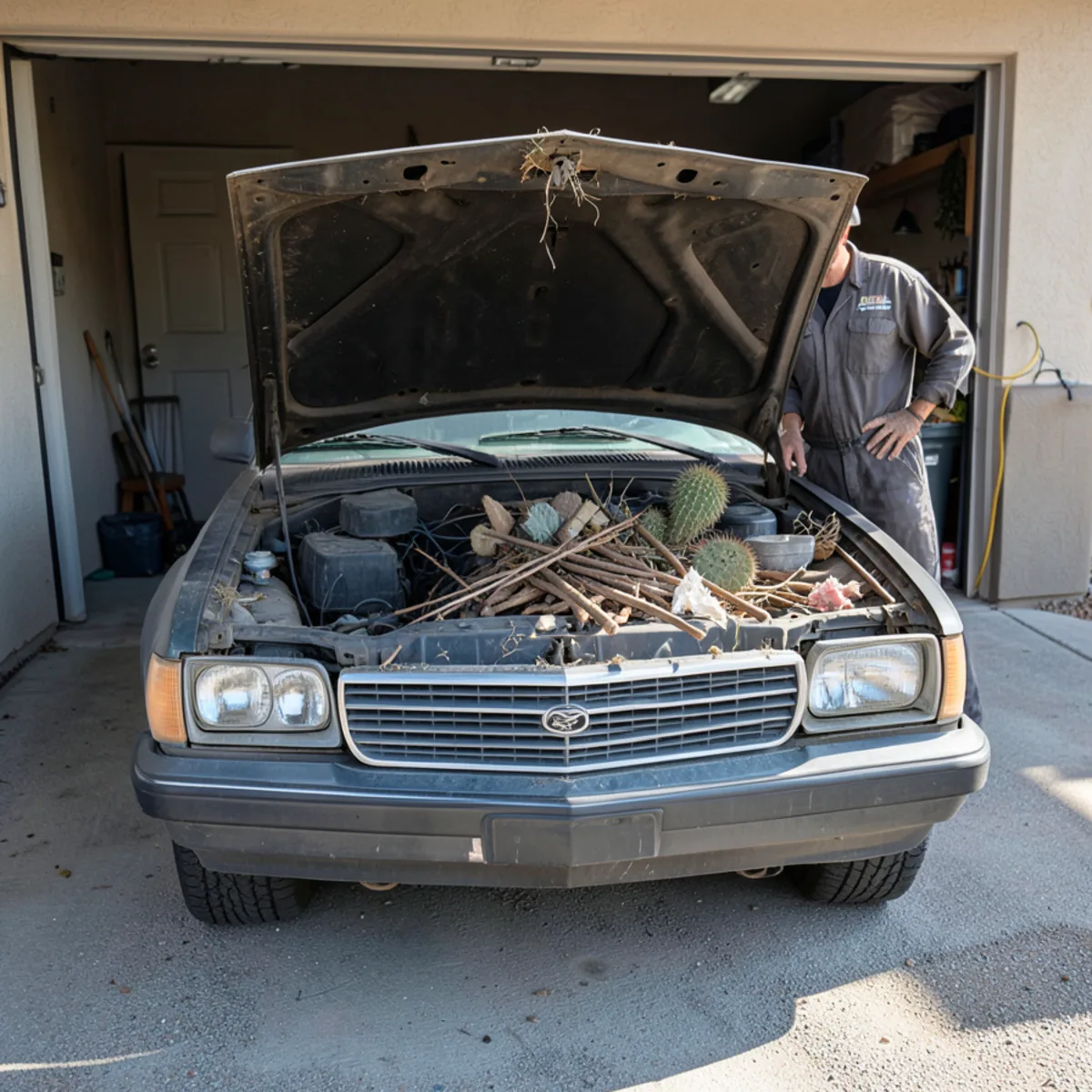
| Car engine bays | Sticks, cactus, chewed wires |
| Woodpiles and storage | Nest material between stacks |
| Attics and garages | Debris in corners, wires gnawed |
A cold, abandoned pile may look harmless. Treat it as active until you know otherwise. Dens are often reused, and a den in a good feeding area may be used for years.
Let the feeding damage point you to it
Chewed plants narrow the search. University of Arizona Extension says the white-throated pack rat is the one most often found in Phoenix-area suburbs, that it feeds on prickly pear, cholla pads and cactus fruit, and that it strips bark from mesquite, yucca and acacia. It also says home ranges reach less than 100 yards from the midden. So fresh damage usually means the nest is on your lot or the one beside it.
Is the nest still in use?
These are general trade signs, not lab proof. Each one leans toward a rat still living there:
- Green cuttings or fresh cactus pieces on top of older, grayed material
- New droppings at the edges
- Trails worn through gravel or debris between the pile and a food plant
- Chewing on nearby plants that was not there last week
Before you touch a nest
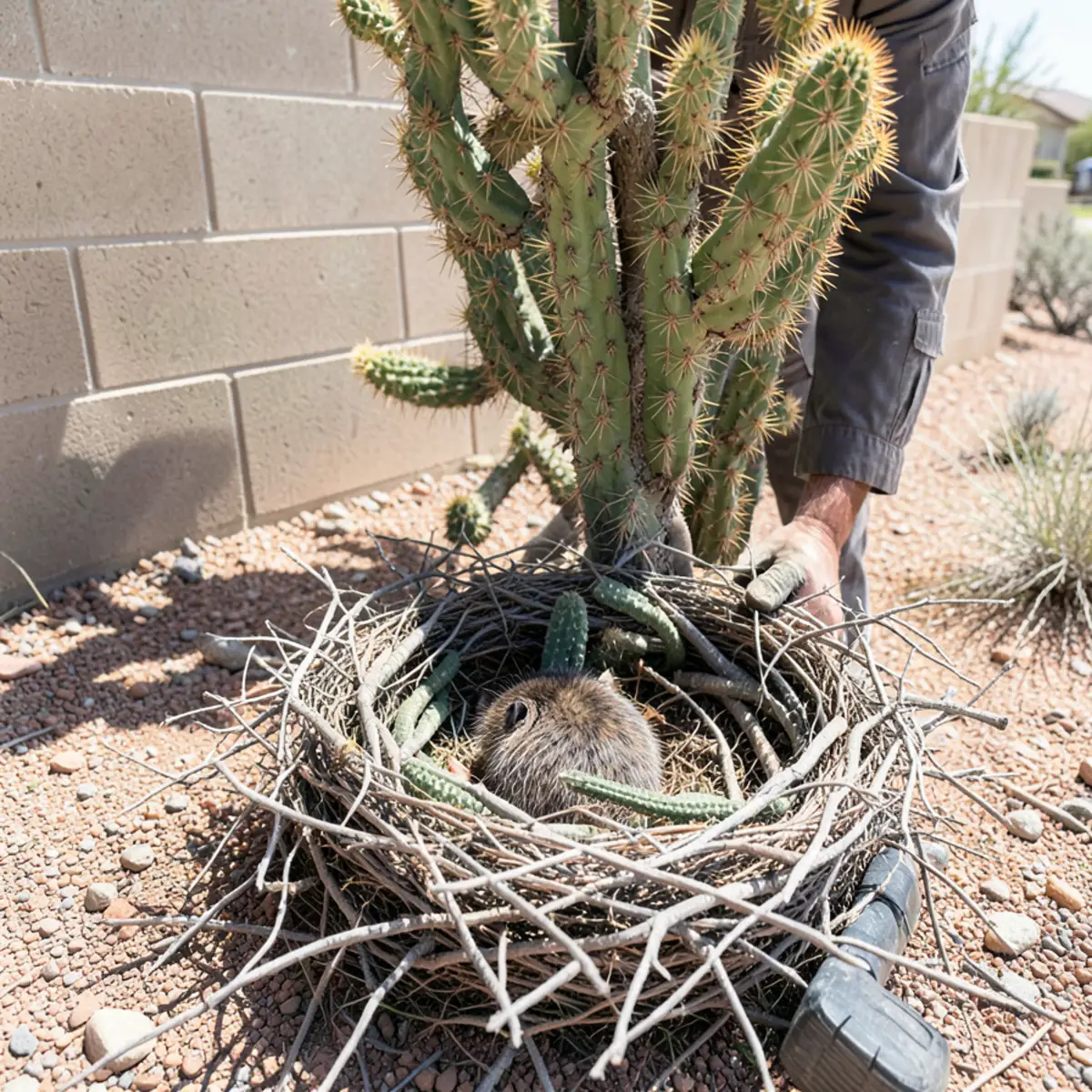
Clean-up is the risky part. University sources warn that hantavirus and other diseases can be present in woodrat nests, and that white-throated pack rats can carry arenaviruses. People can be infected by breathing in the virus when urine, droppings or nest material are disturbed. Nests also hold mites, ticks and fleas, and the CDC says to use insect repellent on clothing, shoes and hands around rodent nests for that reason.
Follow the CDC's points here. Do not sweep or vacuum nest material. Do not hit it with a leaf blower or pressure washer. Wear rubber or plastic gloves. Heavy jobs call for more protection, including a respirator, and the CDC suggests a professional service for those. For anyone with health concerns, a nest is a job to hand off.
Pack rat nest removal, step by step
Take the rat out first if you can. Clearing a nest with the owner still around just sends it to the next spot, sometimes your garage. Rat-sized snap traps work, and the university suggests baits such as nuts, peanut butter, oatmeal or dried fruit. Live trapping is not a good answer, because released rats often die from exposure, predators or competition.
- Trap for several nights. Keep traps out of reach of pets, and check each morning.
- Air it out. For a shed or garage, open it for 30 minutes first, per the CDC. For a car, 20 minutes.
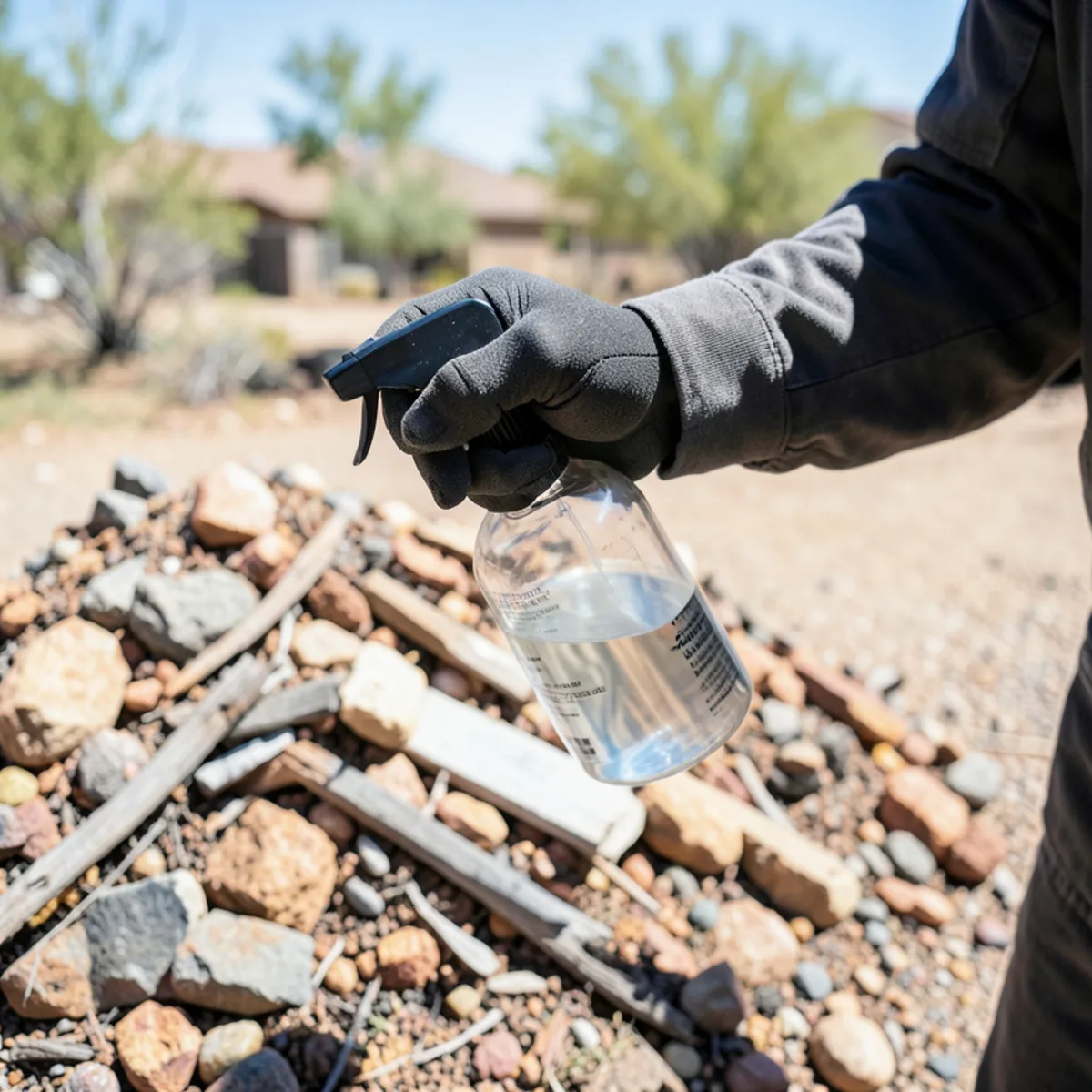
- Soak the nest. Use disinfectant or the CDC's bleach mix of 1.5 cups per gallon of water, and let it sit for 5 minutes or as the label directs. The university says to soak before disturbing it.
- Lift it wet. Move material a little at a time with a tool or gloved hands.
- Double-bag. Tie off the bag, then place it in a second bag and put it in a covered bin.
- Disinfect the area. Treat the ground or surfaces, then wash gloves and hands.
- Change the site. Clear cover so nothing rebuilds there.
Do not throw a whole midden into a pit or set fire to it. Fire is dangerous around cactus and structures, and it does not solve the next arrival.
Dead rats need the same care as the nest. The university says never to handle dead or dying woodrats with bare hands, so use disposable gloves and wash up afterward. Lethal control outside a building is also the point where the legal question in the FAQ below matters, so check with the Arizona Game and Fish Department first.
How to keep pack rats away
Nests often get rebuilt, so the last step is to make the spot unappealing. University of Arizona Extension says pest-proofing is the best way to keep rodents out, and its guidance is short and practical.
- Seal gaps at doors, windows, foundations, eaves and utility lines. If a head fits, the body may too.
- Inspect chollas and other cactus regularly.
- Clear fallen fruit, twigs and debris.
- Fix leaking irrigation.
- Start up and move seldom-driven vehicles, and park them in closed garages.
- Use smooth sheet metal barriers at least 2 feet tall to protect specific plants.
The same university sheet mentions flashing LED lights and a balsam fir oil repellent as deterrents. Treat those as extras. It also says trapping by itself is no long-term answer, so food, water and cover near the house still have to change.
How Kai sees a pack rat job
Kai's view is that a clear yard is not the finish line. The question is why that spot suited a rat, and whether the next one will find it just as good. Customers report he sets traps, cleans up after each catch, and explains how to prevent repeat problems.
The trade-off is that clearing more is not always better. A nest under the eave or beside the AC unit needs to go. A midden far out in open desert may be better left, since it keeps a native rat and its insects away from the house. Inside jobs are the ones to hand off: attics, wall voids, crawl spaces, or any pile too big to soak thoroughly. Heavy layers mean more dust and more parasites if something goes wrong.
The page on pack rat control covers the service side. If a nest has sat against your house, the page on kissing bug control explains the connection. Large nest removal depends on the property, and Kai will tell you on the phone if it is something he takes on. For Gold Canyon and other longer drives, call first to confirm scheduling.
Found a stick pile or a chewed wire? Call (209) 563-1650 before you start digging.
Sources
- Pack Rats, School and Home IPM, University of Arizona Department of Entomology
- Woodrats (Packrats), Backyard Gardener #23, University of Arizona Cooperative Extension
- Roof Rats: Identification, Ecology, and Signs (AZ1775), University of Arizona Cooperative Extension
- How to Clean Up After Rodents, Centers for Disease Control and Prevention
- What You Should Know About Kissing Bugs (AZ1992), University of Arizona Cooperative Extension
About the author
Kai Horner owns and runs Kekoa Pest Control, a family-owned pest and weed control business based in Tempe, AZ, serving the East Valley since 2022. More about Kai