
Pack Rat Control in Tempe, AZ
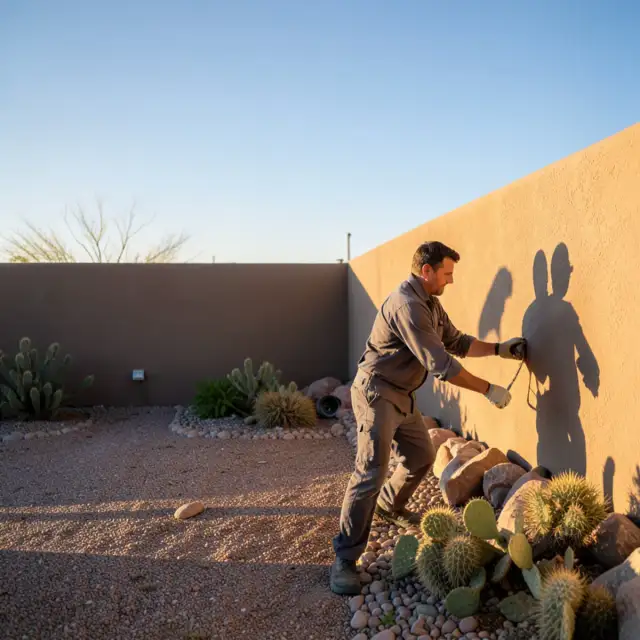
Pack rat control in Arizona, from Tempe to the desert edge, starts with the nest, called a midden, because these native woodrats stay close to it and keep rebuilding. Kai finds the nests near your home and traps the animals, and reviews describe him clearing every catch. He then explains what would stop the next rat from moving in.
- 5.0★ on Google (54 reviews)
- Family owned, owner operated
- Serving since 2022
A pack rat does not hide its home. It builds a heap you can see from the driveway, or under the hood of the truck you have not driven in a month. This work falls under Kai's rodent control service, and it matters most on the desert edge of the Valley, where cholla, rock and open washes meet back walls.
Pack rats in desert landscaping: what you are dealing with
Pack rats, also called woodrats or trade rats, are native to Arizona. University of Arizona Extension says the white-throated pack rat is the one most often found in Phoenix area suburbs. It looks clean, with soft fur, large eyes and ears, and a hairy tail. That tail separates it from the scaly-tailed roof rat.
Unlike roof rats, they mostly stay within 100 yards of the midden, Extension says. Find the nest, and you are close to the animal.
They feed on cactus, especially prickly pear and cholla pads, along with seeds, fruit and bark. New desert landscaping with cactus and rock gives them food and cover at once. That is why a gravel yard in a newer subdivision can have this problem while a neighbor with a lawn does not.
What the nest looks like, and where to look
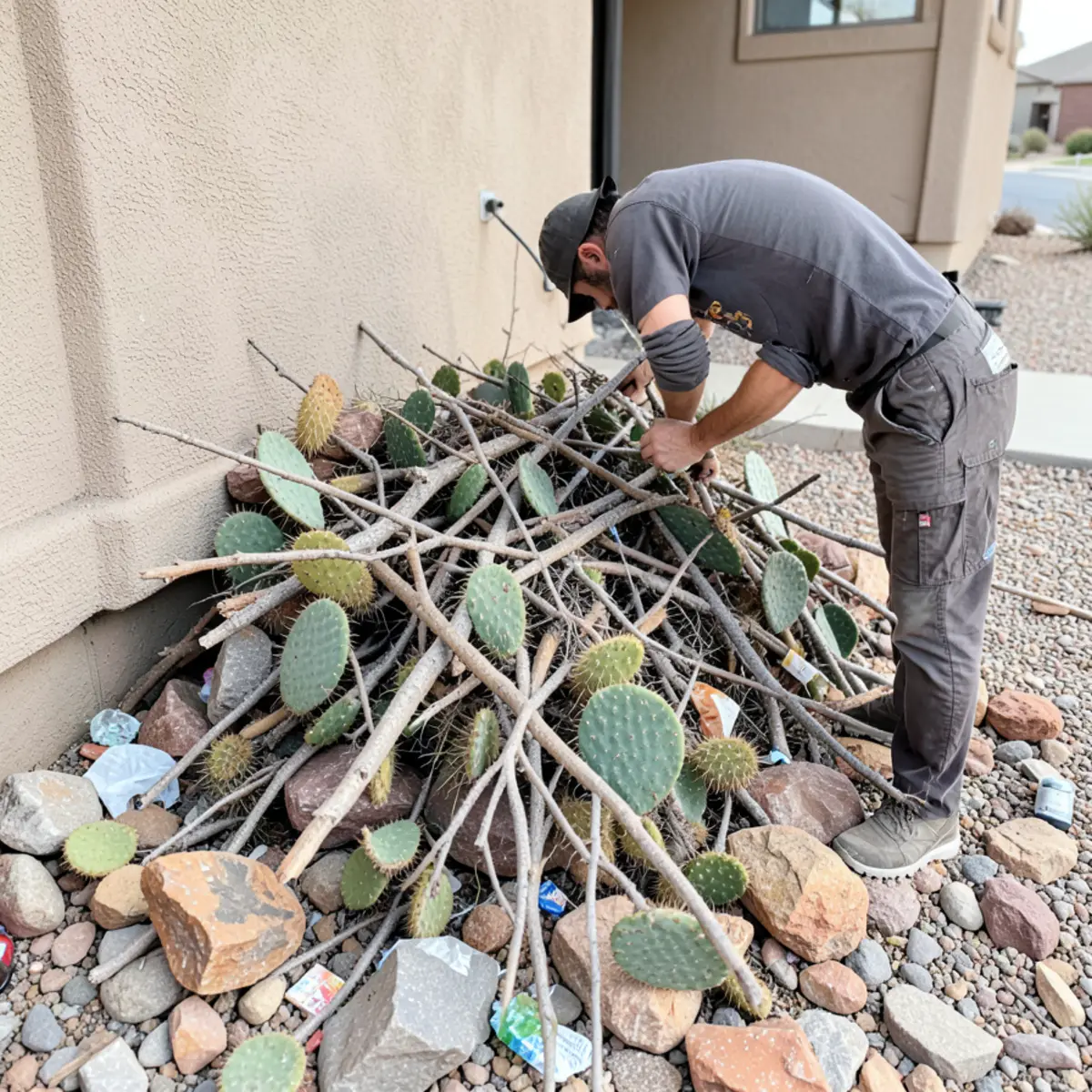
Middens are large, untidy heaps of twigs, cactus joints, paper, plastic and whatever the rat found. Extension says ground dens reach 3 to 5 feet in height and diameter, with several chambers inside. One rat may use more than one, and a good den may stay in use for years.
Check these spots:
- The bases of cholla, prickly pear and palo verde.
- Rock piles and boulder features.
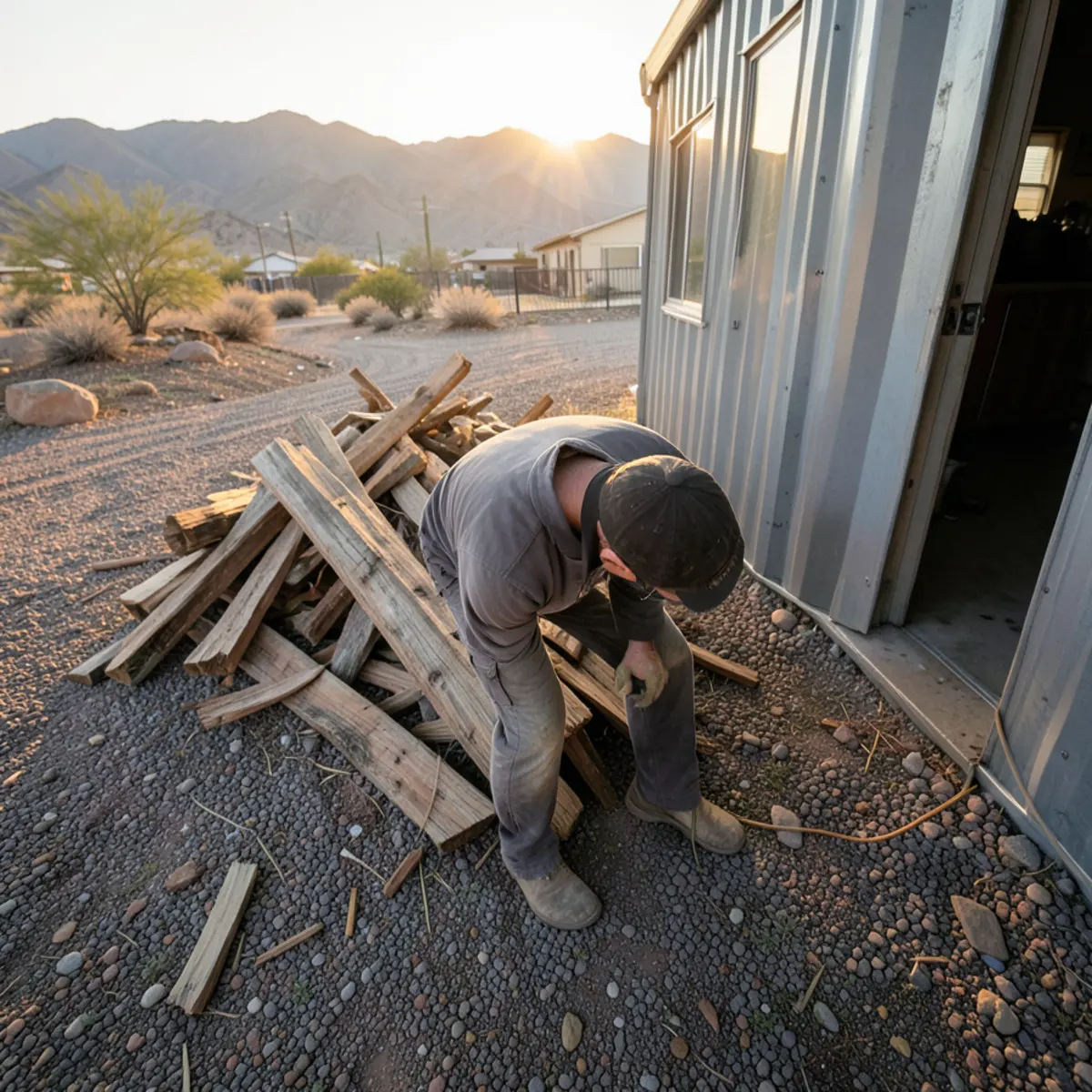
- Firewood stacks, old lumber, and anything piled against a wall.
- Under sheds, trailers and RV covers.
- Attics and wall voids, which Extension says they will sometimes move into.
- Under the hood of a vehicle that sits.
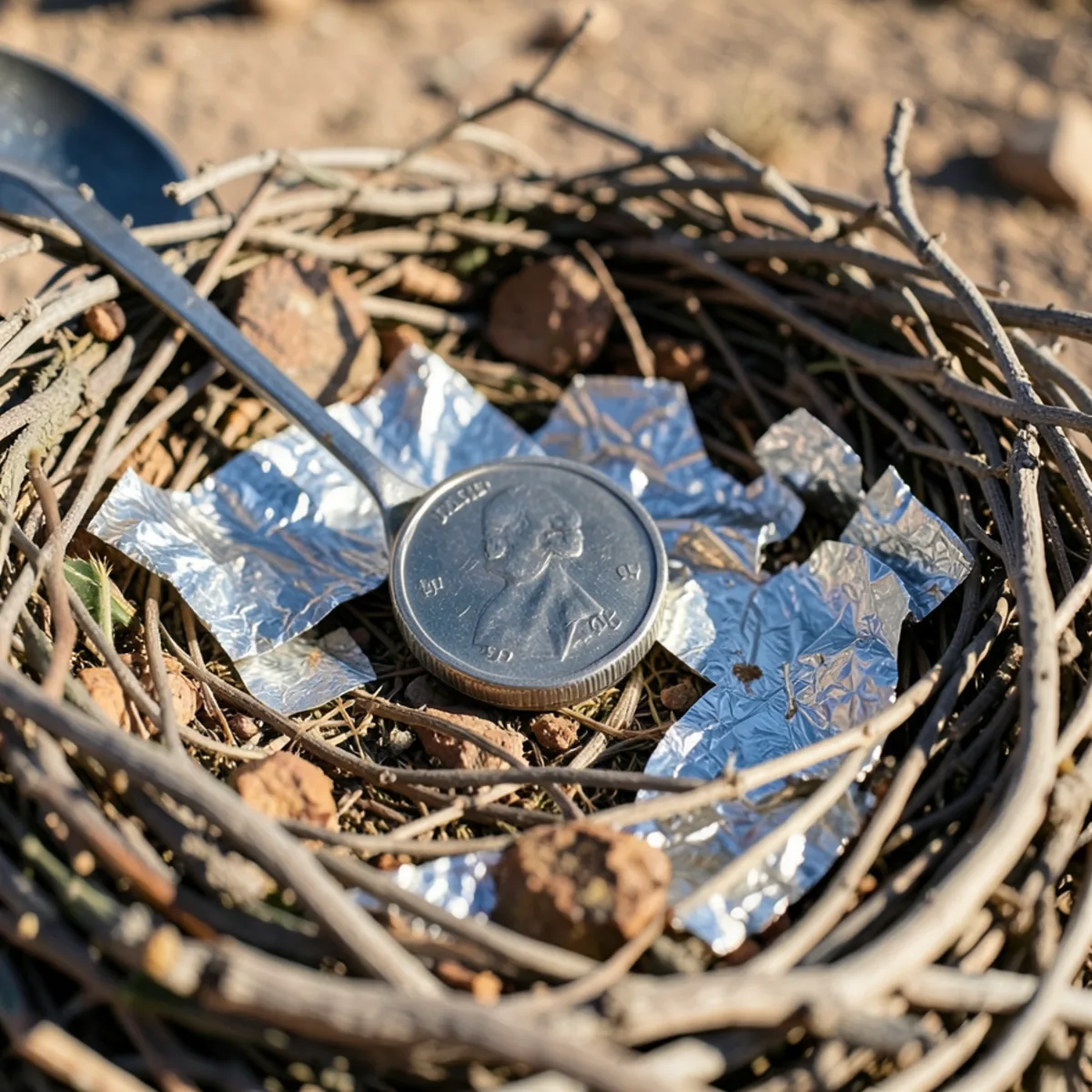
Pack rats like shiny things. Extension says they pick up coins, jewelry and bits of mirror, leaving a stick or cactus piece behind. A missing spoon really can be a clue.
Why are pack rats in the car engine?
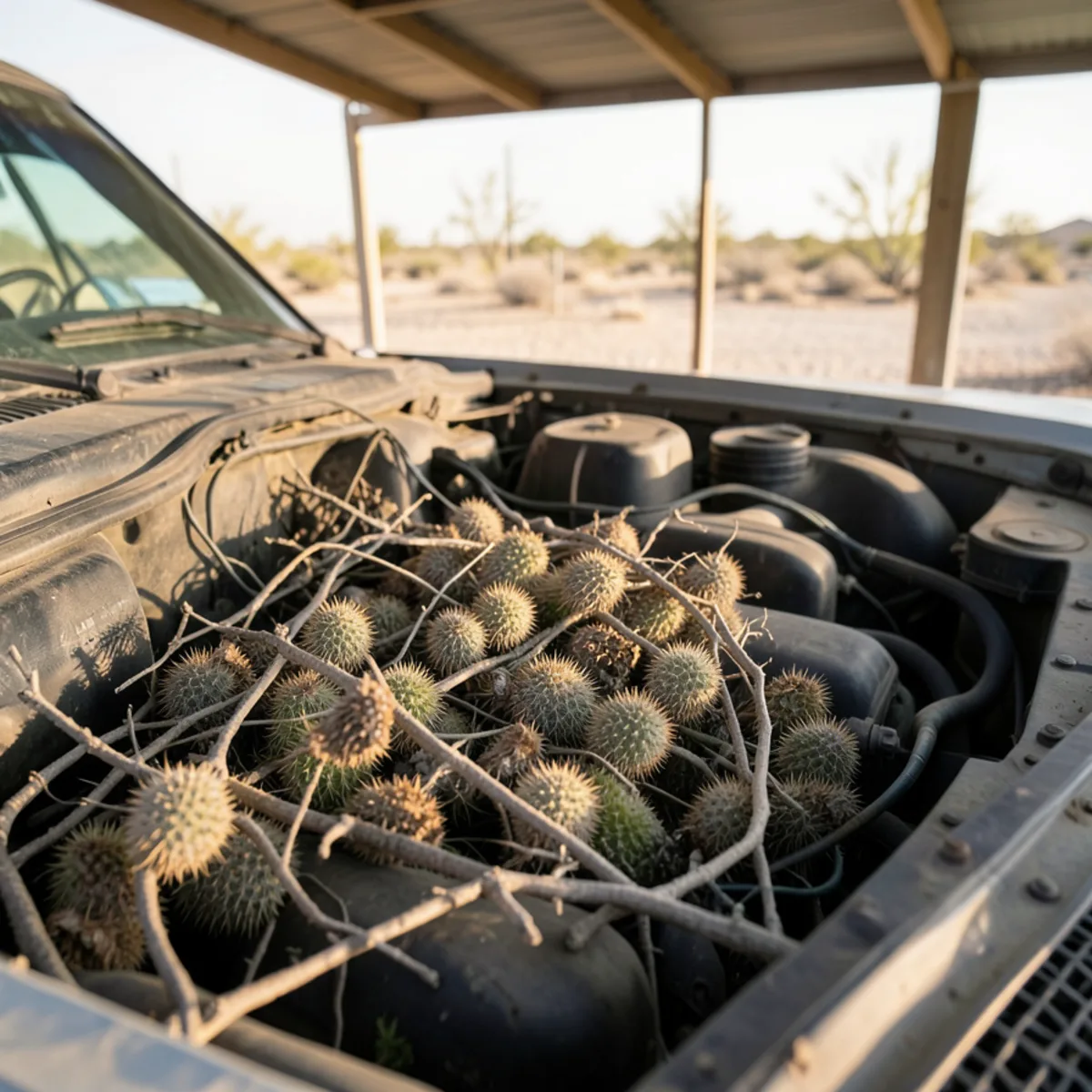
A parked car offers shelter close to food, and Extension reports that pack rats occasionally damage vehicles and wiring. Expect a nest of cholla pieces and sticks, with chewed hoses or insulation nearby. Cars, RVs and boats stored outdoors on the desert edge are most exposed.
Clean it carefully. CDC says to open the hood, doors and trunk and let the vehicle air out for 20 minutes. It says not to use a vacuum or high-pressure sprayer until the area is disinfected. Wear gloves, and have a mechanic check the wiring before you trust it.
What pack rat work from Kai covers
The visit centers on the nest and the animal using it. Kai looks for nests near the house, traps where the rat travels, and cleans up after each catch, which is what reviews describe. Nest removal and sealing depend on what he finds, because a midden against a wall is a different job from one out on the lot.
The work normally covers:
- Walking the yard, walls and outbuildings for nests and runs.
- Checking attics, garages or vehicles where a rat is getting in.
- Placing traps near active routes.
- Repeat checks, with each catch cleared.
- Advice on which nests matter and which to leave.
- A list of cover to clear and gaps to close.
Pack rat control in Arizona: the options and the law
Extension says these native rodents are nongame mammals protected by state law, with control allowed in some instances, such as significant property damage or infested buildings. It puts the emphasis on sealing buildings and the places vehicles are kept. In practice, the reason for control matters, so a nest far out on the lot usually stays while a rat in the attic does not. Common-area desert in an HOA belongs to the association, so report nests there rather than clearing them. Pest control for hire is regulated in Arizona, and the Pest Management Division's lookup lets you confirm a business's license.
| Method | Good for | Trade-off |
|---|---|---|
| Trapping near the nest | Removing the animal in or around a structure | Needs care, and placement matters |
| Nest removal | Clearing cover and parasites | The site gets reused unless cover is reduced |
| Yard cleanup | Removing lumber, debris and fallen fruit | Ongoing work |
| Cactus inspection | Early warning | Needs a regular walk around the yard |
| Sealing the home | The best long-term step, per Extension | Separate work; ask about scope |
Trapping with cleanup is what reviews show from Kai. Nest and sealing work depends on what he finds, and he will tell you what he can take on. He will also tell you plainly if an old nest far from the house is better left where it is. Extension advises destroying only nests close to a dwelling.
Pack rat removal in Tempe and the desert edge: the visit
- Kai asks what you found, and where, and whether a vehicle is involved.
- He walks the yard, walls and outbuildings to locate nests and runs.
- He checks attics and garages if the rat seems to be getting inside.
- He sets traps where the animal travels, out of reach of kids and pets.
- He visits again to clear any catch and move traps if the rat changes course.
- He advises on the nest, the cover around it, and the gaps to close.
By the end you should know where the nests are, which ones matter, and what to do about the yard. Watch for new sticks, which mean a rat is working the area.
Prefer to write? Request a quote
Calling is fastest. If you are on a job or at work, leave your details and Kai will get back to you.
How careful should pack rat cleanup be?
More careful than most people expect. Nests are full of droppings and urine, and Extension says they are common breeding sites for kissing bugs and can harbor fleas, ticks and mites.
CDC's basic advice applies. Do not sweep or vacuum. Wear gloves. Spray the nest and the area around it with disinfectant, let it soak for 5 minutes or as the label directs, and double bag the material. If the nest sits inside a closed shed, air it out for 30 minutes first. CDC advises more gear for heavy infestations. If you have questions about exposure, ask your doctor.
A midden against a home can let kissing bugs crawl inside, so a nest near the bedroom wall comes first.
Cost factors, timing and what prevents a return
There is no flat Kekoa price. Cost depends on the number of nests near the home, how far they are from the structure, whether a vehicle or attic is involved, and how many trap checks it takes. Pack rats live alone, except when breeding, so a single animal can be a quick job. Several nests spread across a lot take longer.
A Tempe yard with one nest behind the shed sits at one end of the range. A Fountain Hills or Gold Canyon lot with rock, cholla and a stored RV sits at the other, and the drive takes planning for a one-person business. Wiring repairs are a mechanic's bill, and hauling heavy debris or large cactus may call for a landscaper, so budget for those separately.
To keep them from returning:
- Clear lumber, firewood and debris from against walls.
- Regularly look under chollas and other cacti, as Extension advises.
- Pick up fallen fruit, and repair irrigation leaks.
- Move stored cars regularly, and keep garage doors shut.
- Close gaps. Read about rodent exclusion for what that involves, and see mice control if smaller droppings show up indoors.
Why call Kekoa about pack rats
- You will not have to touch a trap. Reviews say Kai cleans up after each catch.
- He is one person who knows your property, not a different stranger on each visit.
- He treats inside and out, and that fits a problem that starts in the yard.
- Customers describe him as thorough and knowledgeable.
- He tells you which nests to leave alone.
Kai is based in Tempe, and these pests matter most in places like Fountain Hills, Gold Canyon and Apache Junction. Some of those are a longer drive, so call first about scheduling.
5.0★ from 54 Google reviews
What customers say about pack rat control with Kai
“Since working with him, we’ve seen a huge improvement—especially with eliminating scorpions from our yard. Highly recommend!”
“Kai did a great job with rodent extermination at my In-Laws house. He was professional and timely with setting the traps and cleaning up after each one was captured, two in total.”
“We have had monthly pest control services which have kept the scorpions and other bugs away, as well as mice and hornet abatement on a few occasions.”
Pack Rat Control: common questions
How do I recognize a pack rat nest?
It looks like a messy pile of sticks, cactus joints, trash and shiny odds and ends, often at the base of a cholla or against a wall. University of Arizona Extension says ground dens can reach 3 to 5 feet across. Around East Valley homes, also check rock piles, firewood stacks, sheds and under parked trailers.
Why do pack rats chew vehicle wiring?
An engine bay is sheltered, and rodent teeth need something to work on. University of Arizona Extension says pack rats occasionally damage vehicles and home wiring, and photos show nests of cholla under hoods. Cars that sit for a while on the desert edge are at most risk. Start the car often and check under the hood.
Does removing a nest stop them from returning?
Not alone. A good nest site attracts the next rat, and Extension says one animal may keep several nests, with some dens used for years. Removing the nest helps only if the rat is caught, the cover is reduced, and the structure is sealed. Kai explains which of these matter most at your property in Fountain Hills or Tempe.
Can I legally trap a pack rat on my Arizona property?
Extension says native rodents are classified as nongame mammals protected by state law, though control can happen in some instances when they cause significant damage or when potential disease carriers are infesting buildings. Sealing them out gets the emphasis. It is a good reason to identify the animal first, and to talk to Kai before acting.
Can I clear a pack rat nest myself?
Think carefully before you do. Nests can hold kissing bugs, fleas and mites. CDC says not to sweep or vacuum nests, since that can release virus-containing droplets. Soak material with disinfectant, wear gloves and double bag it. For anything large, call Kai first.
How do I tell a pack rat from a roof rat?
Look at the tail. Pack rats have a furred or hairy tail, soft fur, large eyes and a clean look. Roof rats have a long, scaly, nearly hairless tail. Pack rats usually nest low, in cactus or debris, while roof rats keep to attics and trees. A photo from a Tempe yard helps Kai narrow it down.
Where we offer this
- PeoriaWorth asking about on north Peoria lots that back onto open desert, since University of Arizona Extension says pack rats nest at the base of cactus, shrubs and rock outcroppings.
- TempeNewer gravel yards with cactus and rock can draw them even this far from open desert.
- Fountain HillsRetaining walls, rock and washes on tiered lots make steady nest sites.
- Gold CanyonCars parked for weeks under the Superstitions are a natural spot for a midden.
- Apache JunctionRV pads and sheds at the desert's edge leave plenty of cover beside homes.
- ScottsdaleBoulders and cactus on preserve-edge lots sit right against back walls.
- Cave CreekDens at cholla bases and among rocks are common on foothill and horse lots.
- New RiverOne-acre-plus desert lots leave vehicles and sheds near dens of 3 to 5 feet.
- CarefreeTown policy preserves boulder outcrops, so the cover stays and homes need watching.
Talk to Kai about pack rat control
Call first. You will reach the owner, not a call center.
Kekoa Pest Control, 2407 E Wesleyan Dr, Tempe, AZ 85282, (209) 563-1650
- 5.0★ on Google (54 reviews)
- Family owned, owner operated
- Serving since 2022