
Arizona Bark Scorpion Control in Tempe, AZ
Bark scorpion control in Tempe means dealing with the one Arizona scorpion that climbs walls, crosses ceilings and carries venom of medical concern. Kai Horner inspects for where they shelter and enter, treats inside and out, and gives you a straight answer on what will and will not change.
- 5.0★ on Google (54 reviews)
- Family owned, owner operated
- Serving since 2022
This page covers one species, Centruroides sculpturatus. For the wider picture of treatment, sealing and yard work, start with our scorpion control in Tempe overview. If you are not sure what you found, the signs below will usually settle it.
Is it a bark scorpion? Signs in a Tempe house
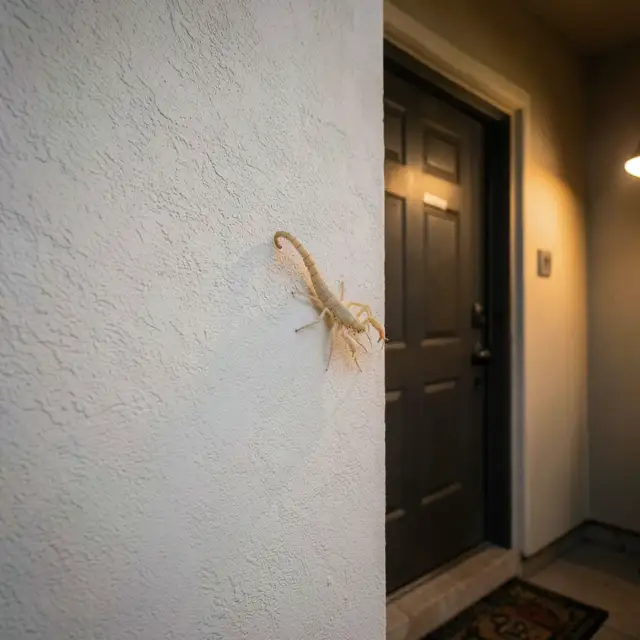
Three things point to this species. It is slender, with thin pincers and a long tail. It is usually 2 to 3 inches as an adult, though younger ones are far smaller, and color runs from pale straw to darker striped. And it turns up where other Arizona scorpions rarely do: on a wall, across a ceiling, or dropped into a sink or tub. University of Arizona Extension calls it the most commonly encountered house scorpion.
Burrowing species such as the stripe-tailed scorpion look bulkier and stay low. Finding one of those outdoors is a different conversation, since Extension describes their venom as relatively mild.
Why bark scorpions climb into Tempe bedrooms
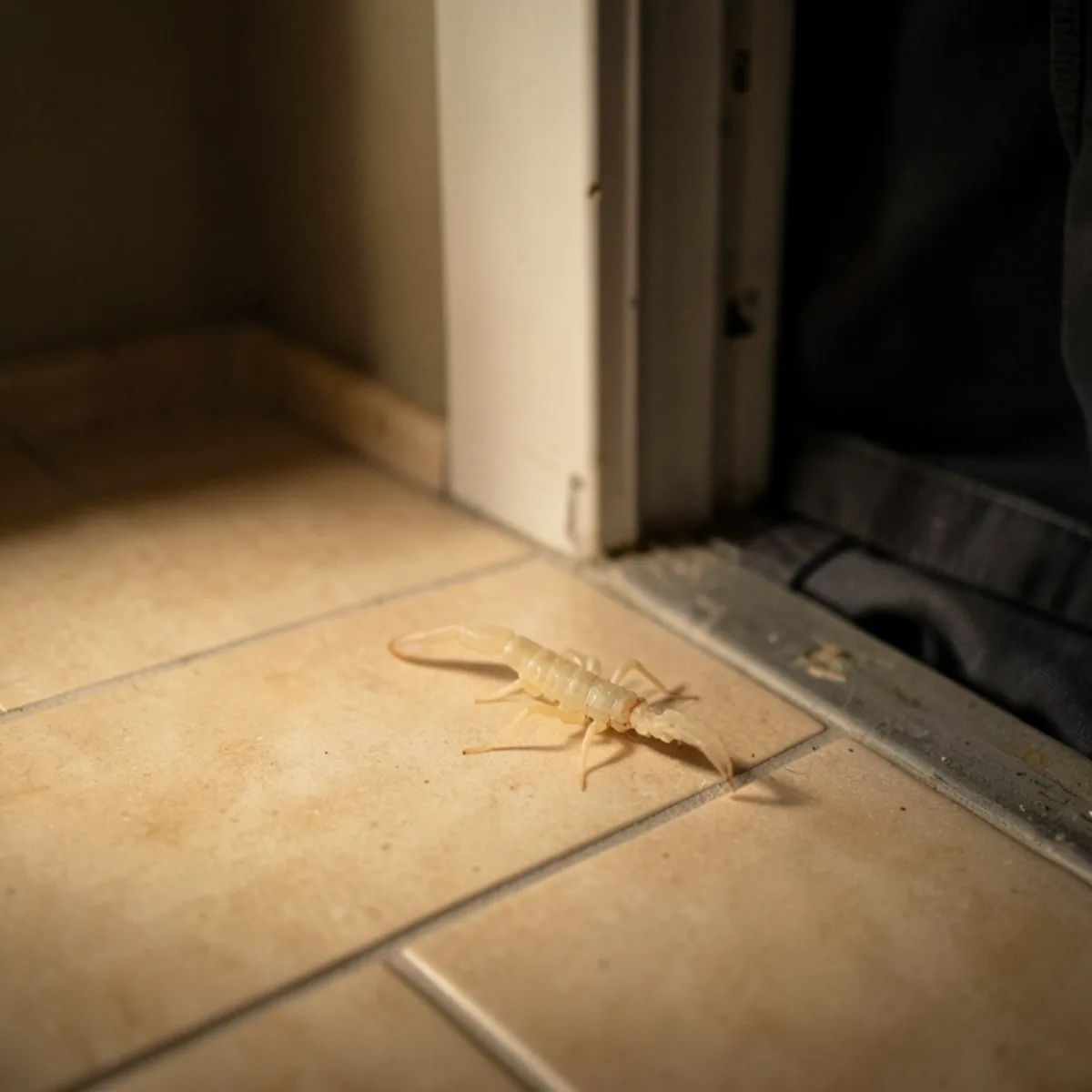
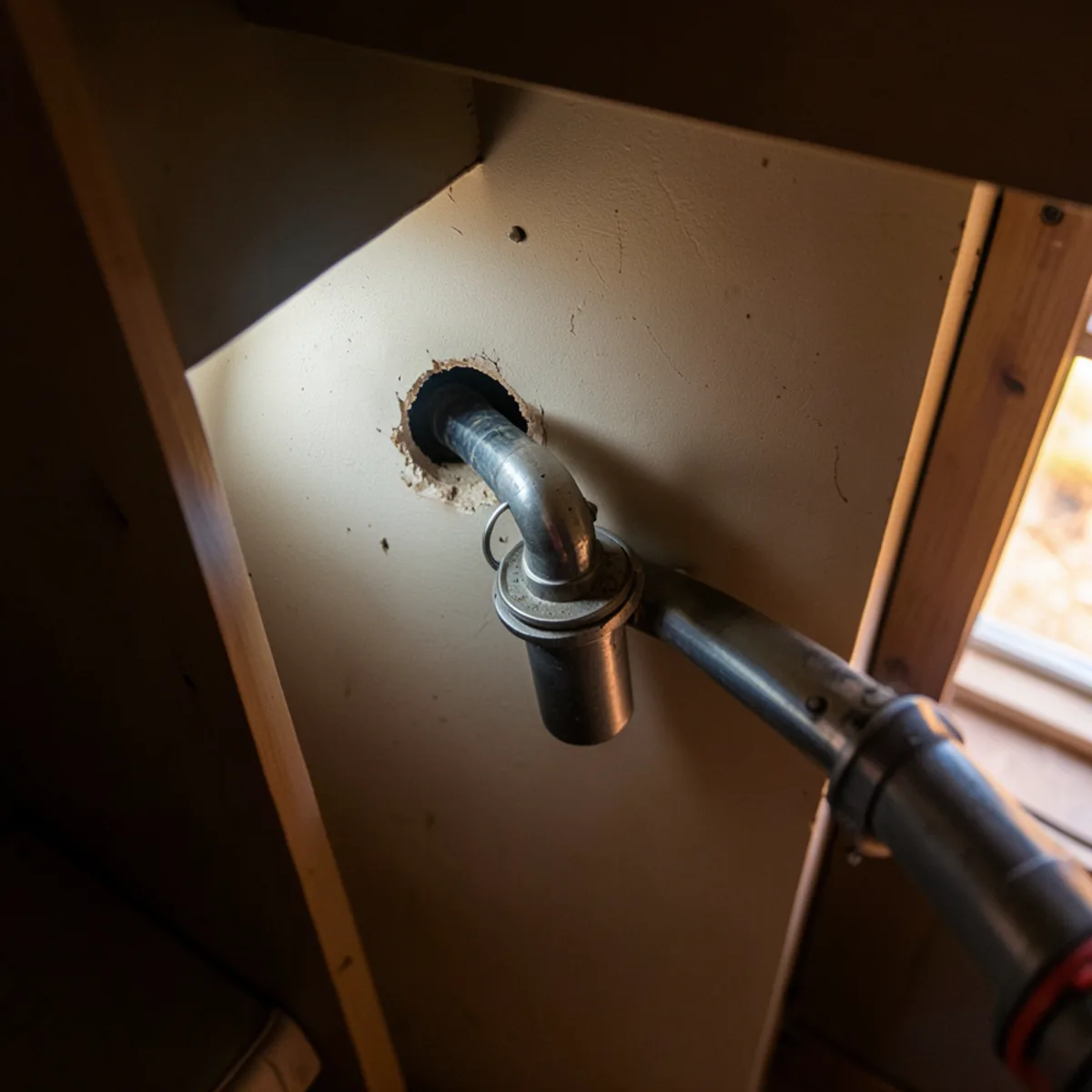
The bark scorpion does not burrow. It lives in crevices, and a house is full of them. University of Arizona material describes them squeezing through cracks about 2 mm wide, so a worn door sweep or a loose window screen is plenty.
Local conditions add to it. Hollow block walls give them daytime shelter close to the house, sprinklers keep insects around, and monsoon storms or irrigation can flood them out of cover. Dig up a yard or move rock, and Extension says they often relocate. Most movement happens between 7 and 11 p.m. and again from 3 a.m. to sunrise, which is exactly when people walk to the bathroom barefoot.
How Kai inspects for Centruroides sculpturatus
He starts where you saw them, then works outward. Inside, that means baseboards, door thresholds, plumbing under sinks and anything sitting on the floor. Outside, he follows the stucco line, weep screed, garage thresholds, block walls, stored materials and branches touching the roof, since Extension notes trees can give scorpions a path up.
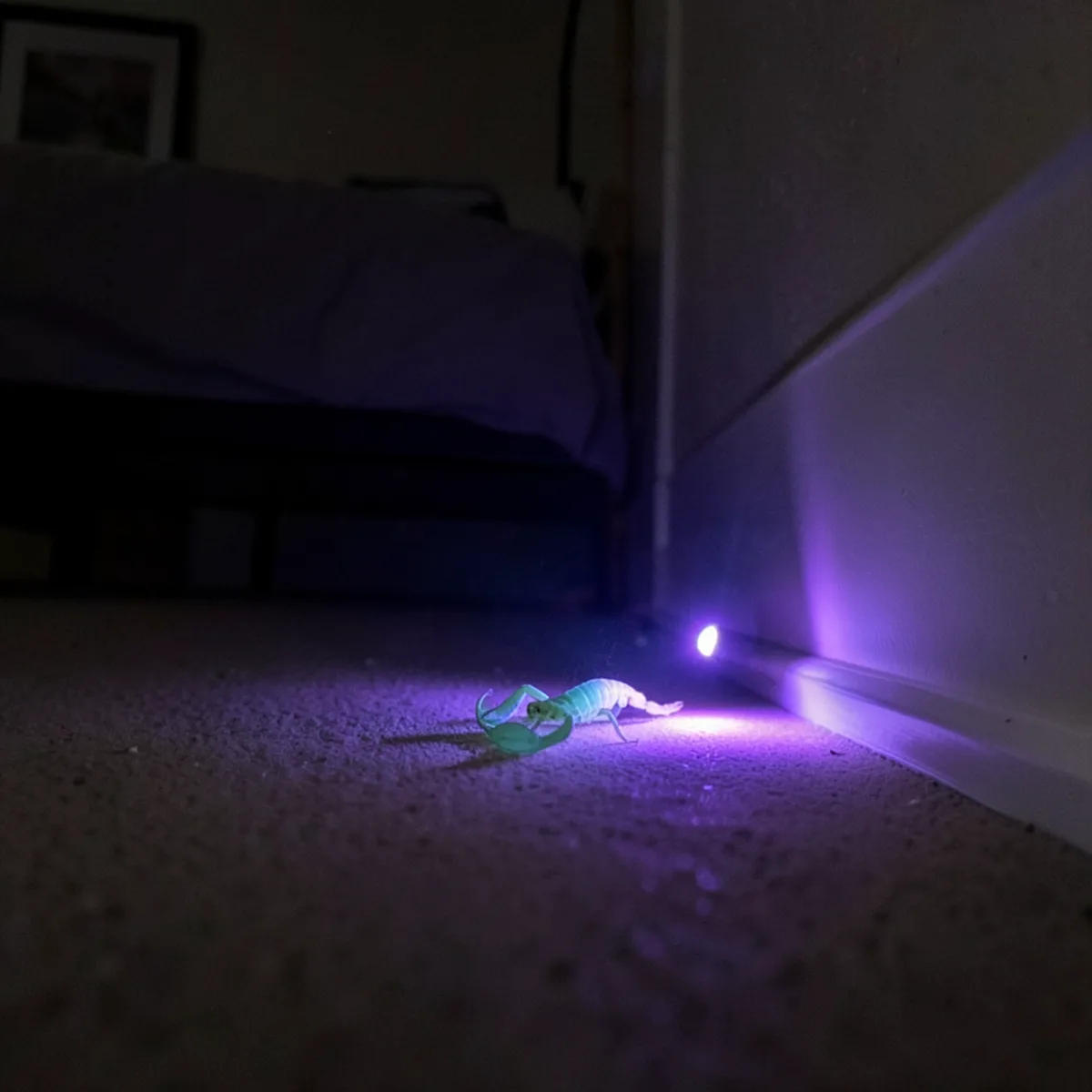
You get told what he finds as he goes. If UV light would help on your property, he will say whether that is something he can arrange. The black light scorpion inspection page explains what that adds.
Prefer to write? Request a quote
Calling is fastest. If you are on a job or at work, leave your details and Kai will get back to you.
Bark scorpion control in Tempe: options and trade-offs
No single method does it all, and a straight comparison saves money.
| Method | Good for | Trade-off |
|---|---|---|
| Interior and exterior treatment | Scorpions and prey moving along the house | Extension says pesticides alone will struggle |
| Monthly service | Keeping pressure on through warm months | An ongoing cost |
| Sealing and exclusion | The most effective way to cut contact, per Extension | Labor up front, and scope varies by house |
| Yard cleanup | Removing shelter and prey | Needs your habits to hold |
| UV checks | Finding them at night | Finds, does not prevent |
Our pages on sealing a home with scorpion proofing go deeper on the exclusion side.
What the pesticide label decides
Federal law settles a lot of this before anyone arrives. EPA says pesticide labels are legally enforceable, and under 40 CFR 156.10 every label must warn that using a product in a way inconsistent with its labeling breaks federal law. The label sets who may use a product, where it may go, how much and how often. That matters with this species, since the worst sightings are in bedrooms, and the label, not anyone's opinion, decides what can go in that room.
It applies to the can from the hardware store as much as to a professional, so read yours for scorpions as a listed pest and for the room you have in mind. On the hiring side, Arizona licenses pest management businesses through its Department of Agriculture under A.A.C. R3-8-201, and the state lookup shows any company you are weighing.
The bark scorpion visit, step by step
- Kai reviews your sightings: room, time of night, season and how many.
- He inspects inside and out, starting nearest those sightings.
- He treats the areas that need it, following label directions and placing product away from where kids and pets reach.
- He shows you the gaps and shelter he found and explains which ones you can handle yourself.
- He gives re-entry directions and tells you what to expect next.
- You agree on whether to continue with regular visits.

What a bark scorpion visit includes
The scope is built around one behavior: climbing. So the visit looks higher than a general service call does, and it follows the routes a climber uses.
- A review of sightings by room, hour and season.
- Inside: baseboards, thresholds, electrical faceplates and pipe collars near the rooms involved.
- Outside: stucco line, weep screed, garage thresholds, block walls and any branch touching the roof.
- Treatment inside and out where the inspection supports it.
- A list of products used and re-entry directions before he leaves.
Bedrooms get extra attention, since Extension warns that climbers can drop from ceilings into beds, sinks and tubs. Tell him which rooms children or older relatives sleep in, so those go first.
The visit does not include masonry on a block wall, tree work or any promise of zero scorpions. Medical questions go to Poison Help. Sealing is a separate conversation, because that offer depends on the house.
What should you expect in the weeks after?
Expect fewer, not none. You may still see a scorpion after the visit, especially on warm nights or after rain, because the ones already in walls and nearby yards keep moving. A scorpion on its way through does not mean the work failed. A steady count in the same room usually means a gap has not been found yet, so tell Kai where it was.
Keep shoes, towels and laundry off the floor. Pull the bed a few inches from the wall. Prune branches away from the roof and keep rocks and clutter from building up against the house, all of which Extension recommends.
What affects the cost of bark scorpion work?
There is no published Kekoa price, so call and describe the job. Cost depends on:
- Size of the home and lot.
- Length of block wall and density of planting.
- Whether sightings are indoors, outdoors or both.
- One visit versus regular service.
- Any sealing or proofing added to the job.
Two Tempe variables come up with this species in particular. Height is one: a vaulted ceiling, a stairwell or a garage full of shelving takes longer to check than a single-story room with clear floors. The other is the wall you share. Where one block wall runs behind several houses, work stops at your side, so the honest scope may be smaller than the problem.
Season moves the picture as well. A call during warm nights may lead straight to regular visits, while a winter call may focus on finding gaps before spring. Tell Kai which rooms are involved, how recent the sightings are and whether you are already on a service plan, and he can talk through what fits.
Why Kekoa for bark scorpions
- You deal with the owner, Kainalu "Kai" Horner, from first call to final walk-through.
- Customers say he explains what he is doing and how to prevent issues, which matters most with this pest.
- One long-time customer wrote that monthly service has kept the scorpions and other bugs away.
- Reviewers report he arrives on time, with a reminder the day before.
A bark scorpion problem gets worked over months, so it helps that the same person keeps seeing the same house and remembers which room, which door and which wall. Kekoa holds 5.0 stars from 54 Google reviews as of November 2026, and a family with young kids wrote that it now feels better about home.
Kekoa works out of Tempe and also serves Mesa, Chandler and Gilbert, where the same block walls and irrigated yards make bark scorpion removal a regular East Valley job.
5.0★ from 54 Google reviews
What customers say about bark scorpion control with Kai
“We’ve been so impressed with our pest control service! Kai is always professional, punctual, and extremely knowledgeable. He takes time to explain what he’s doing and makes sure we understand how to prevent future issues.”
“Since working with him, we’ve seen a huge improvement—especially with eliminating scorpions from our yard. Highly recommend!”
“When we moved into our home, we had a scorpion infestation.These guys knocked it out in no time haven't seen a scorpion since! (With regular monthly service)”
Bark Scorpion Control: common questions
How can I tell a bark scorpion from other Arizona scorpions?
Look at the build. University of Arizona Extension describes adult bark scorpions as 2 to 3 inches long with slender pincers and a long, thin tail. Color varies from pale to darker striped. Stripe-tailed scorpions are bulkier in the pincers and tail. A scorpion on a wall or ceiling is a strong clue, because this is the climbing species. Send Kai a photo if you can.
Why do bark scorpions end up on walls and ceilings?
They are proficient climbers hunting and looking for shelter, and stucco or textured drywall gives them grip. University of Arizona Extension notes they can scale walls and cross ceilings, then drop into beds, sinks and bathtubs. That falling habit is why a bedroom sighting deserves a closer look, even in a tidy Tempe house with a clean floor.
Where do bark scorpions hide during the day in a Tempe home?
They wedge into tight dark spaces. Outside, that means hollow block walls, rocks, bark and debris. Inside, University of Arizona Extension lists wall voids, with access around electrical faceplates and pipe collars. Check shoes, floor-level towels and laundry piles too. Kai looks at the same places on an inspection, starting with the outside of the house nearest your sightings.
When is bark scorpion activity highest in the Valley?
Activity peaks on warm nights. University of Arizona Extension says they stay active most of the year in the low desert, with nighttime temperatures above 70 degrees being ideal. November through March is slower, and in the coldest stretches they cluster in protected spaces. Monsoon rain and irrigation can flood them out of shelter, which pushes them on the move.
Are bark scorpions dangerous to adults?
Stings are very painful, and University of Arizona Extension says most healthy adults recover without a doctor, though it advises calling Poison Help at 1-800-222-1222 because reactions differ. Young children and older adults face higher risk. Severe symptoms such as trouble breathing mean 911. Kekoa handles the scorpions. Poison Help handles the medical questions, day and night.
Where we offer this
- BuckeyeUniversity of Arizona Extension names the bark scorpion as the common house scorpion and the only Arizona species considered life-threatening, so identify what turns up on a Buckeye patio.
- TempeTextured stucco and hollow block give this climbing species grip and shelter around older ranch homes.
- MesaLots in the citrus sub-area must keep citrus trees, and branches at the roofline are the climbing route Extension warns about.
- ChandlerOcotillo lake lots stay damp, and moisture keeps the insects this night hunter feeds on close to the house.
- GilbertSeven recharge basins at the Riparian Preserve hold standing water, which feeds the insects this species hunts.
- ScottsdaleRock and desert along the preserve edge suit a crevice dweller that does not burrow.
- Fountain HillsAshbrook, Balboa and other washes flood in rain, and flooding pushes bark scorpions out of shelter.
- Gold CanyonBoulders and eroded volcanic rock under the Superstitions offer the rock crevices this species uses.
- San Tan ValleyYoung tract homes back onto Sonoran scrub at San Tan Mountain Regional Park, over 10,000 acres.
Talk to Kai about bark scorpion control
Call first. You will reach the owner, not a call center.
Kekoa Pest Control, 2407 E Wesleyan Dr, Tempe, AZ 85282, (209) 563-1650
- 5.0★ on Google (54 reviews)
- Family owned, owner operated
- Serving since 2022