
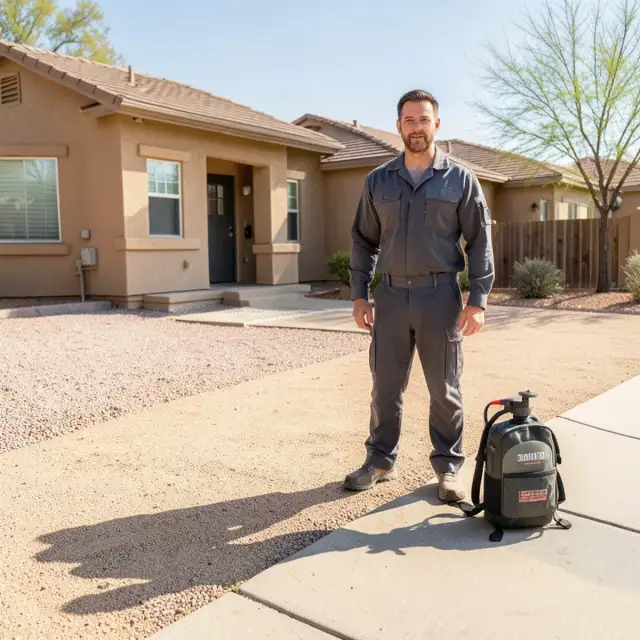
Pre-Emergent Weed Control in Tempe, AZ
Pre-emergent weed control in Tempe, AZ stops seeds from reaching the surface, so it has to go down before weeds appear. University of Arizona Extension gives March for summer weeds and October for winter weeds as the usual timing. Call (209) 563-1650 to work out a schedule for your yard.
- 5.0★ on Google (54 reviews)
- Family owned, owner operated
- Serving since 2022
This is the prevention half of weed control in Tempe. A pre-emergent does nothing you can see, and that is the point: a good application means a flush of seedlings that never arrives. It also means a missed date cannot be made up afterward, so the calendar does most of the work.
What a Pre-Emergent Application Includes
Each application covers the same ground:
- A look at what grew last season, since that tells you which seeds are waiting.
- A check for weeds already up. Pre-emergent will not touch them, so those need separate treatment.
- An even application across gravel, beds and edges, at the label rate.
- Clear advice on watering it in, if rain is not on the way.
- A note of what was applied and any re-entry time on the label.
Even coverage matters more than people expect. University of Arizona turf specialists say most products move very little sideways once watered in, so a skipped strip stays a strip of weeds.
On the day, it runs in this order:
- Kai walks the yard and notes last season's weeds and anything growing now.
- Beds you want left out, such as wildflowers and vegetables, get marked.
- Forecast and watering are checked, since the product needs moisture to activate.
- Any weeds already up are dealt with first.
- The pre-emergent goes down evenly at label rate.
- You get the watering-in instructions and the date of the next window.
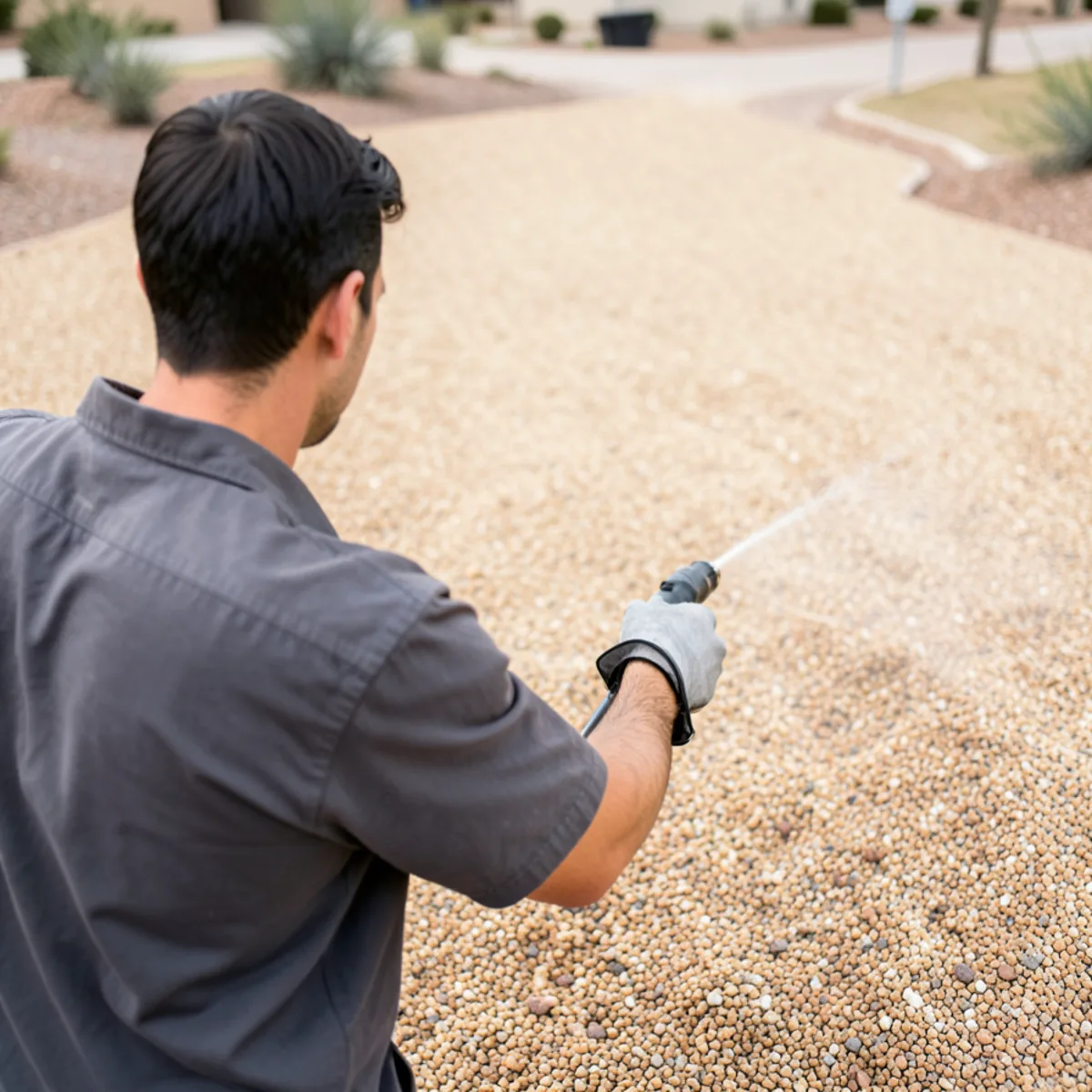
When Should Pre Emergent Weed Control Go Down in Tempe, AZ?
The dates below come from University of Arizona Extension and its turf specialists.
| Target | Window | Why |
|---|---|---|
| Summer annual grasses | By end of February or early March in Phoenix | Soil near 50 to 55 degrees at a 2-inch depth |
| Goosegrass, if you have it | Last week of March in Phoenix | Comes up later than other summer grasses |
| Spurge | Spring, then again in mid-summer | Germinates whenever air is above 60 degrees |
| Winter annuals such as London rocket | October | Just ahead of the cool-season rains |
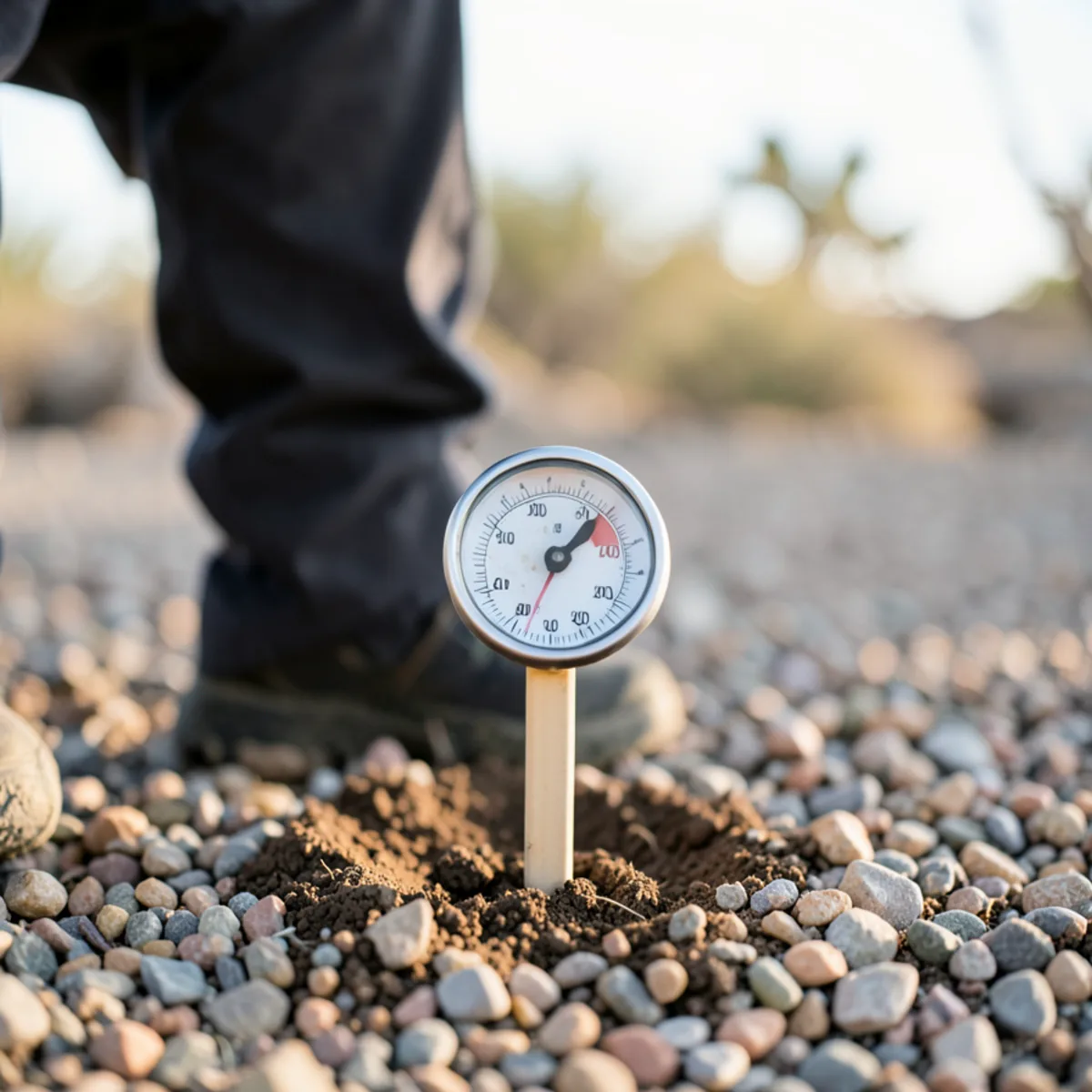
Soil temperature beats the calendar in an odd year. Extension's AZMET weather network reports soil readings at 2 inches, and a warm February can bring dates forward. A little early beats a little late, since the product has to be in place before seeds get moving.
Prefer to write? Request a quote
Calling is fastest. If you are on a job or at work, leave your details and Kai will get back to you.
Which Tempe Yards Need It Most?
Look back at last year. If London rocket lined the block wall, or spurge spread across the gravel after monsoon storms, that seed is still there and will return on schedule. Local causes to look for:
- Drip lines and leaks that keep soil damp under the rock.
- Thin gravel, where light and rain reach bare soil.
- Disturbed ground from trenching, new rock or a removed lawn.
- Vacant lots or weedy neighbors that blow seed in.
- Weeds left to seed last season. Extension puts spurge at up to 500 seeds per square foot.
It pays best on clean or freshly cleared ground. A yard already full of bermuda needs a different plan first.
How Do Spring, Fall and Full-Year Schedules Compare?
These are the usual ways to set it up in the Valley, not fixed Kekoa packages. Kai will tell you what makes sense for your property.
| Schedule | Suits | Trade-off |
|---|---|---|
| Spring only | Yards mainly troubled by summer weeds and spurge | Winter weeds come up unchecked |
| Fall only | Yards overrun by London rocket and cool-season annuals | Summer flush still needs spraying |
| Spring and fall | Most gravel yards | Two visits a year, plus spot treatment |
| Spring, mid-summer and fall | Heavy spurge pressure | Most applications; check label limits on repeat use |
What Winter Weed Prevention Gets You
Prevention costs less work over the year. University of Arizona's turf newsletter makes the same point, saying it is easier to prevent annual weeds that return every year than to treat them after they are up. In practice you get fewer seedlings, less seed dropped for next year, and less spraying near plants you want to keep.
It also spares you handling some unpleasant weeds. Spurge sap can irritate skin and eyes, and Extension notes that the plants often harbor stinging ants. A yard where spurge never mats is easier to walk.
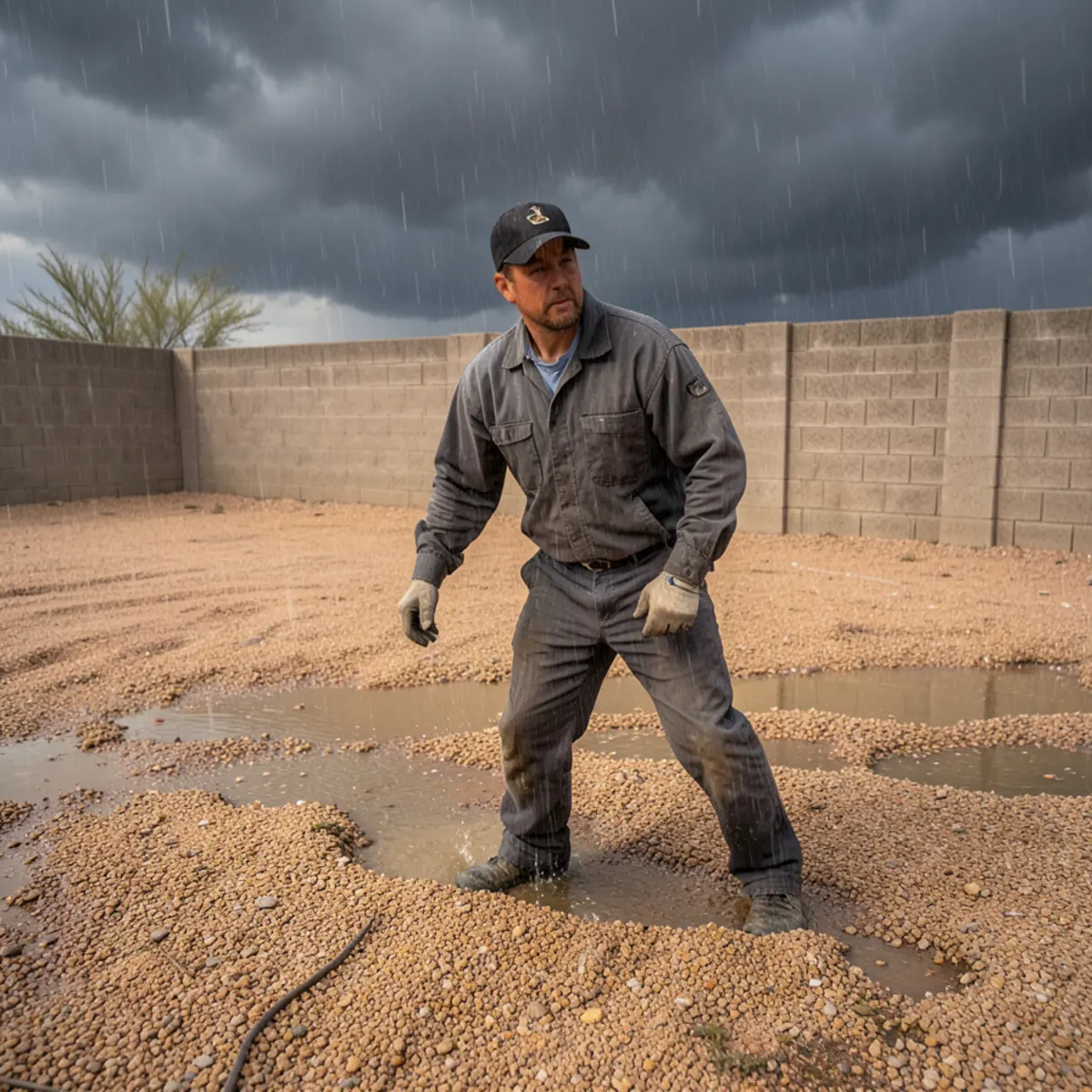
What Pre-Emergent Will Not Do
Being honest about limits saves disappointment:
- It will not kill anything already growing. For that, see post-emergent weed control.
- It will not stop bermuda spreading from runners and rhizomes.
- It cannot work without water.
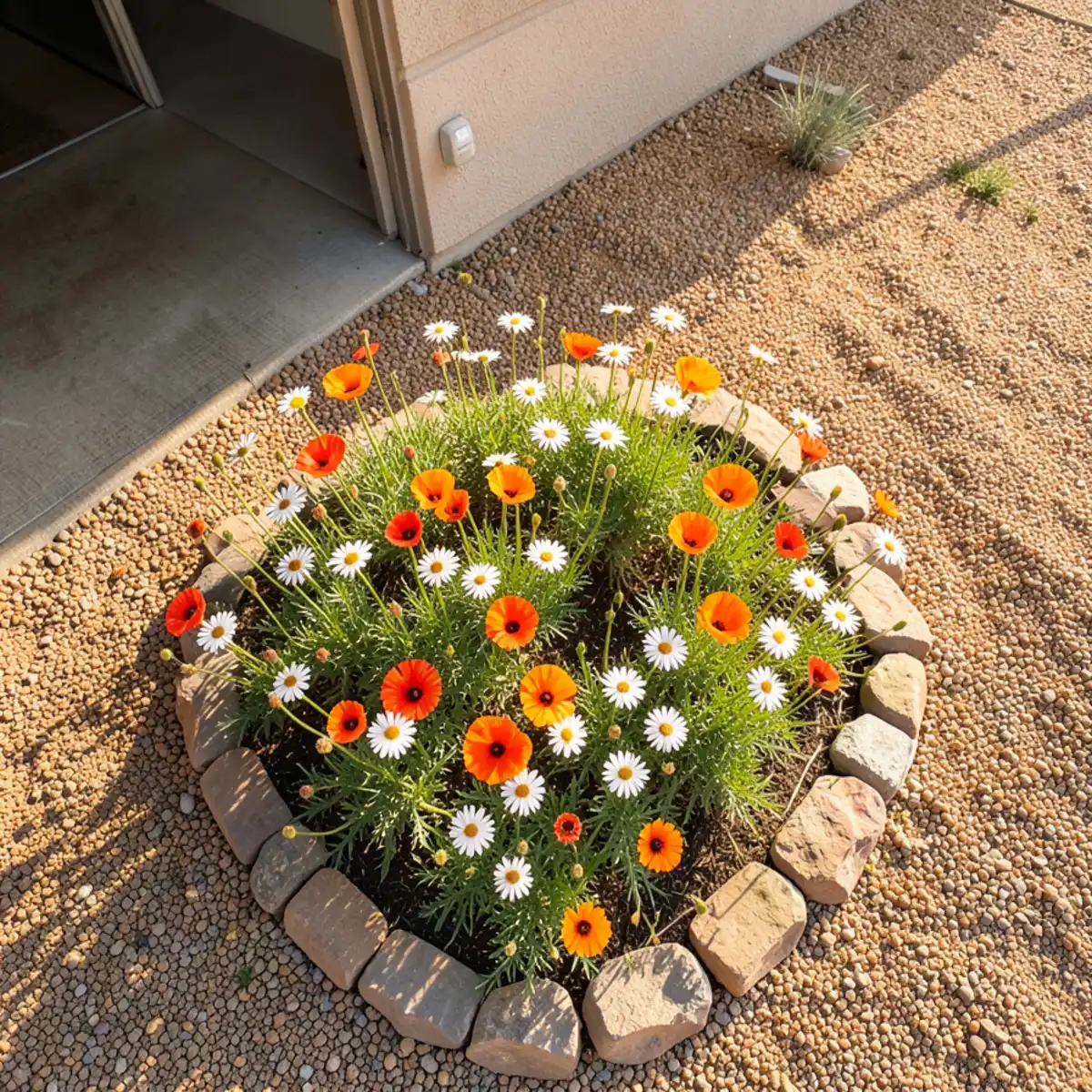
- It stops wanted seed too, so wildflower beds stay out of it.
- It does not belong in vegetable gardens, according to Extension.
- It works less well through plastic or roofing felt, which comes up a lot in gravel yard weed control.
Cost Factors for a Pre-Emergent Service
No price is listed, because Kekoa does not publish one. These factors drive it:
- The size of the treated area.
- How many applications a year you want.
- How much clean-up has to happen first.
- Whether it pairs with a pest visit.
Clean-up usually moves the number most in Tempe. A yard that has already gone green needs that dealt with first, because a pre-emergent has no effect on weeds that are up. Beds to skip take longer to mark and work around. Yards on a fixed spring and fall rhythm are simpler to plan than one-off rescues. A second or third application adds visits, and the label limits how much can go down in a year.
Miss the March or October window and you are paying to spray what a timely application would have stopped.
What the Label Decides on a Pre-Emergent
Rates, sites and repeat rounds. EPA says a label sets who may use a pesticide, where, how, how much and how often, and that going against its directions breaks federal law. States can add stricter limits. Here that means the label caps rates and repeat rounds, names the sites it can go on, sets the watering window and gives any re-entry time. HOA rules on seeded beds or plant lists sit on top, so check yours first.
Why Plan Your Weed Windows With Kekoa
- A Google review mentions Kai dealing with weeds along with pests.
- He sends a reminder the day before, according to customers, which helps on a job tied to a date.
- You hear exactly what to water in and when.
- Customers describe a one man show, so whoever marked your beds is the one who returns.
- Google showed 5.0 stars and 54 reviews at the November 2, 2026 check.
Weed control sits in its own Arizona license category, separate from general pest work, so ask any applicator which one covers the job and confirm it with the state lookup at opm.azda.gov/PCBusSearch.php.
Kai schedules this work in Tempe and around Gilbert, Mesa and Chandler.
5.0★ from 54 Google reviews
What customers say about pre-emergent weed control with Kai
“He leaves a list of all chemicals he has used during his monthly visits. I have used big companies in the past and had to deal with no shows, turnover, price increases, etc. With Kai, you get Kai as he is a one man show.”
“With Kekoa you will get a great company who cares about their clients, does a fantastic job time and time again and won’t jack up the rates once they have you as a client.”
“Kai listens and never fails to address our pest issues and weeds as well.”
Pre-Emergent Weed Control: common questions
When should pre-emergent be applied in the Valley?
Twice a year is the usual pattern, in October for winter annuals and in March for summer annuals. University of Arizona turf specialists set the spring date by soil temperature, around 50 to 55 degrees at 2 inches, which falls at the end of February or early March in Phoenix. Earlier is usually better, because it must be down before seeds move.
How long does pre-emergent last in Arizona?
Plan on a season, not a year. Extension says heat, moisture and microbial activity all affect how long it holds once applied, and a Valley summer brings plenty of all three. That is why the usual schedule uses two applications, with a mid-summer round added where spurge is heavy. The product label states the limits for each one.
Does rain or irrigation activate pre-emergent?
Yes, it needs water to work. Extension says a pre-emergent must be watered in by irrigation or rainfall, and Arizona guidance adds that spring or monsoon rain within one to two weeks gives the best results. Some products have to be watered in sooner than others, and a dry spell in Tempe can leave a product on the surface losing strength.
Can I still seed wildflowers after an application?
No, not in the treated area. Extension warns that pre-emergent chemicals will prevent seeded wildflowers such as African daisy or California poppy from establishing. If you scatter seed every fall, mark those beds and show Kai before anything goes down. He can leave them out. They will then need hand weeding or spot treatment instead.
Does pre-emergent work on gravel?
It works when it reaches the soil beneath the rock and gets watered in. That is why plastic sheeting or roofing felt under gravel causes trouble: Extension says these materials can restrict effective uptake. Applications on rock also have to be even, because most products move very little sideways once they are watered in. Old plastic under your yard is worth mentioning.
Where we offer this
- SurpriseUniversity of Arizona turf guidance points to late February or early March in the Phoenix area, so Sun City Grand and Loop 303 owners should call Kai before the window closes.
- TempeMarch and October windows fit yards here, with 2-inch soil temperature the better guide in an odd year.
- GilbertDrip beds along block walls can water a product in, and show any strip that was missed.
- MesaYards fresh from a lawn conversion start bare, so the next March or October date counts.
- ChandlerAssociation front yards take planning, and any seeded beds must be marked before an application.
- Queen CreekA first-season yard beside vacant lots takes in seed, so the first window matters most.
- Sun LakesGravel lots rely on winter rain and monsoon storms to water product in, so dates follow the forecast.
- ScottsdalePreserve-edge yards with seeded wildflowers need those beds left out of any application.
- San Tan ValleyStorm-wet ground sprouts through young gravel yards, so spring dates matter. It is a long drive, so call first.
Talk to Kai about pre-emergent weed control
Call first. You will reach the owner, not a call center.
Kekoa Pest Control, 2407 E Wesleyan Dr, Tempe, AZ 85282, (209) 563-1650
- 5.0★ on Google (54 reviews)
- Family owned, owner operated
- Serving since 2022