
Weed Control · By Kai Horner, owner of Kekoa Pest Control · Published · Updated
People often buy one product and expect it to do both jobs. It will not. A barrier cannot clear a yard that is already green, and a kill spray cannot stop tomorrow's sprouts. If you only remember one thing, remember that a pre-emergent weed control job happens before you see a problem, and a post-emergent weed control job happens after.
Our weed control page covers the full service. Here we stick to how the two approaches differ and how to use them together.
Pre emergent vs post emergent, compared
| Pre-emergent | Post-emergent | |
|---|---|---|
| Target | Germinating seedlings | Weeds already growing |
| Timing | Before weeds appear | When weeds are young and active |
| What you see | Nothing, if it works | Weeds yellow and die back |
| Water | Needs rain or irrigation to move in | Needs dry leaves after spraying, per label |
| Soil disturbance | Digging or raking weakens it | Not a major concern |
| Persistence | Weeks to months, fading over time | Mostly limited to what the spray touched |
| Main failure | Applied too late | Sprayed on old, stressed or hardened plants |
| Best known use | Late February barrier | Spot work after rain |
How pre-emergent weed control works
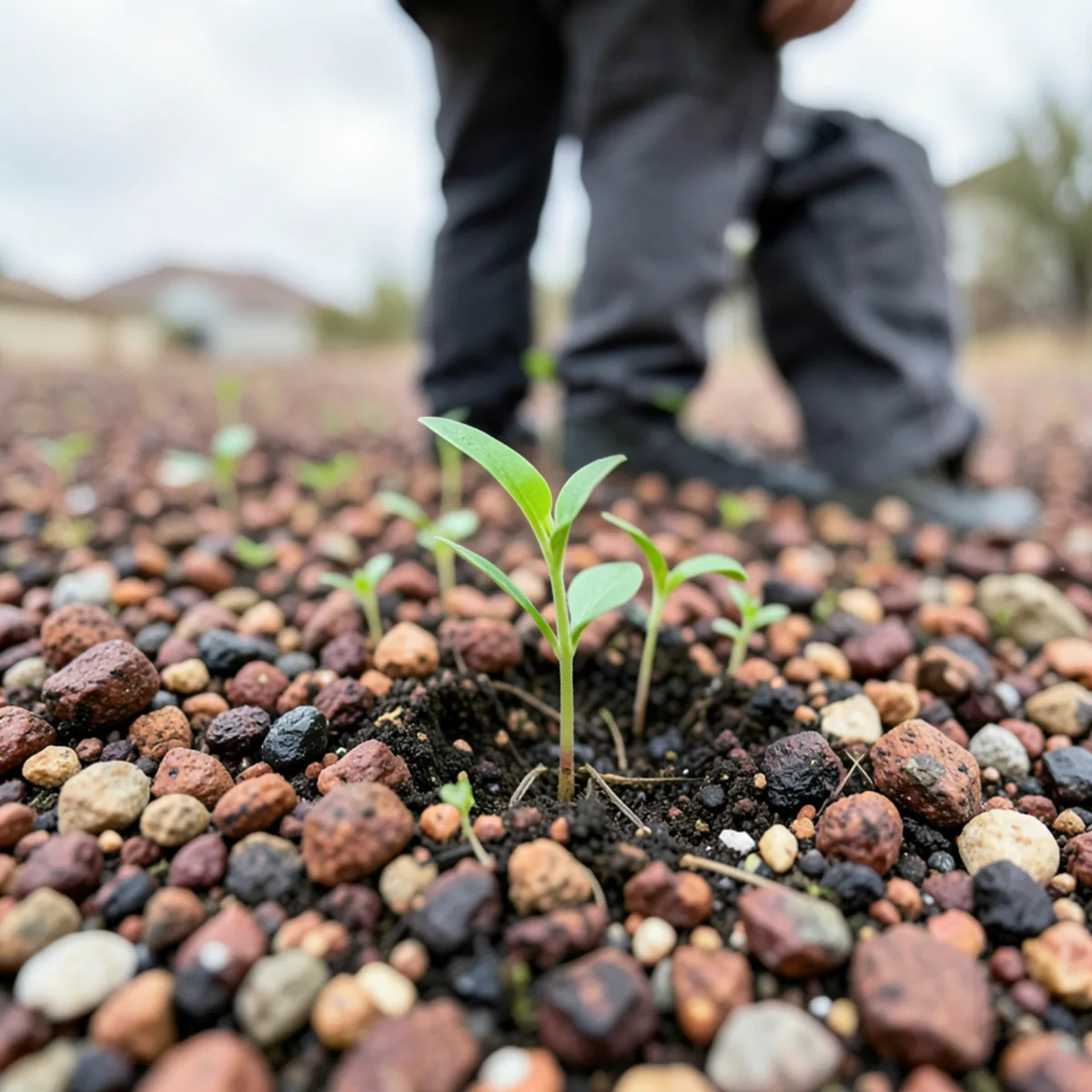
A common belief is that pre-emergents kill seeds in the ground. University of Arizona weed specialists say most do not. They act on seeds that have already germinated, as the new root or shoot takes up the product in the treated layer. That detail explains the rules:
- It has to be in place first. Roots or shoots already established before contact often survive.
- It has to be in the right place. Soil placement decides whether seedlings meet the product. Deep mixing dilutes it and control falls.
- It has to be watered in. Arizona turf research says a watering or a rain has to move the product in, and the allowed wait runs from days to weeks by product.
For the Valley, timing comes down to a short window. Turf guidance lists about February 25 to March 5 for Phoenix, or when soil at 2 inches reaches 50 degrees. In one Extension summary, summer weeds began germinating in March and peaked in June. University of Arizona weed specialists keep repeating the same point: being late, even slightly, costs you the season.
Residual weed control fades. The same summary notes that control declines over time, and that a second round around midsummer can be needed, label permitting. Extension's spurge guide says heat, moisture and microbial activity all affect how long a pre-emergent lasts, so a Valley summer wears on it.
The math explains why people bother. Under good conditions, some spurges can finish their life cycle in as few as two weeks and produce up to 500 seeds per square foot, per that guide. A yard that only ever gets post-emergent is always cleaning up after the last crop.
How post-emergent weed control works
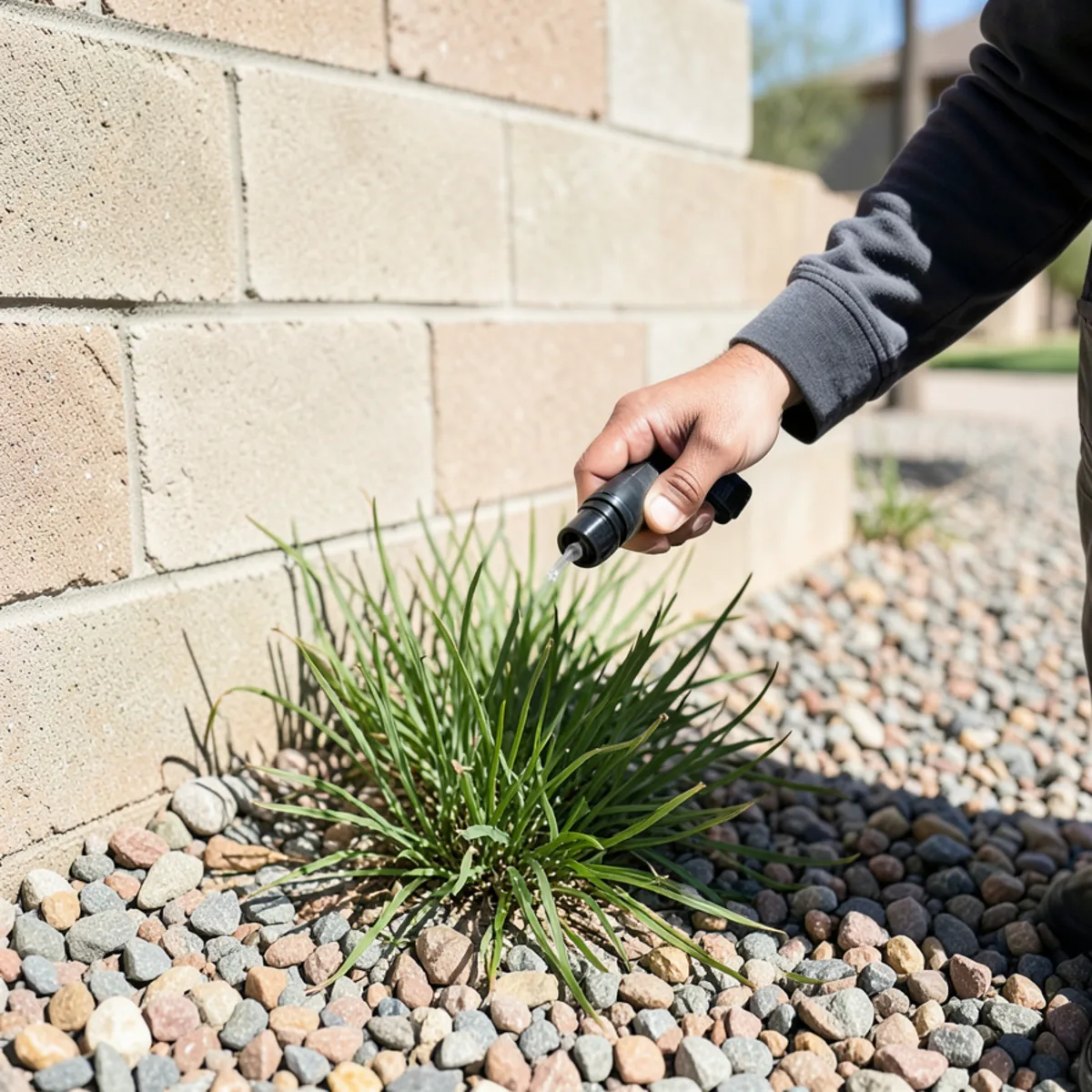
A post-emergent acts on the plant through what it touches. Broadly, products split into selective types, which target certain plants, and non-selective types, which can injure anything green. Some work through the leaf and move inside the plant. Others burn back what they contact.
Size matters a great deal. A small, actively growing weed is easy. A tall, drought-hardened one is not. In a University of Arizona turf trial, post-emergent treatments applied in July performed poorly against established summer grasses, while pre-emergent treatments gave better control. That trial was on turf and is old, so read it as a general lesson: the later you start, the harder it gets.
Some practical habits help:
- Spray young weeds, soon after rain brings them up.
- Avoid windy days, because drift can reach plants you want.
- Follow the label on temperature limits in the summer heat.
- Keep spray off trunks and low growth. Palo verdes have green bark, and that matters.
Why most Valley yards need both
Rain arrives on its own schedule. A barrier reduces the flush and post-emergent cleans up what gets past it, including the weeds that came before the barrier and the ones germinating after it fades. A simple year might look like this:
| Time of year | Pre-emergent | Post-emergent |
|---|---|---|
| Late February | Main barrier | Knock down winter weeds |
| Spring | Water in if dry | Spot spray survivors |
| June to July | Second barrier if the label allows | After first monsoon rains |
| Late summer | None | Before seed heads form |
| Fall and winter | Optional, weather and label dependent | After cool-season rains |
Our weed calendar for Valley yards goes month by month. Lawns are a separate question, because a barrier can stop grass seed from germinating too, and turf tolerance varies by product.
Which tool fits which weed
The answer also changes with the weed in front of you. These are common Valley examples from University of Arizona material.
| Weed | When it comes up | Pre-emergent role | Post-emergent role |
|---|---|---|---|
| Annual spurges | Any time air is above 60 degrees | Spring and again midsummer, per label | Hit it young. Bag dead plants, since seeds may survive |
| White margin spurge | Warm season, perennial | Only on seedlings | Taproot makes it stubborn, so expect repeat work |
| London rocket | Cool season | Fall barrier, ahead of winter rain | Spray or pull before it starts to head |
| Summer grasses such as stink grass | Warm season, from March | Late February barrier | Weak once established, as the July trial showed |
Extension's landscape guidance says pre-emergents usually go down in October and March, just ahead of the rainy seasons. That October round is the one many yards skip.
Mistakes that waste either treatment
Most failures trace back to a few habits.
- Digging or reworking the ground once the barrier is watered in, which breaks up the layer seedlings have to meet.
- Laying pre-emergent over plastic or roofing felt. University of Arizona says those materials restrict uptake.
- Using a barrier where you scattered wildflower seed, because it blocks those too.
- Applying pre-emergent in a vegetable garden. Extension says not to.
- Using long-residual soil herbicides near landscape plants, which Extension also warns against.
- Raking mature spurge across the ground, which spreads its seed.
- Skipping gloves and eye protection around spurge. Its milky sap can irritate skin and eyes.
How Kai chooses for a yard
Kai looks at what is growing, the ground cover and the plants you want to keep. Since reviewers mention him covering weeds too, the two jobs may fit the same visits. Gravel yards with no plantings give the most room. Planted beds and edging near citrus or desert trees call for more care. He follows the label directions and can tell you what was used.
One general note for any provider. Pest management work in Arizona calls for a state business license, and the rule is A.A.C. R3-8-201. A.R.S. 3-3613 gives landscape maintenance workers a limited herbicide exemption, but pre-emergent products fall outside it, so confirm that whoever sprays your yard holds the right license category from the Arizona Department of Agriculture.
This applies from Tempe out to newer gravel-yard neighborhoods in San Tan Valley, which takes longer to reach, so ring ahead about timing.
If February is close or the yard has already turned green, call (209) 563-1650 and ask Kai which treatment fits right now.
Sources
- University of Arizona Cooperative Extension: Preemergence Herbicides (2022)
- University of Arizona Turfgrass: Preemergence timing and summer annual weeds (Turf Tips, February 1997)
- University of Arizona Turfgrass: Preemergence control in low desert valleys (January 1994)
- University of Arizona Turfgrass: Late February or early March timing (February 1999)
- A.R.S. 3-3613: Weed management exemption and limits
- A.A.C. R3-8-201: Activities that require a license
- University of Arizona Cooperative Extension: Managing Spurge in the Landscape, Garden and Turf (AZ1572)
- University of Arizona Cooperative Extension: Converting Turf to a Xeriscape Landscape (AZ1371)
About the author
Kai Horner owns and runs Kekoa Pest Control, a family-owned pest and weed control business based in Tempe, AZ, serving the East Valley since 2022. More about Kai