
Bee & Wasp Removal · By Kai Horner, owner of Kekoa Pest Control · Published · Updated
A bee quote can seem to vary wildly between neighbors, and the reason is almost always location. This post walks through the main job types and what shapes the bill, so a homeowner in Mesa or Tempe can read a quote for bee and wasp removal and know what it covers.
Why bee removal cost in Arizona varies so much
Three things drive most of the difference. These are how easily the bees can be reached, whether they have built comb, and what has to be repaired or closed afterward. A cluster on a low branch has none of those problems. A two-year-old colony in a second-story soffit has all three.
University of Arizona Extension says a swarm that has settled builds comb and rears brood, and workers grow more protective. So time works against you. A job looked at early tends to be a simpler job.
| Situation | What shapes the cost |
|---|---|
| Resting swarm, low branch | Quick access, no comb, may leave alone in 24 to 72 hours |
| Swarm on a wall or post | Height, nearby people, cleanup |
| Colony in a tree or shed | Comb volume, access, disposal |
| Colony in a block wall | Finding the entry, reaching comb, closing holes |
| Colony in a stucco wall or attic | Opening the structure, comb removal, repair by another trade |
| Meter or valve box | Ownership, tight access, screening the lid |
| Roofline or soffit | Ladder work, roof access, sealing |
Swarm, hive or wall: three very different jobs
A swarm has no home and no comb. It may not need removing at all, since the university says swarms usually move within 24 to 72 hours. Pay for removal when it blocks a doorway or sits near someone with an allergy. Some beekeepers collect swarms, and the Arizona Beekeepers Association keeps a list.
A hive in the open means a colony in a tree, shed or stack of pallets. Comb and brood are present and the bees will defend it. Protective gear, more time and careful disposal all add to the work.
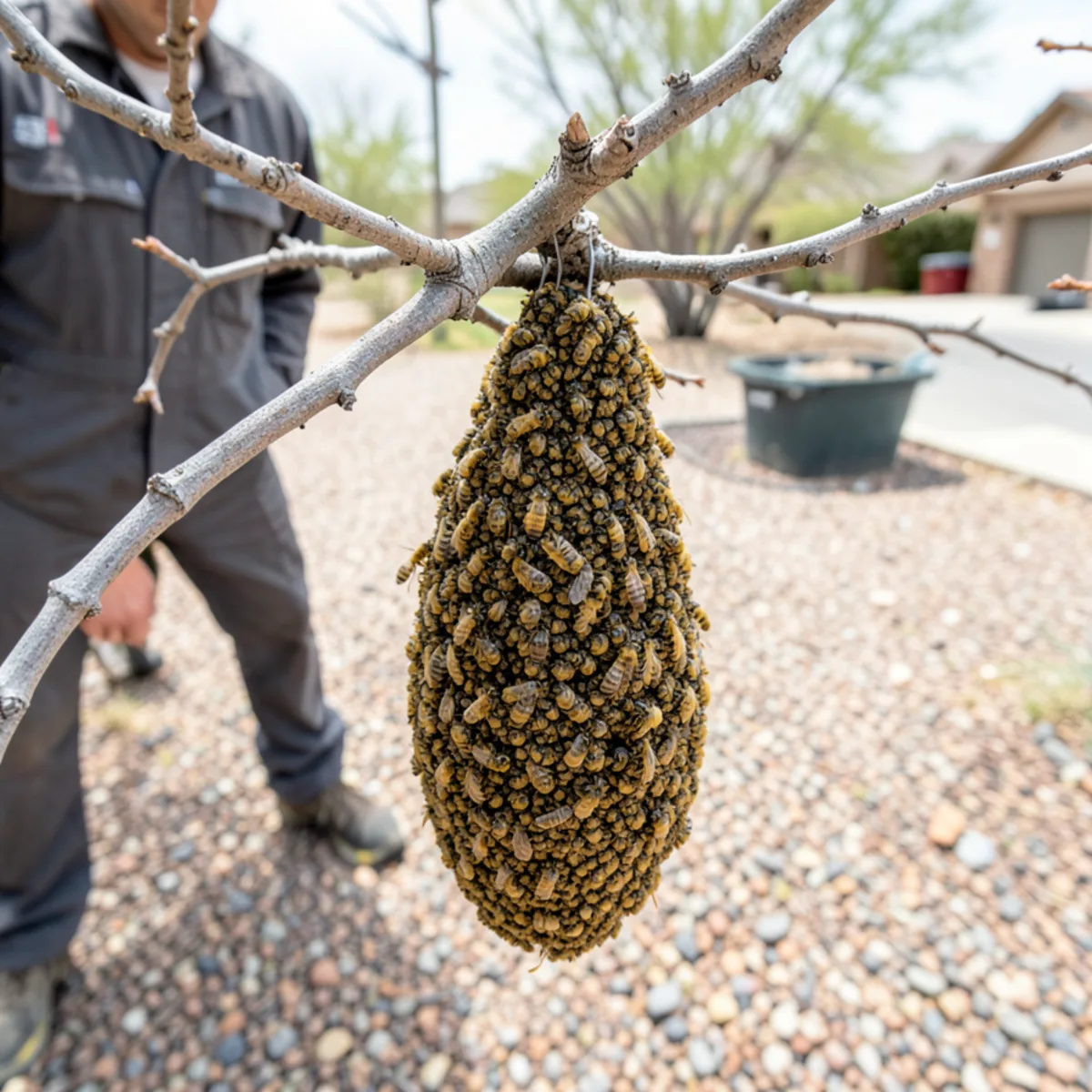
A wall colony is the expensive case, because the job does not end when the bees are gone. Comb holds honey and wax, and leaving it behind invites problems. The same publication says the void should be cleaned out completely and entry points sealed, or new swarms will move back in.
The cost to remove bees from a wall
This is the part people underestimate, so ask each company to explain its plan step by step. A good quote addresses each of these points in writing:
- How the colony's position will be found.
- Whether the wall must be opened, and from which side.
- What happens to comb and honey.
- Who repairs the stucco, drywall or block.
- How the entry point will be sealed.
- What is excluded from the price.
Do not seal the hole first to save money. The university warns against filling a gap while bees are moving in and out of it, and trapped bees may find a way into your rooms. Also be wary of any offer that sounds cheap because it skips comb removal.
The bee job people pay for twice
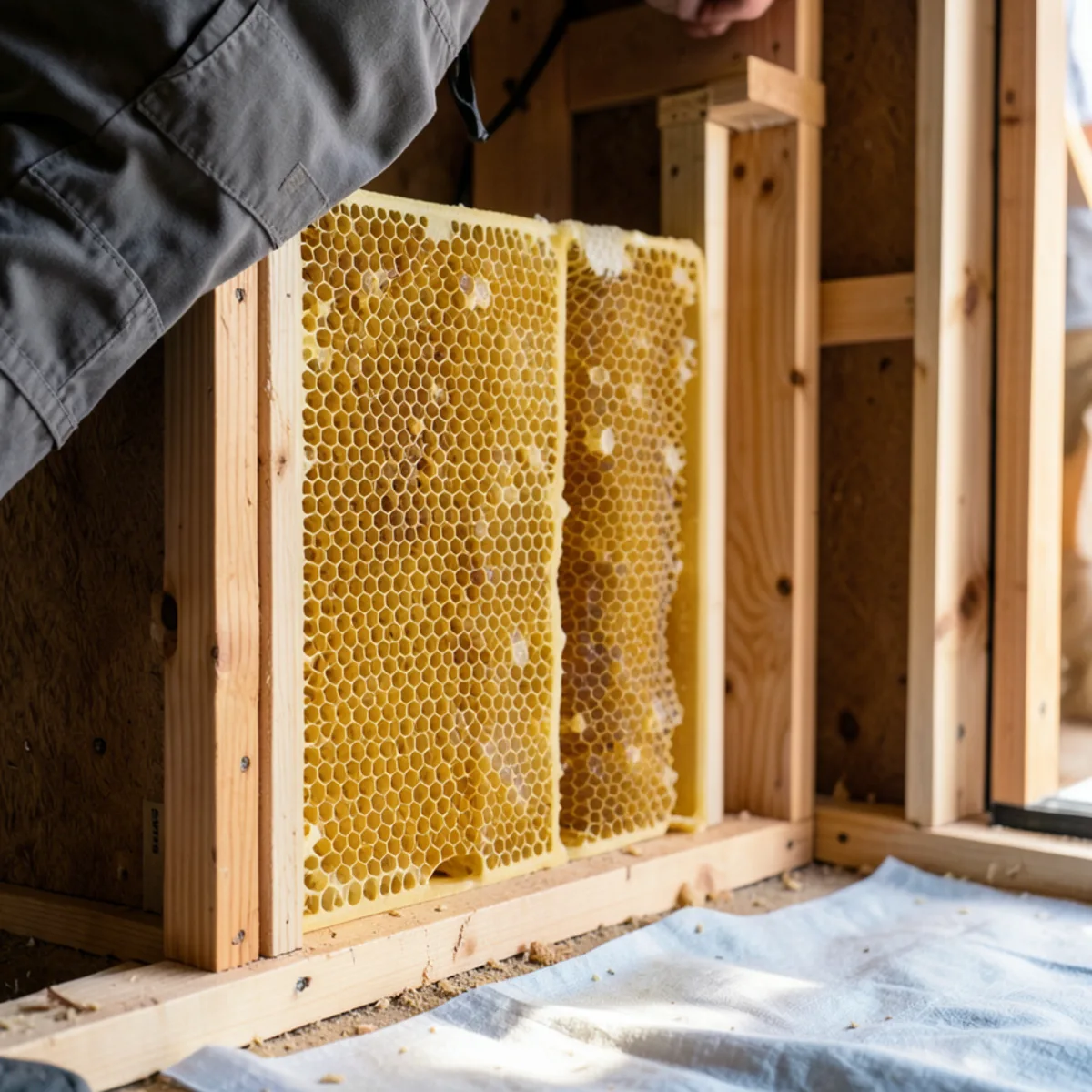
The first invoice is rarely the whole cost. Each shortcut below has a price that turns up later, so weigh it against the saving.
| Shortcut | What it can cost you later |
|---|---|
| Bees removed, void left dirty | New swarms move into the same space, the university says |
| Entry point left open | Scouts can find the same gap the next season |
| A can of spray first | The university does not recommend sprays on swarms or colonies |
| Waiting for a slow month | More comb to remove, and the university says sting risk rises once brood are present |
After any removal, ask how to avoid hosting the next swarm. University of Arizona Extension tells residents to put that question to whoever does the work. Its own list is inexpensive: seal holes of 1/8 inch or larger, fit mesh over rainspouts, chimneys and water meter boxes, repair outdoor leaks, and remove hollow yard items such as overturned clay pots.
Meter box and roofline bee removal
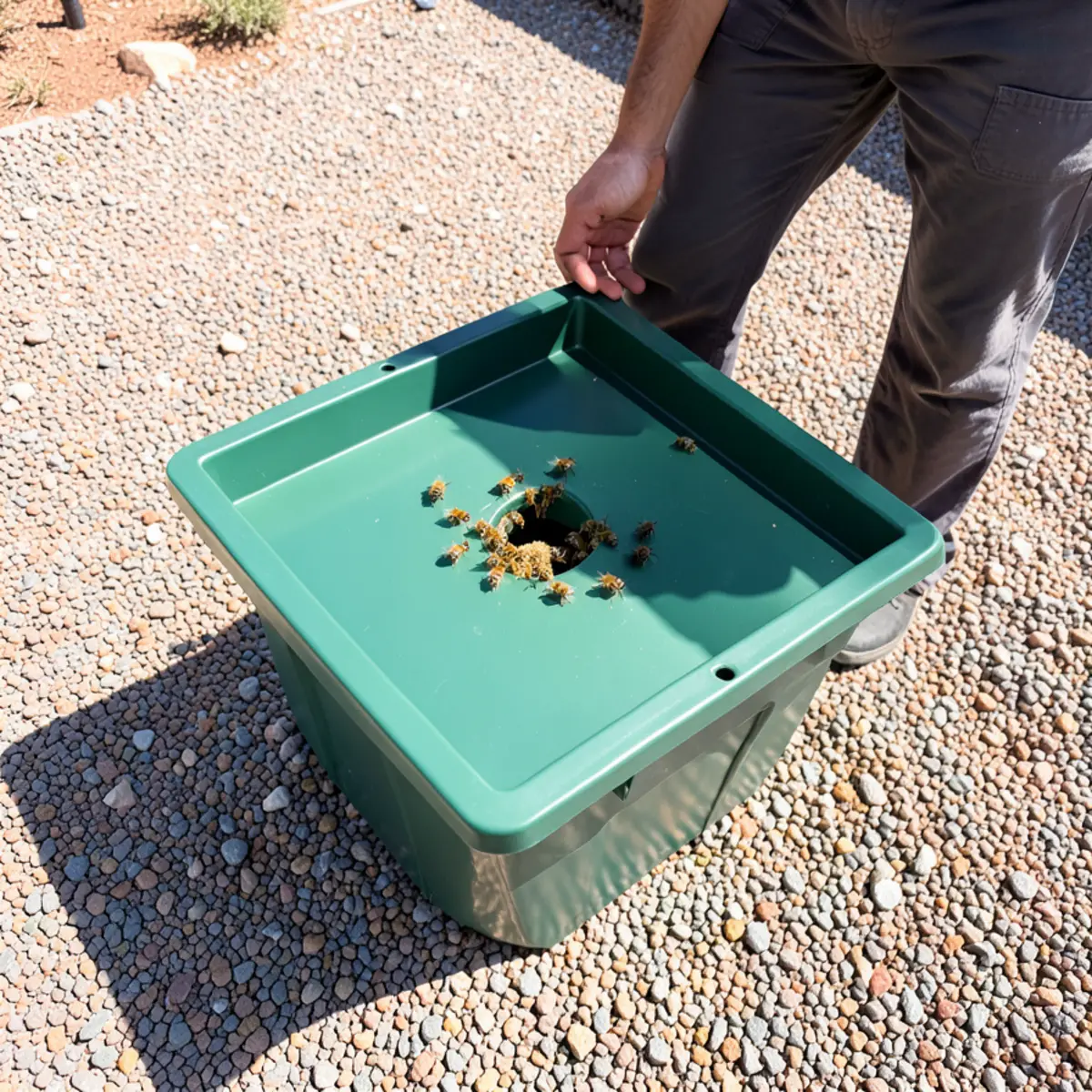
Boxes in the ground bring a question that walls do not: who owns it? Chandler handles non-threatening bees in city-owned water meters and valve boxes and asks residents to verify ownership first. Mesa lists a separate number for bees on water meters. A sprinkler valve box on your side of the line is likely yours. Read more on meter box bee removal before you pay anyone.
Maricopa County Vector Control is another name you may come across. Mesa's page says the county can destroy a wild hive or swarm that poses a health hazard under A.R.S. 36-601, and it still sends people with bees on private property to a private exterminator.
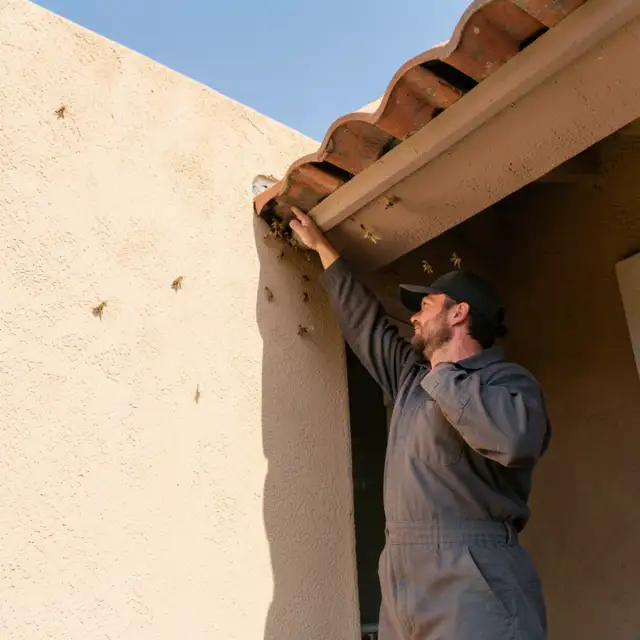
A roofline job is mostly about access. Height adds time and risk, and tile or foam roofs may need extra care. If the entry point is above a patio or walkway, expect extra steps to keep people clear.
Wasp nest removal cost, for comparison
Wasps are usually a smaller job than bees. Paper wasp nests are often exposed and hold no honey, so there is no comb problem in the wall afterward. The factors are height, the number of nests, and whether the nest is inside a void. Many people lump these in with bee calls, so describe what you see. If you can see the nest from a distance, take a photo and send the details when you call.
What to have ready before you ask for a number
A useful first conversation needs only a few facts. Gather these from a distance, without going near the entry point:
- Where the bees go in, and roughly how high off the ground
- When you first noticed them
- A photo taken from well back, or through a window
- What sits below the entry: patio, walkway, pool or play area
- Anyone in the home with a bee allergy
- Whether anyone has already sprayed, plugged or opened the spot
- Whether you own, rent or share the wall with a neighbor or HOA
That last one matters more than it seems. Mesa says the owner or occupant carries the cost on private property, so a renter should settle who is paying, in writing, before anyone books the work.
Questions that make quotes comparable
- Is this a fixed price or an estimate based on what is found?
- Does the price include comb removal?
- Is sealing included, and with what material?
- Is there a charge if the job needs a second trip?
- Who handles repairs?
Arizona requires pest management businesses to hold a license from the Arizona Department of Agriculture Pest Management Division, and it is worth checking any company at the state's license search. The university also recommends experienced beekeepers or pest professionals, and it is firm that residents should not try to remove colonies themselves.
How Kai looks at a bee quote
Kai's view is that the price should follow the facts: where the bees are, how long they have been there, and what the job will leave behind. A photo from a safe distance and a rough date help more than anything else on a first call. That is also the honest way to tell you when a swarm may not need anyone at all.
Customers describe a man who explains what he is doing and how to prevent problems. For what the work involves, see the page on bee removal. Hours are Monday to Friday 6 to 5 and Saturday 8 to 12.
Want a straight answer on your bee problem? Call (209) 563-1650 and describe what you see.
Sources
About the author
Kai Horner owns and runs Kekoa Pest Control, a family-owned pest and weed control business based in Tempe, AZ, serving the East Valley since 2022. More about Kai