
Bee Removal in Tempe, AZ
Bee removal in Tempe, AZ depends on one thing first: is this a resting swarm or a hive with comb? Stay well back, do not disturb them, and call (209) 563-1650. A swarm in a quiet corner may simply leave, while bees going in and out of a wall need a proper removal.
- 5.0★ on Google (54 reviews)
- Family owned, owner operated
- Serving since 2022
Bees are one half of Kekoa's bee and wasp removal work, and they are the half that can live inside your house. A few honey bees on the lantana are nothing. A stream of them at a stucco crack is. This page is about telling those apart, and what happens when a hive has to come out.
Signs You Need Bee Removal in Tempe, AZ
Look from a distance, ideally through a window. These are the signs that matter:
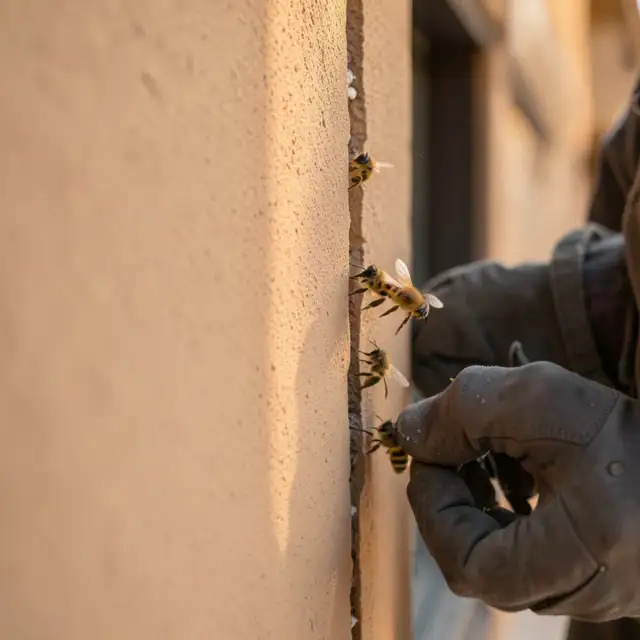
- Bees flying in and out of one spot, again and again: a crack, a vent, a gap under roof tile, a hole in a block wall.
- A buzzing sound behind a wall or ceiling.
- A dark, greasy stain forming around an opening, which comes from constant traffic.
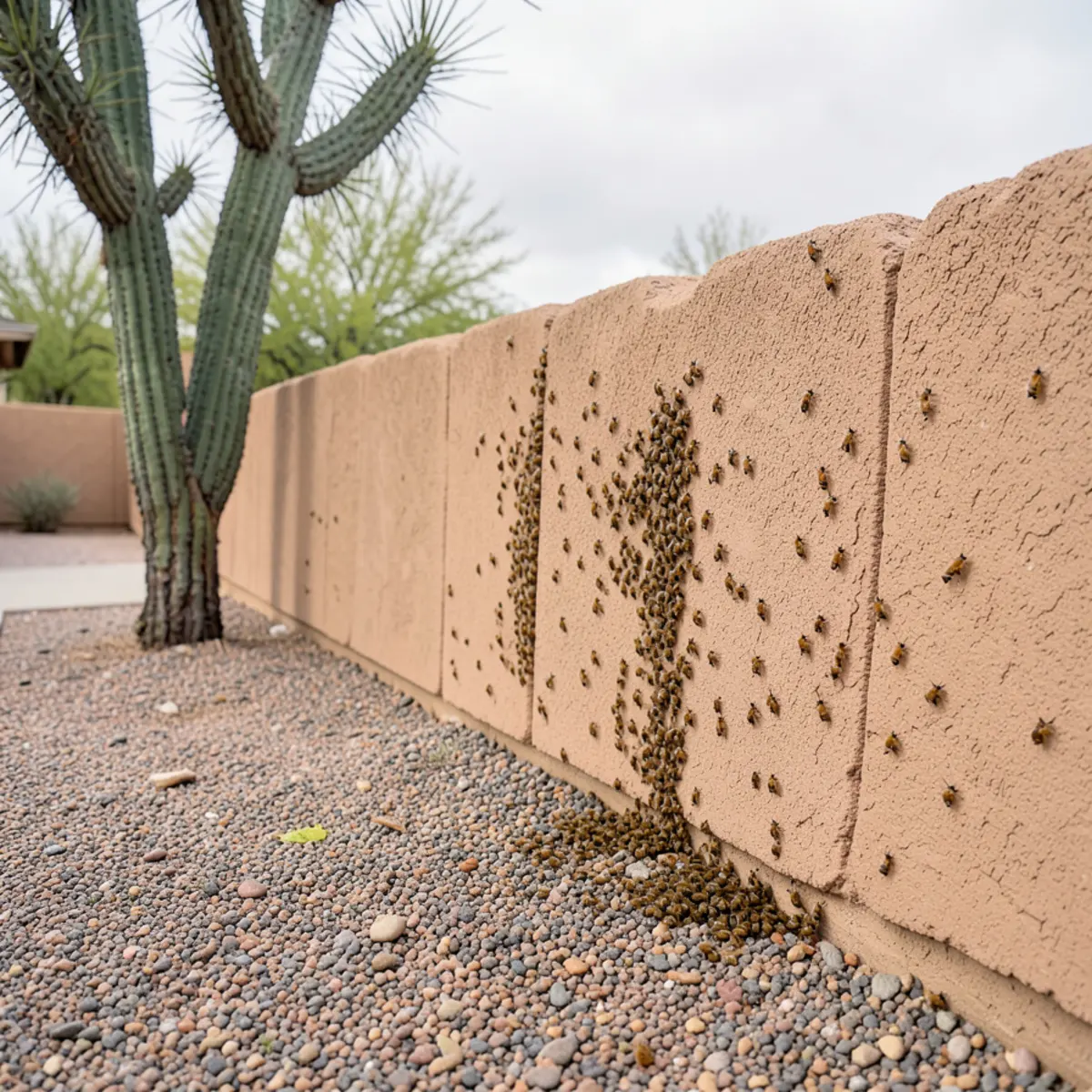
- A cluster the size of a ball or larger that showed up suddenly on a branch, post or wall.
- Bees bumping you or following you near one part of the yard. Treat that as a warning and leave.
The first three point to an established colony. The fourth is a swarm. The last means bees are defending something close by, and it belongs on the Africanized bee removal page.
Why Do Bees Pick Tempe Walls and Roofs?
A swarm wants a dry, enclosed space it can defend, and a Valley neighborhood is full of them. University of Arizona Extension names hollow-block walls, wall voids, attics, crawl spaces and in-ground irrigation boxes among the sites honey bees use around buildings. Extension's advice is to fill any hole of 1/8 inch or larger, which shows how small an opening is worth closing.
Water and food finish the appeal. Dripping hose bibs, leaky irrigation, bird baths and pools keep bees close through a dry summer, and flowering landscape plants feed them. Spring is the main swarm season, but Extension says swarming continues through the year while pollen and nectar hold out.
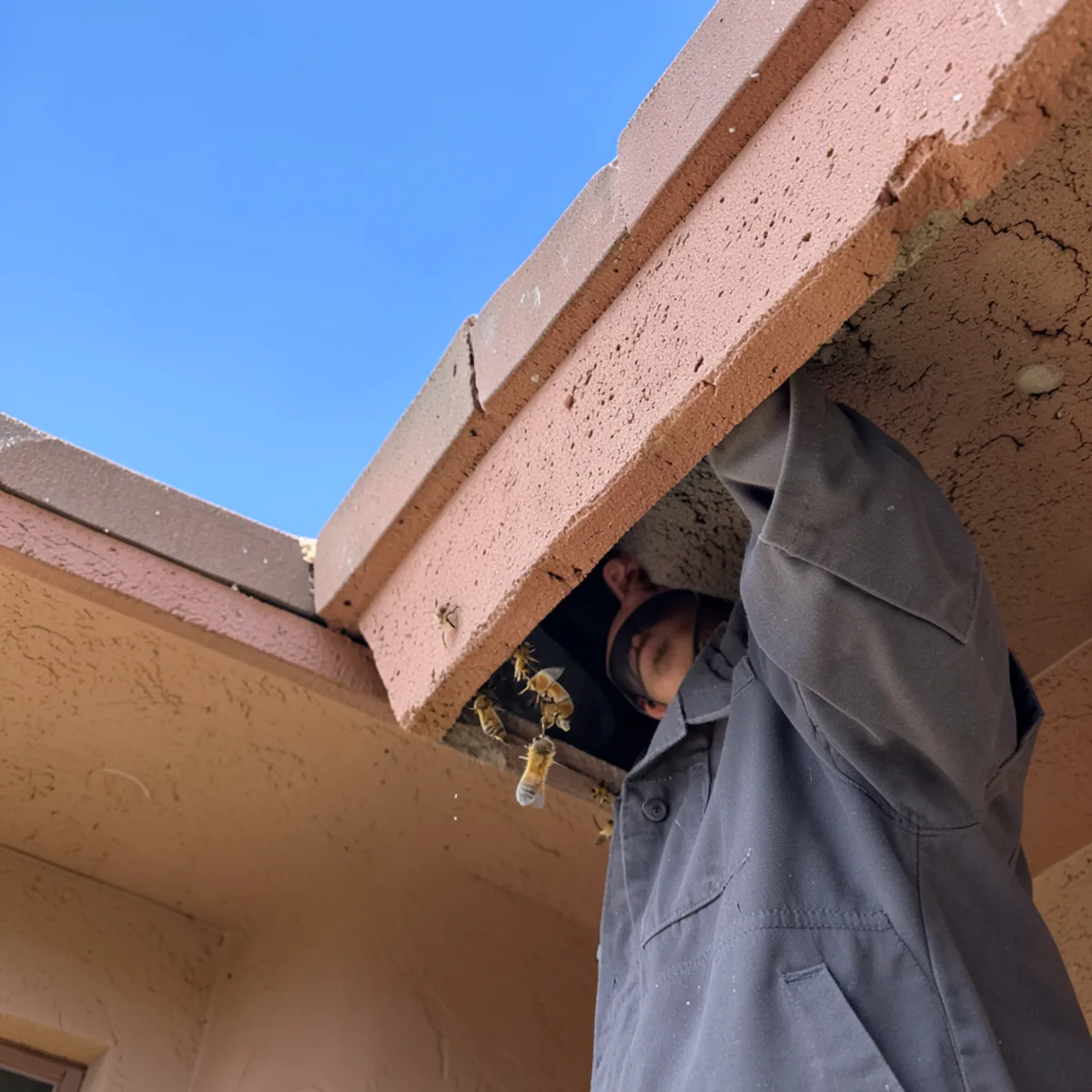
Bees in a roof are usually using a gap at the eave, a vent or space under tile. Walking the roof to look is a bad idea, since a startled colony and a ladder do not go well together.
Is It a Resting Swarm or a Hive in the Wall?
Honey bee swarm removal and beehive removal are different jobs, and the difference decides what you do tonight.
A swarm has left its old colony with a queen and is waiting while scouts find a home. It has no comb and no brood. Extension says swarm bees are not generally defensive, and they will not be going in and out of a cavity. A swarm on a back fence often needs caution tape and patience. One hanging at your front door, or over a walkway the neighbors use, may need to be removed.
A hive is a settled colony with comb, honey and young to defend. It will not leave because you waited, and Extension says the workers become more protective as soon as brood rearing starts.
Prefer to write? Request a quote
Calling is fastest. If you are on a job or at work, leave your details and Kai will get back to you.
What Bee Removal Includes
The job runs from finding where the bees really go in to telling you how that opening gets closed.
- Identification from a distance, so you know it is honey bees and not yellowjackets.
- Tracing the entry point and estimating where the comb sits.
- Treatment or removal in protective gear, following label directions.
- Reachable comb taken out.
- Clean-up of the cavity as far as the structure allows.
- A clear account of what still needs sealing, and by whom.
Repairs to stucco, drywall and tile fall outside this.
Treatment or Full Removal: The Trade-Offs
There are two broad routes for a colony, and neither suits every wall.
Treatment without opening the structure is less invasive, and may be all that is reachable. The trade-off is that comb and honey stay behind. Honey left in a wall can draw other pests, and the scent makes the cavity attractive to the next swarm.
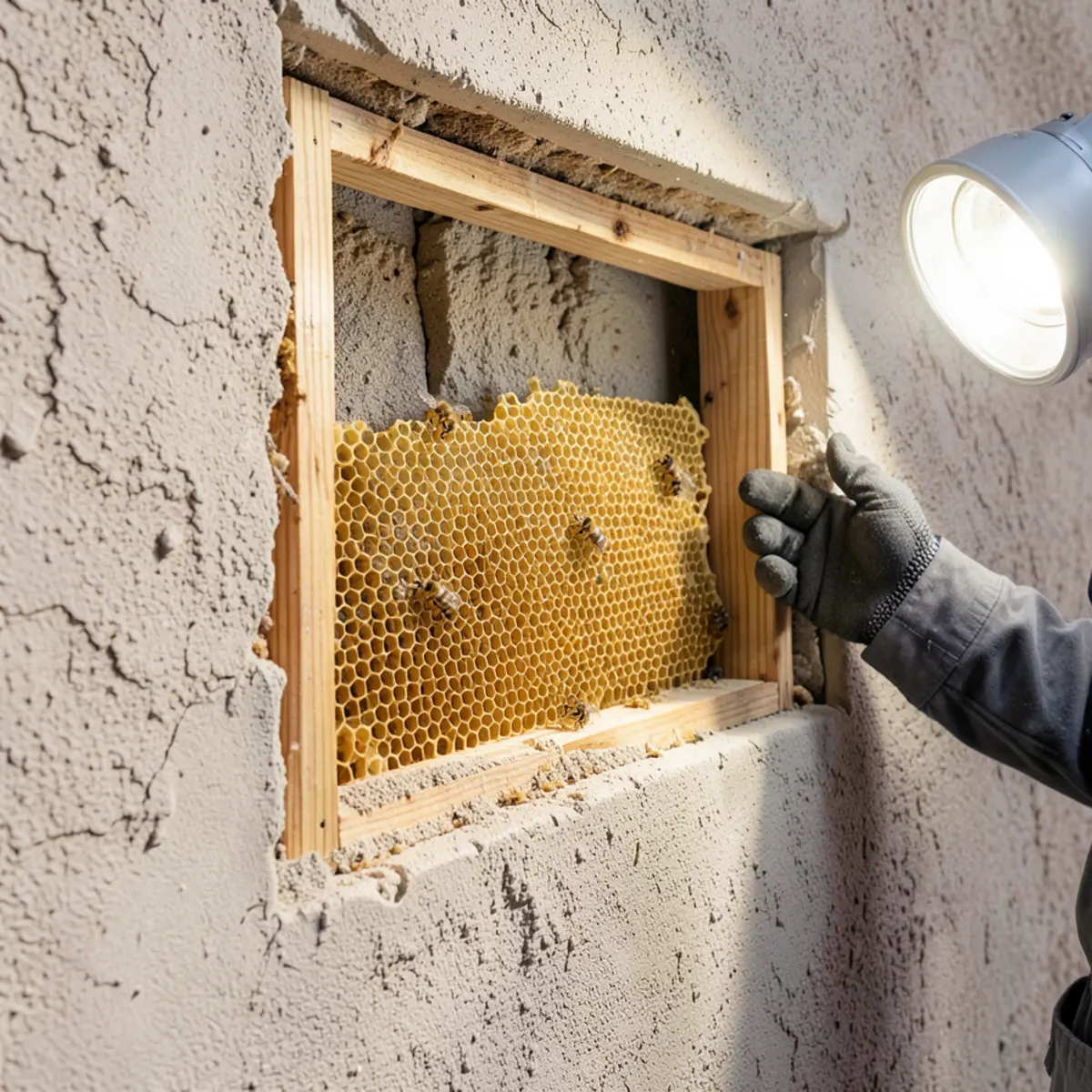
Treatment with comb removal means opening enough of the wall, soffit or box to take the comb out and clean the void. It costs more and leaves a repair, but it deals with what Extension is warning about when it says a colony's cavity must be cleaned out completely.
Kekoa does not promise live relocation. If keeping the bees alive matters to you, raise it on the phone before anything is scheduled. Extension's publication points people to the Arizona Beekeepers Association at azbeekeepers.org for a list of beekeepers who may be able to help.
What Happens on a Beehive Removal Visit
- Kai looks at the site from the outside first, watching flight paths to find the real entry point.
- He checks what is nearby: doors, a pool, neighbors, pets, foot traffic.
- He tells you where the comb probably sits and which route makes sense.
- You keep the household and pets indoors with doors and windows closed.
- The colony is treated or removed in protective gear, following label directions on anything applied.
- Reachable comb comes out, the area is cleaned up, and Kai shows you the entry point and what needs sealing.
Expect some bees around the spot for a short while afterward, since foragers return to a home that is no longer there. Keep clear until Kai says the area is settled.
What Drives Bee Hive Removal Cost in the East Valley?
No price is published here, because a quick swarm and a hive in a second-story soffit have little in common. These are the factors:
- Swarm or established colony, and how long the colony has been there.
- Where the comb sits: yard structure, block wall, wall void, roof or attic.
- Height, ladder access and how much opening up is needed.
- How much clean-up the void needs after comb comes out.
- Who does any repair. Stucco, drywall and tile work may need another trade.
On Tempe homes, comb in a hollow block wall is reached differently from comb in a framed stucco wall, and concrete tile slows any roofline job. A colony left through a season is usually bigger to clear, so waiting rarely saves money.
Who Pays, and Who Else Can Step In
Bees on your own land are usually your bill. Maricopa County Vector Control works out the responsible party on feral bee complaints, and its brochure sets a useful test: call a pest control company if a honey bee swarm stays longer than 24 hours. Extension allows up to 72 hours, so weigh how close it sits to people. Renting? The brochure says to start with your landlord. Mesa spells out that the owner or occupant pays, whether a beekeeper or an exterminator does the work.
After the Bees Are Gone
Most of this comes straight from Extension:
- Fill holes 1/8 inch or larger in walls, rooflines and around foundations, but only once no bees are using them.
- Put mesh screening over rainspouts and chimneys.
- Fix dripping taps and irrigation leaks.
- Clear overturned pots and similar shelters from the yard.
- Look over the house from a few yards back each warm-weather month.
If wasps are the next problem on the list, see wasp and hornet control.
Why Homeowners Call Kekoa for Bees
- Kai is the owner and the exterminator, so nothing gets lost between a sales call and a stranger at your door.
- Reviewers value hearing what he found and how to head off another colony.
- A day-before reminder and punctual arrival, both reported by customers, help when you need the house closed up.
- A Sun Lakes customer says on Google that he responds to emergency situations immediately. Whether he can get to you today is something he will tell you straight when you call.
- Google lists a 5.0 rating across 54 reviews on November 2, 2026.
Before hiring any company for this work, look it up. The Arizona Department of Agriculture's Pest Management Division issues the state license these businesses need, and its search page is opm.azda.gov/PCBusSearch.php.
Kai covers Tempe and nearby cities including Mesa, Gilbert and Scottsdale from his Wesleyan Drive base.
5.0★ from 54 Google reviews
What customers say about bee removal with Kai
“He responds to emergency situations immediately! And the best part of working with Kai is that he is the most genuine, friendly and competent contractor we have worked with in our 18 years in Sun Lakes!”
“I was experiencing cockroaches in my new home and they were here the next day. Very professional and quick service”
“We have had monthly pest control services which have kept the scorpions and other bugs away, as well as mice and hornet abatement on a few occasions.”
Bee Removal: common questions
What should I do when a swarm lands in my yard?
Stay away from it and keep kids and pets inside. University of Arizona Extension says it is often enough to mark the area off-limits until the queen flies again, so a swarm on a back fence may need nothing more. If it hangs over a gate, patio or walkway that people must use, call (209) 563-1650 and describe the spot.
Why does a hive inside a wall need to be removed?
A colony in a wall keeps growing and turns protective once it is raising brood, which Extension says makes stings much more likely. Nest building can also damage the structure. Sealing the hole with bees still using it is the wrong move: Extension says not to fill voids with bees moving in and out, because the colony needs dealing with first.
How long does a swarm usually stay in one place?
Usually one to three days. University of Arizona Extension gives 24 to 72 hours, and the City of Mesa says a few hours or days. Scouts are out looking for a home the whole time. That is the reason to check your eaves and vents while you wait, from a distance, in case those scouts pick your house.
Do you seal the opening after removal?
Sealing is part of finishing the job properly, and how it gets done depends on what the opening is. Extension says the cavity should be cleaned out and entrance points sealed, or new swarms will recolonize. Kai will look at the opening and say what he can close himself and where a wall, stucco or roof repair needs another trade.
Can a wall colony just be left alone?
Not when it sits beside a door, patio or busy side yard. A colony in a far corner of a shed is a calmer conversation, but it will not fix itself, and wild colonies in Arizona are treated as Africanized to some extent. Mowers and blowers near the entrance can set them off. Have it looked at before your next yard day.
Are carpenter bees part of bee removal?
Usually they are not a removal job. Extension calls the valley carpenter bee a gentle giant, a little over an inch long, and says most native bees are beneficial or benign. They do not form the big defended colonies honey bees do. If you see a large black bee at a flower, leave it be. A steady stream at one hole is what to report.
Where we offer this
- TempeOlder stucco and hollow block walls give swarms enclosed voids a few minutes from Kai's base.
- MesaBees in a private wall or shed are the owner's or occupant's bill, per the city's bee page.
- GilbertDrip beds and turf on old hay ground keep water close to the new block walls swarms scout.
- ScottsdaleRoof tile gaps and wall voids sit within reach of the Greenbelt's lakes, a steady summer water source.
- ChandlerOcotillo's reclaimed-water lakes and irrigated common areas keep bees close to roofs and block walls.
- Apache JunctionMobile homes are much of the housing, and the county names the space beneath them as a nest site.
- Queen CreekWorking farms and U-pick gardens keep bees foraging near homes, and new walls offer fresh voids.
- Paradise ValleyOne-acre lots leave sheds, walls and pool pads far from the house, so colonies can grow unnoticed.
Talk to Kai about bee removal
Call first. You will reach the owner, not a call center.
Kekoa Pest Control, 2407 E Wesleyan Dr, Tempe, AZ 85282, (209) 563-1650
- 5.0★ on Google (54 reviews)
- Family owned, owner operated
- Serving since 2022