
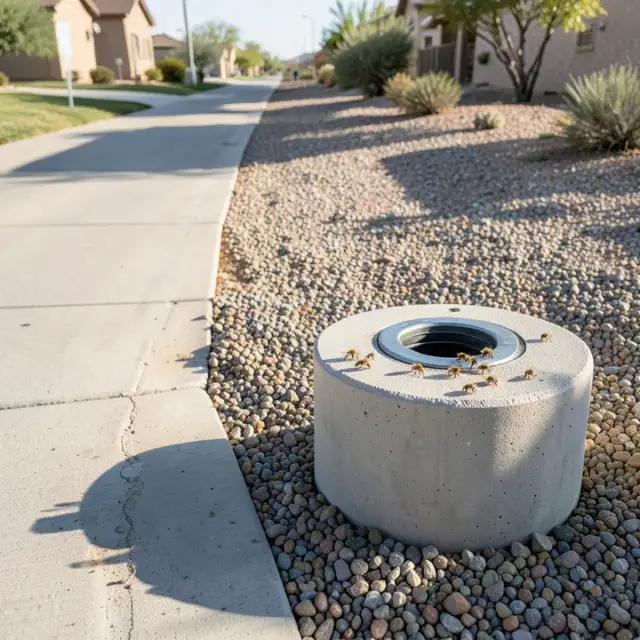
Meter & Irrigation Box Bee Removal in Tempe, AZ
Bees in a water meter box in Arizona are a real hazard, because the box sits right where people walk and read meters. Do not lift the lid. In Mesa, the city lists its own line for bees at water meters. For irrigation and valve boxes on your Tempe property, call (209) 563-1650.
- 5.0★ on Google (54 reviews)
- Family owned, owner operated
- Serving since 2022
A box in the ground is one of the most awkward places for a colony, and it is part of Kekoa's bee and wasp removal work for that reason. The comb sits at ankle height, right beside a sidewalk or driveway, and the first person to find it is often whoever lifts the lid.
Why Are There Bees in a Water Meter Box in Arizona?
Bees want a dark, dry, defensible cavity with one small way in, and a utility box checks every one of those boxes. University of Arizona Extension lists in-ground irrigation boxes with block walls and wall voids as the sites wild honey bees use, and its own publication shows bees moving in through the hole in a lid.
The Valley makes it easier. Irrigation valves often weep, and water close to the nest is valuable in a dry climate. Every lot on a street has at least one box, so scouts have plenty to inspect.
Other containers count too: utility pull boxes, backflow covers, sprinkler control enclosures, and pool equipment covers.
How Do You Know Bees Have Moved In?
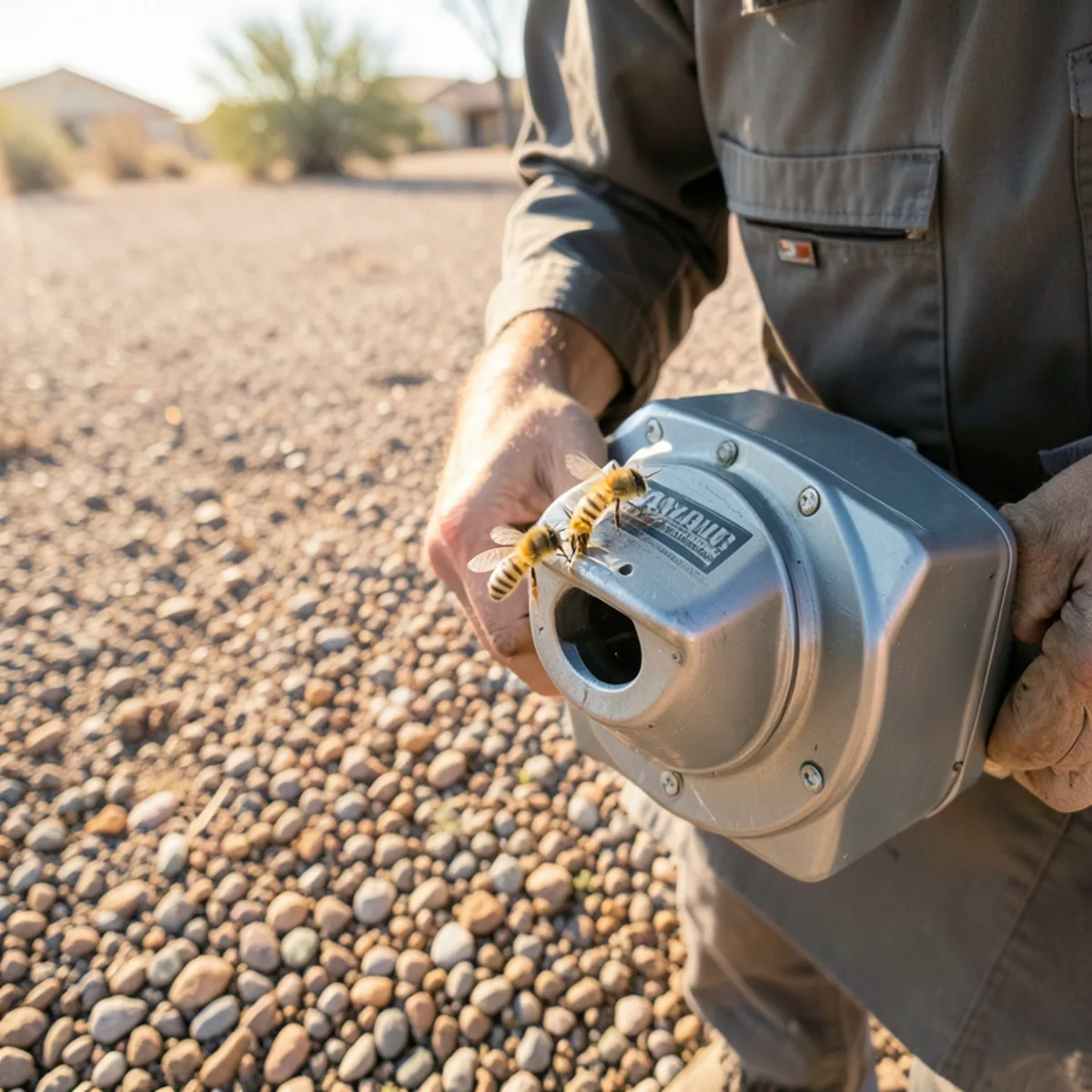
Do not lift the lid to check. These signs are visible from a few yards back:
- Bees flying in and out of the lid hole or the gap at the edge of the box.
- A steady flight path across your yard, low and in one direction.
- Bees on the sidewalk or gravel around the lid.
- A meter reader or landscaper reporting bees.
- Bees bumping you as you walk past the spot.
If it is a cluster sitting on top of the lid with nothing going in, it may be a resting swarm, and that often moves on within a few days. A colony inside a box stays.
Who Do You Call? Start With Who Owns the Box
This is the first question on any of these jobs, and the answer changes by city.
| Situation | Who to call |
|---|---|
| Bees at a City of Mesa water meter | Mesa's listed line, 480-644-2221 |
| Bees on Mesa-owned property | 480-644-4321 (the city notes exceptions) |
| Bees in a Mesa park | 480-644-2262 |
| Anyone being attacked | 911 |
| Irrigation or valve box on your property | Your choice of private company; the owner or occupant pays in Mesa |
| Meter box in Tempe or another city | Your water provider first, then a private company if they send you back |
These Mesa numbers come from the city's bees page, so check there in case they change. Kekoa does not speak for any city. Tempe, Chandler and Gilbert residents should ask their own water department who takes care of a meter box, because bees in a utility's box are not always yours to deal with. Once you know it is on your side, Kai can take the call.
If nobody will claim a box, Maricopa County Vector Control says it investigates feral bee complaints to find the responsible party. It is not an emergency service, so bees attacking someone remain a 911 call.
Prefer to write? Request a quote
Calling is fastest. If you are on a job or at work, leave your details and Kai will get back to you.
What a Box Removal Includes
A box job has a tighter scope than a wall job. It covers:
- Confirming what is in the box, from a distance, and who owns it.
- Treatment or removal of the colony, as the label directs.
- Comb cleared off the lid, walls and fittings.
- Honey and wax cleaned out, so the scent does not call in the next swarm.
- Advice on mesh, lid fit and weeping valves.
Work on a utility's meter stays between you and your water provider. Valve and irrigation repairs may need your landscaper or a plumber, and Kai will say so if he sees one.
Getting Bees Out of an Irrigation or Valve Box
Compared with a wall, a box is reachable. That helps with the work and raises the risk, as the colony is close to people and at ground level. Extension warns that established colonies may respond in large numbers if provoked. Before Kai arrives, keep the walkway clear and let neighbors know.
There are two usual routes:
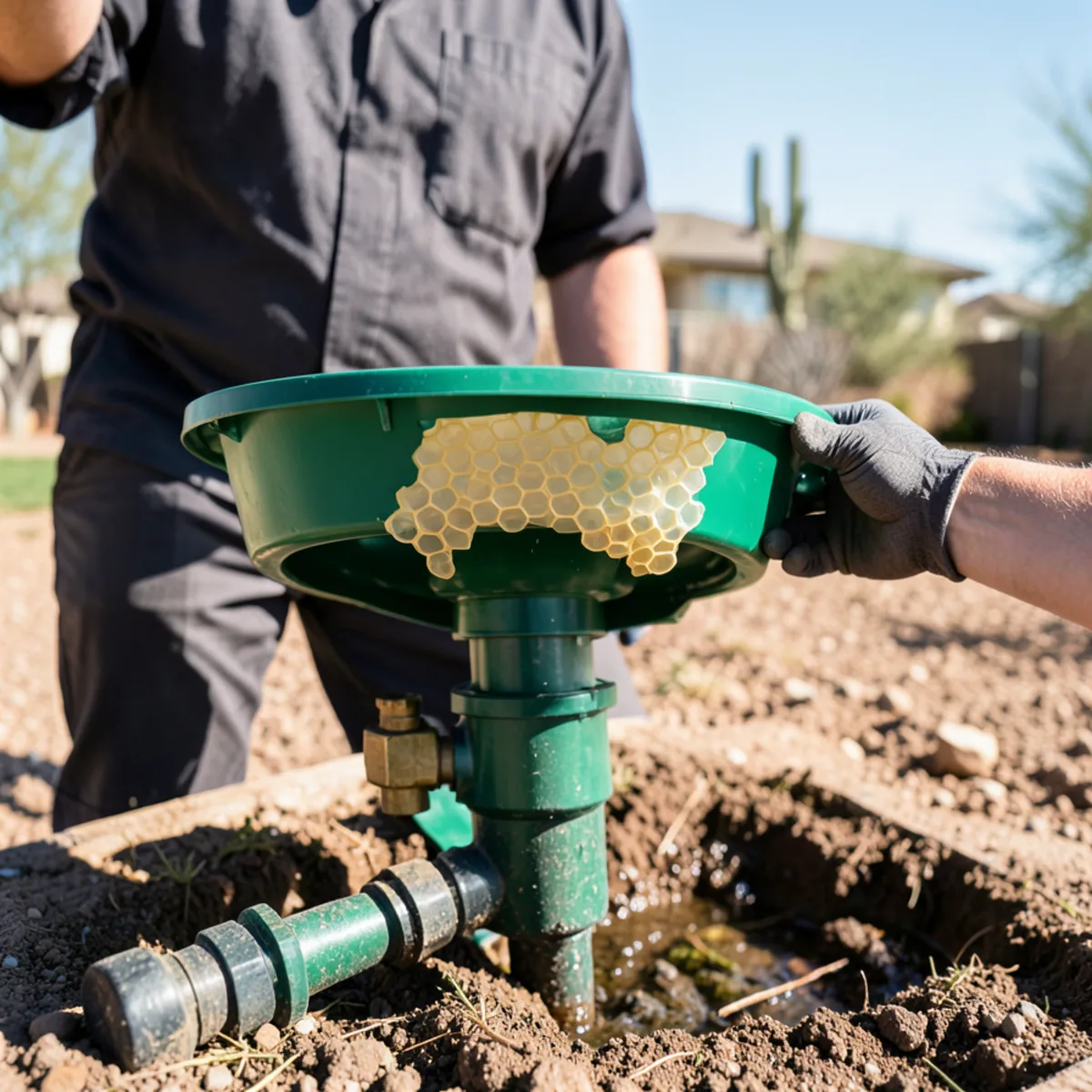
Remove the comb and clean the box. This takes more time and gives the most complete result, because Extension says a cavity needs cleaning out and sealing or new swarms will use it again.
Treat and leave the box closed for a period. This suits a colony that is too dangerous to open up right away, with the comb dealt with once activity has stopped.
Kekoa does not promise live relocation. If that matters, say so when you call.
Here is how a visit usually runs:
- Kai confirms from a distance that these are honey bees, since yellowjackets also use boxes.
- He checks the ownership question if it is still open.
- People and pets stay indoors, and the area stays clear.
- In protective gear, he lifts the lid and assesses the comb.
- Treatment or removal goes ahead, and any product is used as its label directs.
- Comb is cleared from the lid and walls without damaging valves or wiring, then he closes the box and points out what needs screening or repair.
Bees in Pool Equipment and Other Yard Boxes
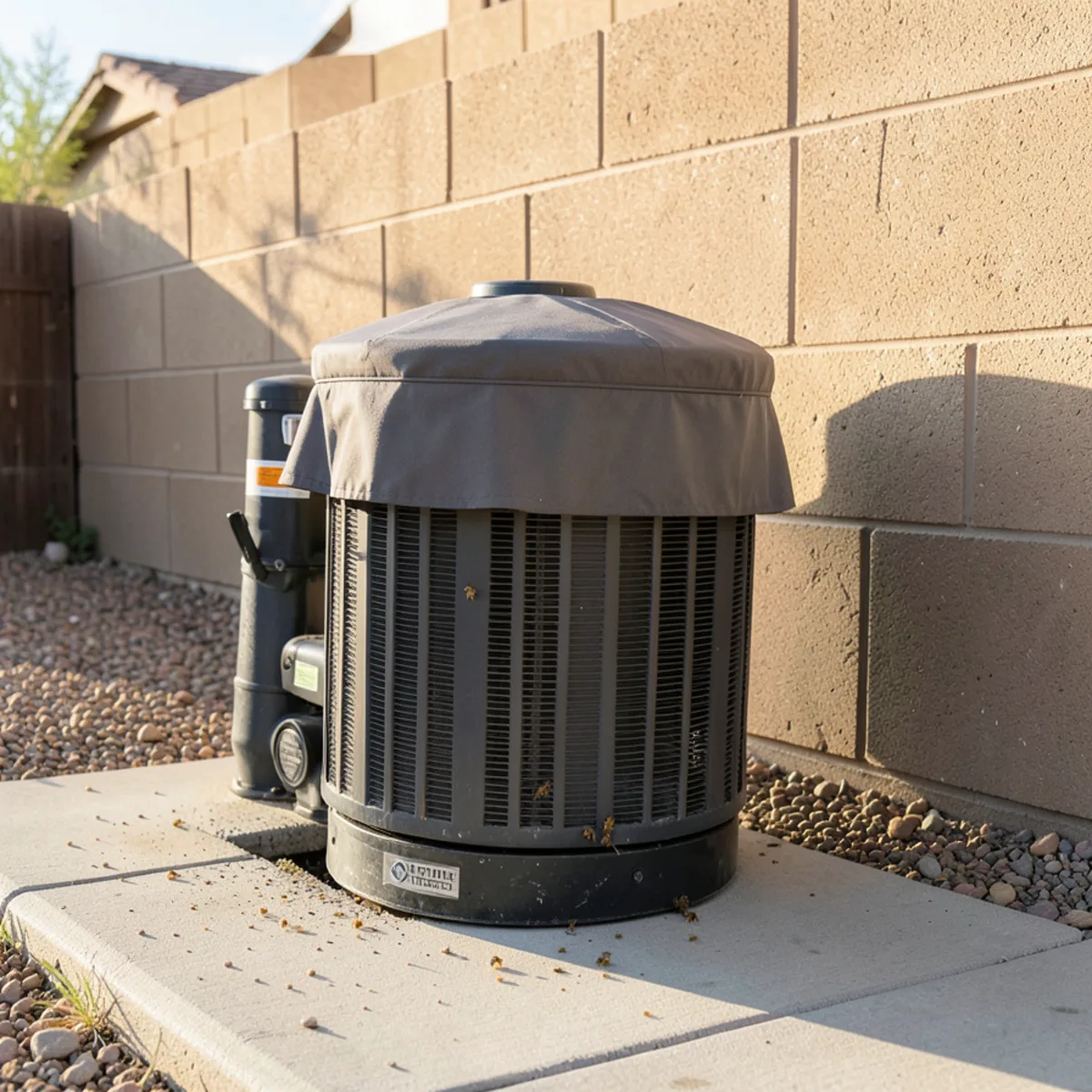
Pool pads draw bees for a simple reason: the water is right there. Extension notes that bees use pools and leaks as water sources, so bees landing at the edge are usually drinking and leave again. Nesting looks different: traffic into one gap in a pump cover, heater housing or neighboring valve box. Hold off on running the equipment for service until it has been looked at, because vibration and noise are on Extension's list of what provokes a colony. For a colony in a wall by the pad, bee removal is the better read.
What Sets the Price of a Box Removal?
No price is listed here. Cost depends on the job:
- Box type and how much comb is inside.
- How long the colony has been in place.
- Proximity to sidewalks, doors and neighbors.
- Whether the colony is acting defensive, which is covered under Africanized bee removal.
- Any lid replacement, screening or valve repair needed afterward.
- How many boxes are involved.
Nobody knows what is under a lid until it is open, so a phone estimate can shift once the comb is seen. A heavy concrete lid or a cramped valve box takes longer than a wide plastic one, and a full box leaves more comb and honey to take out. A box beside a shared Tempe sidewalk may also need quieter hours. And if the box turns out to belong to your water provider, the bill may not be yours at all, so settle ownership before you book.
Screen It, Cover It, Keep Checking
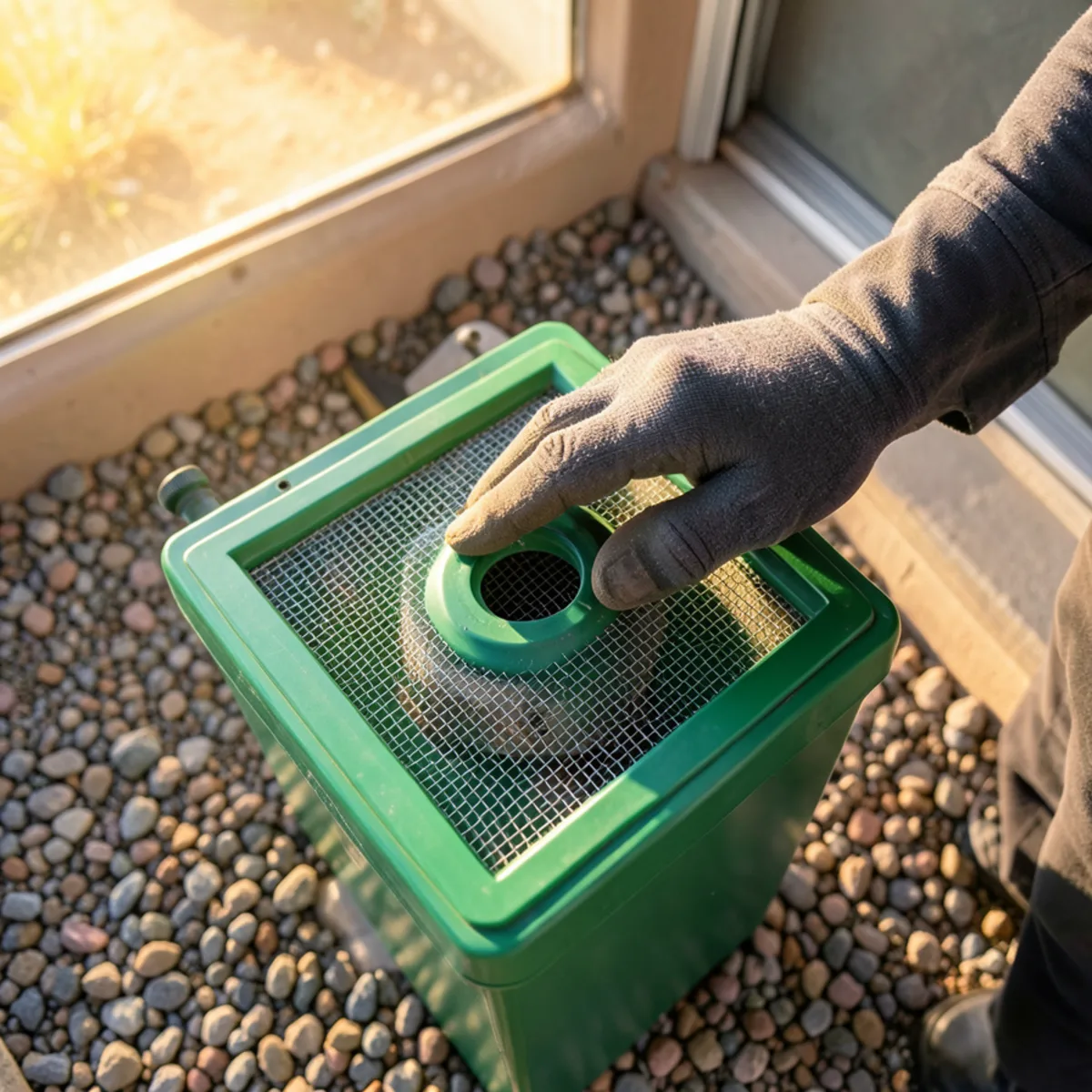
Extension's prevention advice for boxes is short: put mesh screening over water meter boxes and cover the hole in a valve box. On your own boxes, that means fine mesh under the lid, a plugged pull hole, a lid that sits flat and fixes for weeping valves. Do this only when the box has no bees. On utility-owned boxes, ask first, because the meter must stay accessible.
Check each box monthly from a few yards back during the warm months. Spotting a few bees early beats finding a full colony.
Why Call Kekoa for Box Jobs
- Owner-operated, per reviewers who call Kekoa "a one man show", so Kai is who you talk to and who shows up.
- Prevention advice is a recurring theme in reviews, and on boxes that is most of the value.
- One Sun Lakes customer writes that he responds to emergency situations immediately.
- A monthly customer reports a list of the chemicals used, which is worth asking for on anything treated beside your irrigation.
- A 5.0 Google rating over 54 reviews, checked November 2, 2026.
A state license is required for pest management businesses in Arizona, and the lookup is at opm.azda.gov/PCBusSearch.php.
Kai takes these jobs in Tempe and around the East Valley, including Mesa, Gilbert and Queen Creek.
5.0★ from 54 Google reviews
What customers say about meter box bee removal with Kai
“He responds to emergency situations immediately! And the best part of working with Kai is that he is the most genuine, friendly and competent contractor we have worked with in our 18 years in Sun Lakes!”
“I was experiencing cockroaches in my new home and they were here the next day. Very professional and quick service”
“We have had monthly pest control services which have kept the scorpions and other bugs away, as well as mice and hornet abatement on a few occasions.”
Meter Box Bee Removal: common questions
Why do bees move into irrigation and meter boxes?
A box is a ready-made cavity. It is dark, enclosed and sheltered, and many lids have a pull hole for a key, which works as a doorway. University of Arizona Extension names in-ground irrigation boxes among the sites wild honey bees use and has photographed bees entering through the lid hole. Tempe yards add leaky valves and damp soil nearby.
Who is responsible for bees in a water meter box?
It depends on who owns the box, so ask your water provider first. In Mesa, the city lists 480-644-2221 for bee removal from water meters. The city says bees on private property are for the owner or occupant to hire out and pay for. Irrigation and valve boxes on your side usually fall to you, but confirm with your city.
How do I keep bees out of the box afterward?
Close the openings once the bees are gone. University of Arizona Extension advises mesh screening over water meter boxes and covering the hole in a valve box. Check with your utility before changing anything on a city meter box, since readers need access. For your own boxes, a screened or plugged lid hole and a repaired valve leak do most of the work.
Can I pour something into the box to kill the bees?
Please do not. The university's list of things never to throw at a colony includes water, gasoline and other chemicals, and those are exactly what people try with a box. Liquids will not reach the comb evenly, and they will bring a defensive response right at your ankles. Pouring chemicals also puts them on your water hardware. Stay back and call.
What about bees around my pool equipment?
Bees at the pool itself are usually just drinking. Bees going in and out of a pump enclosure, cover or nearby box may be nesting. Watch from a distance, keep the gate shut, and hold off on servicing the equipment until someone has looked. Tell your pool service company too, since Extension warns noise and vibration can provoke a colony.
Is it dangerous to my meter reader?
It can be, and that is a reason to report it quickly. A person lifting a lid has their hands and face right above the comb. Established colonies may respond in large numbers, according to Extension. Do not walk up to the lid to leave a note. Phone your water provider and let them know instead.
Where we offer this
- TempeStreet-side boxes sit beside busy sidewalks, so ask your water provider first who handles the box.
- MesaBees at a water meter have their own city line, 480-644-2221, before any private call.
- GilbertValve boxes sit beside drip-fed front beds, and a weeping valve gives a colony water at the door.
- Queen CreekYoung streets are full of fresh valve boxes, and the town's growth keeps adding more each year.
- ChandlerAssociation-run strips may hold shared valve boxes, so ask the HOA before paying for removal.
- PhoenixFlood-irrigated lots add damp valves and irrigation structures that bees can treat as a sheltered cavity.
- GuadalupeTight lots put a bee-filled box steps from a neighbor's door, so report it early.
- Sun LakesThree homeowner associations cover the community, so ask whether a box on common ground is theirs.
Talk to Kai about meter box bee removal
Call first. You will reach the owner, not a call center.
Kekoa Pest Control, 2407 E Wesleyan Dr, Tempe, AZ 85282, (209) 563-1650
- 5.0★ on Google (54 reviews)
- Family owned, owner operated
- Serving since 2022