
Bee & Wasp Removal · By Kai Horner, owner of Kekoa Pest Control · Published · Updated
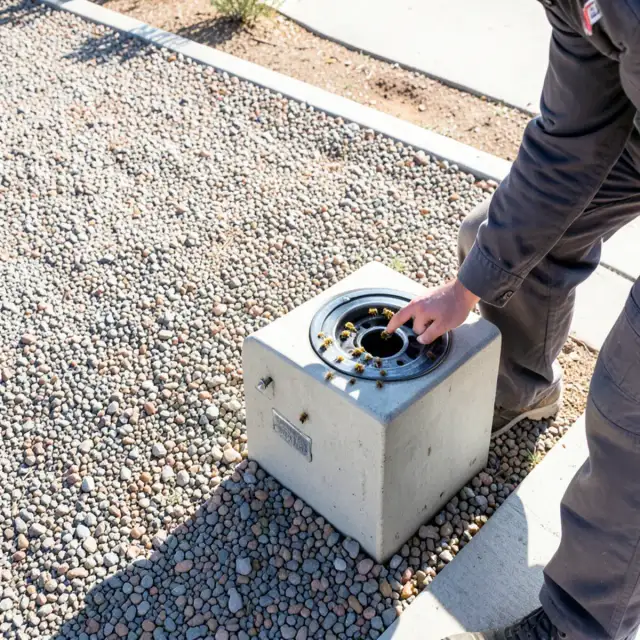
A meter box is about the last place you expect to meet a colony, and the first sign is often a few bees circling the lid. Stepping on that lid is how people get hurt. This post explains why bees pick these boxes, who is responsible in Mesa, Tempe and nearby cities, and how general bee and wasp removal fits in.
Why bees like meter boxes so much
Scouting bees look for a dry, dark, protected space with a small entrance, and a meter box comes close to ideal. It has a lift hole in the lid, a shaded cavity and steady cool ground around it. Damp soil and drips from fittings sit nearby. University of Arizona Extension names in-ground irrigation boxes among the urban voids wild honey bees use, and it pictures a colony moving in through the hole in a lid.
Put together, these are the attractions:
- A ready-made cavity. No digging or chewing is needed.
- A single small entrance. That is simple to defend.
- Water close by. Leaks at taps and irrigation draw bees.
- Low disturbance. Nobody opens it for weeks, until a reader or a landscaper does.
Once comb and brood are present, workers grow more protective, and the chance of stings rises. A box near a sidewalk then becomes a risk to the whole street.
Passing swarm or settled colony?
Look from well back. University of Arizona Extension says a resting swarm clusters on a surface, carries no pollen on its legs and usually moves on within 24 to 72 hours. A colony is different. Bees go in and out of a cavity, and foragers return with yellow or orange pollen. That traffic at a lid hole means they are staying. Extension also treats all wild honey bees in Arizona as Africanized to some extent, and only genetic testing can tell, so do not try to judge the temper of a box by looking at it.
What to do about bees in a water meter box today
Take these steps today and leave the box alone. Bee traffic at the lid is reason enough.
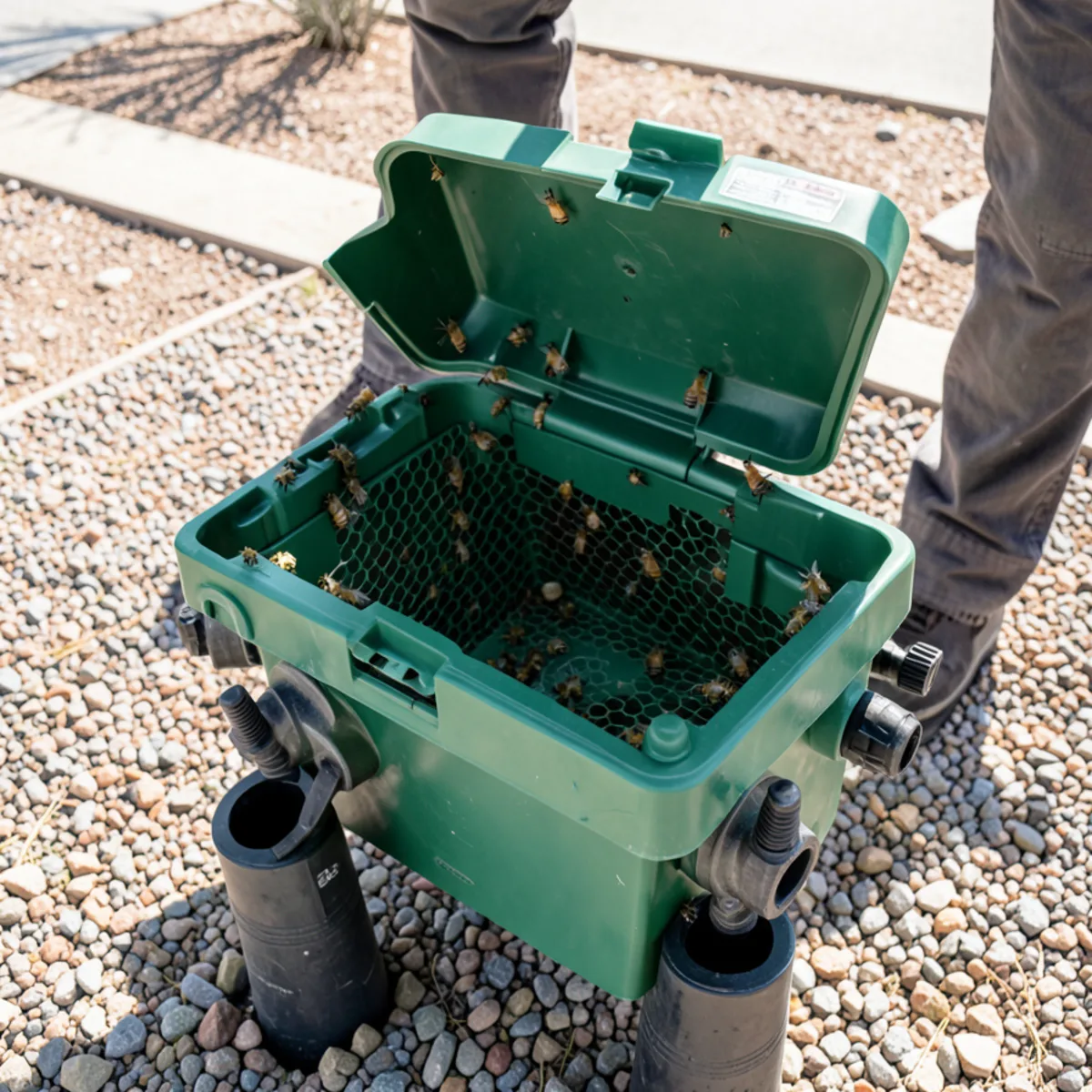
- Do not open the lid. It is heavier than it looks, and bees may be on the underside.
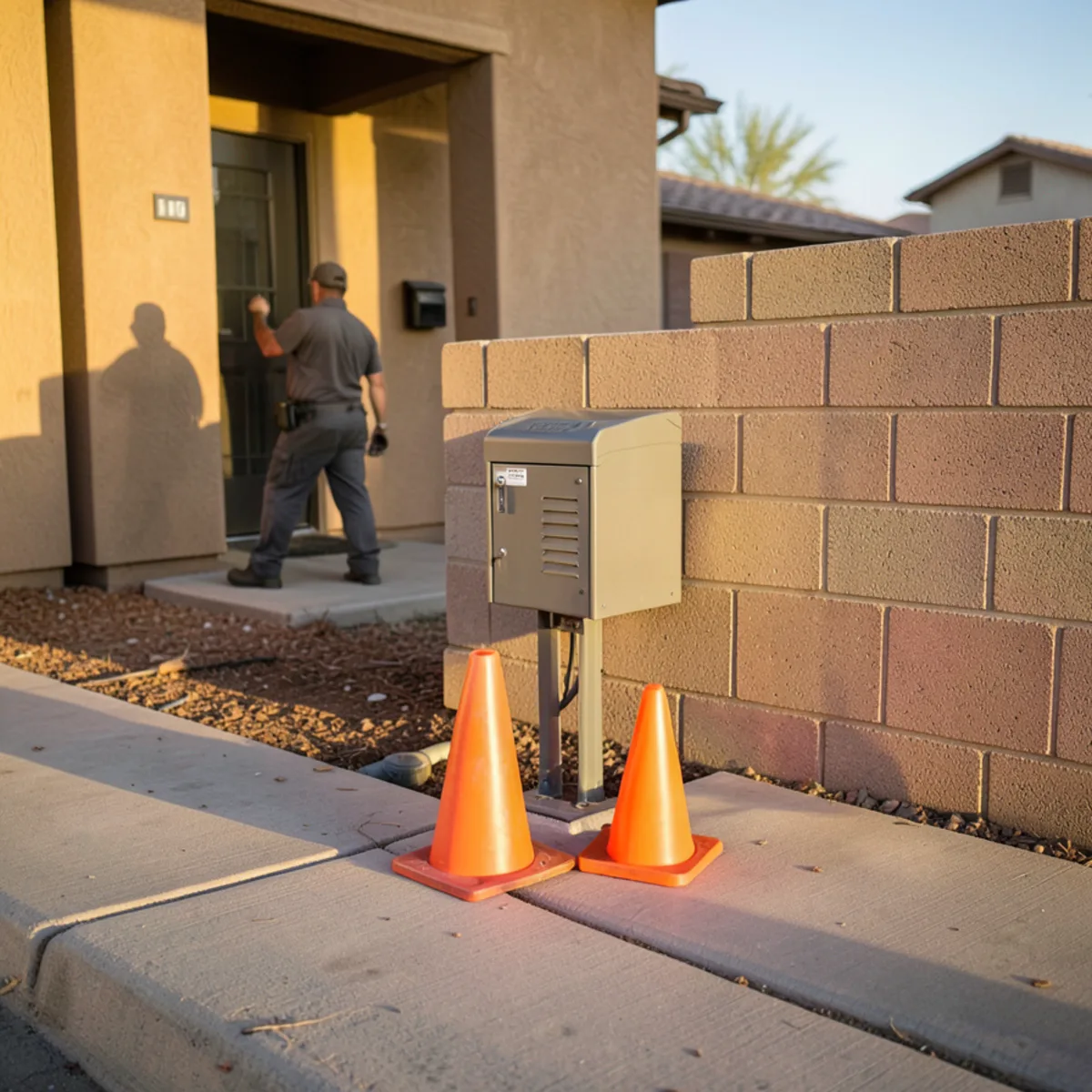
- Mark the area. Use tape, cones or a chair well back from the box.
- Warn the household. Keep kids, dogs and mowers away.
- Tell your landscaper. Blowers and mowers are known triggers, and one pass can start a defensive response.
- Note the location. Is the box at the street, on the sidewalk line or inside your yard?
- Take a photo from a distance. Use the zoom.
- Make the call. Use the list in the next section.
If bees are chasing or stinging people, the rule is the same as anywhere else: move away fast, get indoors and call 911 for an emergency. Poison Help at 1-800-222-1222 can advise on stings.
Who removes bees from a meter?
Ownership decides this, and it differs by city. The fastest answer is on your water bill. Here is what we could confirm from city sources, with a note on what we could not.
| City | What the city says | Number |
|---|---|---|
| Mesa | Lists a number for bees on water meters. Private property is a private hire. | 480-644-2221 |
| Chandler | Removes non-threatening bees in city-owned meters, valve boxes and utility boxes. Verify ownership first. | 480-782-3700 |
| Tempe | City leak guidance says to stop and call Customer Services if bees are flying in or out of the meter lid. | 480-350-8361 |
| Other cities | Call your water provider and ask who owns the box before you hire anyone. | See your water bill |
Utility boxes can also belong to electric, telecom or irrigation providers, so look for a mark on the lid. Do not assume a city will come for free, and do not pay to clear a box the utility would have handled. A sprinkler valve box serving your own landscape is generally your responsibility, and a box in a common area is usually a question for the HOA.
Tempe's page tells you whom to call, not who ends up removing the bees, so ask that question when you get through.
Bees in a sprinkler or utility box
Sprinkler boxes bring two extra problems. The first is watering: an automatic zone that runs on schedule can stir bees up and soak whoever is working at the box. Ask whoever comes if the zone should be turned off first. The second is damage, since comb can foul valves and wiring, so removal needs to be careful with what is inside.
Electrical boxes are a separate class. If the bees are in anything marked electric, stay out and call the utility. The university warns that some chemicals and even petroleum products irritate bees, and spraying into a powered box adds risks of its own. Never pour gasoline or other liquids in.
What removing bees from a box involves
Extension says the right route is an experienced beekeeper who can relocate the bees, or a pest management professional using an integrated approach. It does not recommend pesticide sprays on swarms or colonies, and it says do not try to remove a colony yourself. Timing counts too. Extension says honey bees are more irritable on cloudy, overcast days and on cool mornings before they can fly, which is one reason a box is not something to open on impulse.
The job has three parts, and the last is the one people skip:
- Deal with the bees. Whoever comes should confirm these are honey bees and not wasps, then explain the plan.
- Empty the box. Extension says the interior must be cleaned out completely, or new swarms will move back in.
- Close the entry. Mesh or a cap goes on only once no bees remain.
What changes the size of the job
These are trade judgment, not price points. How long the colony has been there and how much comb it has built matter most. So does a lid that is stuck or buried, valves and wiring that have to be worked around, foot traffic on the sidewalk, and whether the water or the zone can be shut off first.
How to keep bees out of a valve box
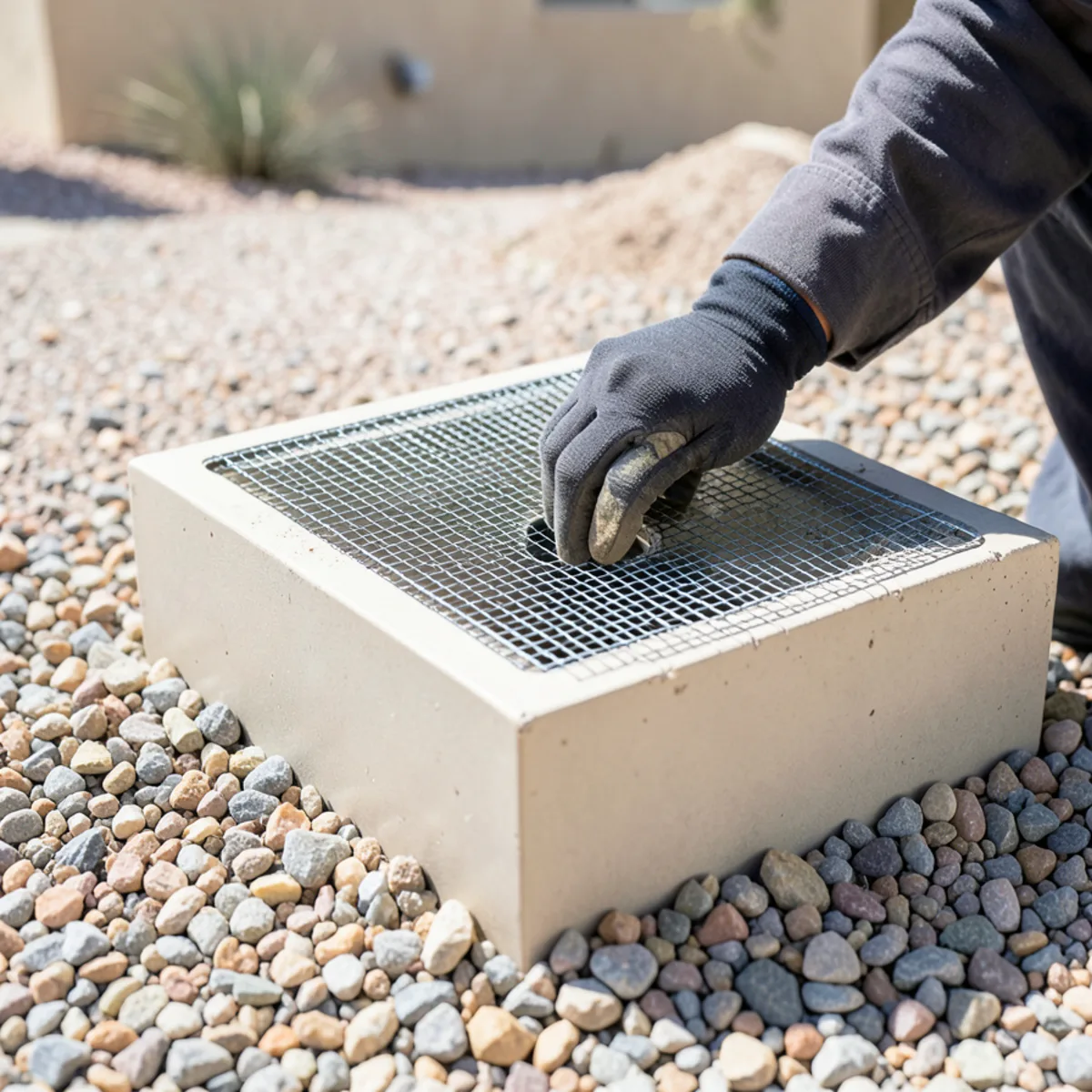
Prevention here is cheap and quick, and it should wait until the bees are completely gone. The university recommends mesh screening over water meter boxes, and its Backyard Gardener sheet says to cover the hole in your water valve box. Those two publications support these steps:
- Check the yard at least once a month for new bee activity.
- Close the lift hole with fine mesh or a solid cap, if the owner allows it.
- Repair dripping taps and irrigation fittings close to the box.
- Remove old comb and wax completely, or new swarms will return.
- Fill rodent holes and cover other hollow spots in the yard.
- Move overturned pots and clear debris.
Before you modify a city-owned lid, ask the utility, because meter readers need access. Do not fasten anything to a meter box without permission.
How Kai handles the question of who pays
Kai's view is that you should not pay for something that belongs to a utility. So the first question on a meter box call is whose box it is, and if it is the city's, the honest advice is to call them. If it is yours, the job is a matter of reaching the box, handling the bees and closing the hole so it does not happen again.
The honest limit is that a screened box does not make a yard bee-free. Swarms keep passing through in spring and summer, and a leaky tap nearby keeps giving them a reason to stop. If the box belongs to the utility, what can be fitted to it is the utility's call. Prevention then shifts to what you do control, which is water, hollow spots and regular checks.
Customers say he explains what he is doing and how to prevent problems. The page on meter box bee removal has more detail, and bee removal covers other locations.
Bees at a box on your own side of the property line? Call (209) 563-1650 and Kai will talk it through.
Sources
About the author
Kai Horner owns and runs Kekoa Pest Control, a family-owned pest and weed control business based in Tempe, AZ, serving the East Valley since 2022. More about Kai