
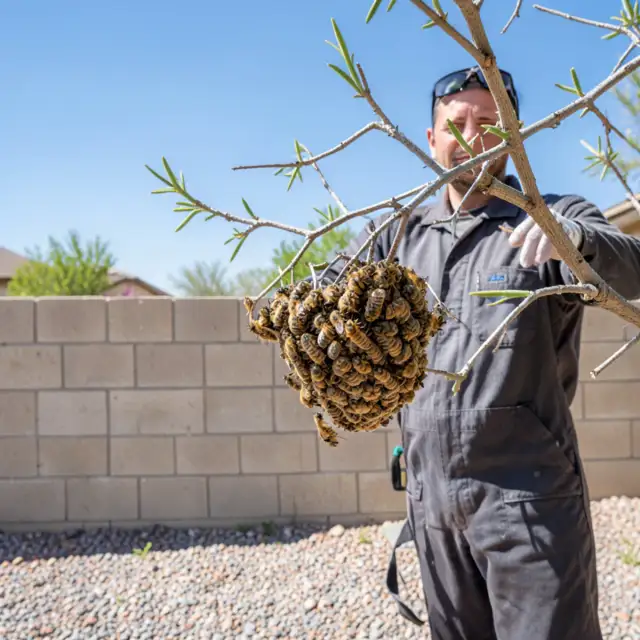
Bee & Wasp Removal · By Kai Horner, owner of Kekoa Pest Control · Published · Updated
Most people searching this have bees somewhere they do not want them and a decent wish not to kill them for no reason. That instinct matches the University of Arizona's position, which is that bees are beneficial and should not be killed unless they are causing a problem. Sometimes, though, they are. Our bee and wasp removal page covers how to respond. This post helps you figure out which situation you have.
First, the part that is not a choice. If bees are attacking, University of Arizona Extension says to get to the shelter of a house or car quickly, covering your head without slowing down. Do not jump into water. Call 911 for emergency help. For sting questions, Poison Help is 1-800-222-1222.
Bee removal vs extermination: what each one means
Live removal means taking the bees out alive. For a swarm, that can be simple. For an established colony, it means reaching the comb, moving brood and bees into a hive box and clearing the cavity.
Extermination means killing the colony in place with a pesticide, then removing what is left. University of Arizona material says honey bee nests are difficult to destroy and that the work should be done by a professional. Its newer wild honey bee guide (AZ1846) goes further: it does not recommend pesticide sprays on swarms or colonies, and it tells anyone using a pesticide on a colony to read the whole label first. So extermination is a last resort, not a quick default.
That same guide names the two routes plainly. When wild bees get in the way, it says to have an experienced beekeeper remove and relocate them, or have a pest management professional take an integrated approach. Whichever you use, ask how to avoid hosting the next swarm passing through.
Here is how the factors usually sort out.
| Factor | Points toward live removal | Points toward extermination |
|---|---|---|
| Stage | Swarm resting on a branch | Long-established colony |
| Location | Open, reachable, low | Sealed void with no safe access |
| Behavior | Calm when people pass | Stinging without being touched |
| Nearby people | Few, and can be kept away | Schools, elderly neighbors, allergies |
| Structure | Wall can be opened and repaired | Opening would cause major damage |
| Time | Bees can wait for a beekeeper | Immediate risk to people or animals |
No single row decides it. A calm colony by a daycare entrance is a different call from a calm colony in a far shed.
Swarm or colony? That changes everything
A swarm is a cluster of bees hanging on a branch, fence or eave. They have left an old hive and are looking for a new home. University of Florida Extension says honey bees are considerably less defensive in a swarm because they have no brood or honey to guard, but it still advises caution around all of them. A swarm can leave on its own in a short time, and University of Arizona Extension says they usually move on within 24 to 72 hours. That makes waiting a real option when nobody needs to go near the spot.
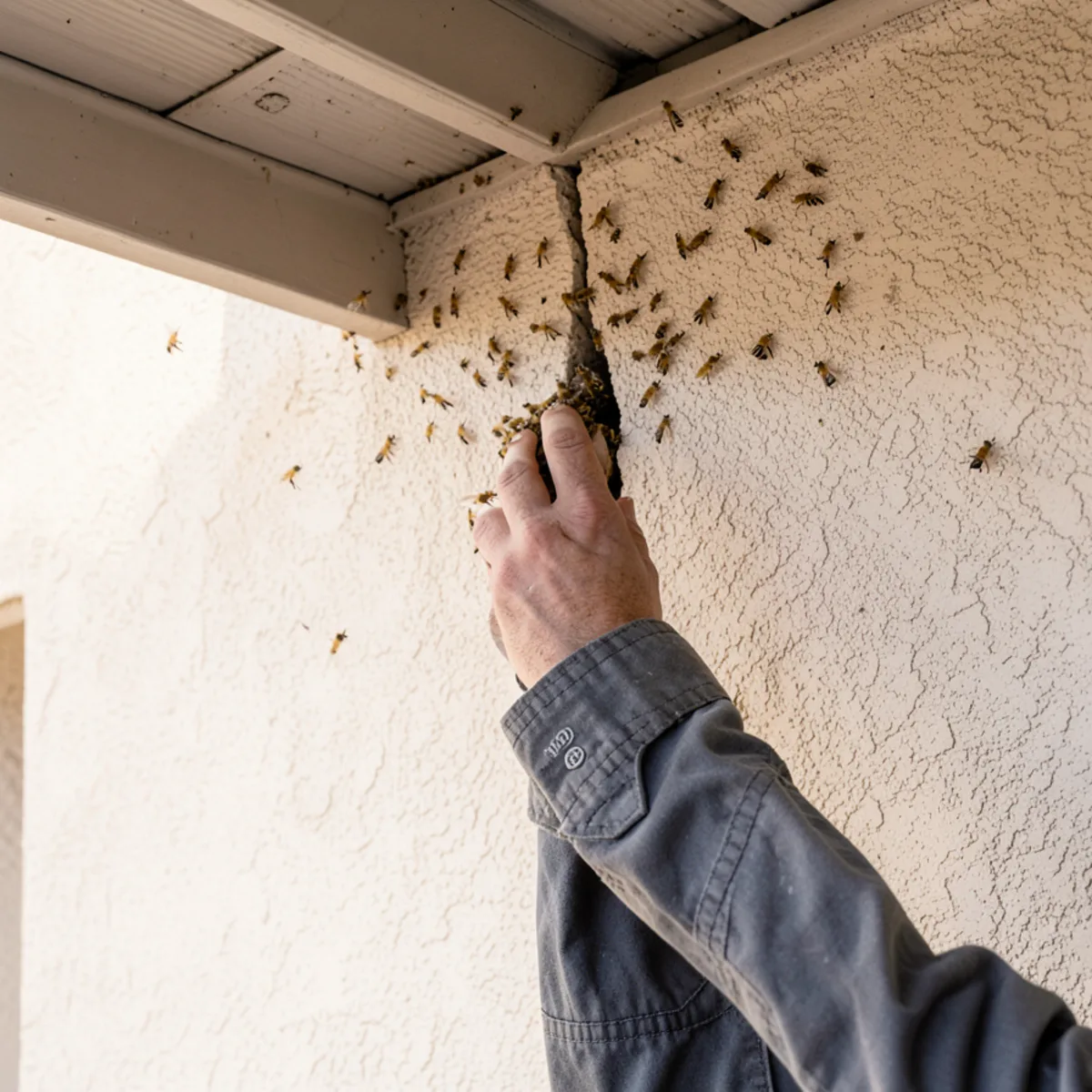
A colony is settled. Look for bees flying steadily in and out of one opening: a crack in a wall, a hole in the ground or a valve box cover. University of Arizona Extension says colonies can reach up to 60,000 bees. Those bees have comb to defend, so the risk is higher.
Our post on a bee swarm at your door covers the swarm case in detail.
Live bee removal in Arizona: what makes it harder
Africanized honey bees have changed how the work gets done here. University of Arizona Extension describes them as more easily aroused to defend their homes than the bees people were used to. AZ1846 treats all wild honey bees in Arizona as Africanized to some extent, and only genetic testing shows the lineage. You cannot tell by looking at them, so any wild colony should be approached as a possible risk.
That does not rule out relocation, but it adds some questions. Will a beekeeper accept a wild colony? Is there a suitable site? Can the removal be done with the neighbors kept clear? Some colonies that look saveable on paper are not practical to move.
What happens to the comb
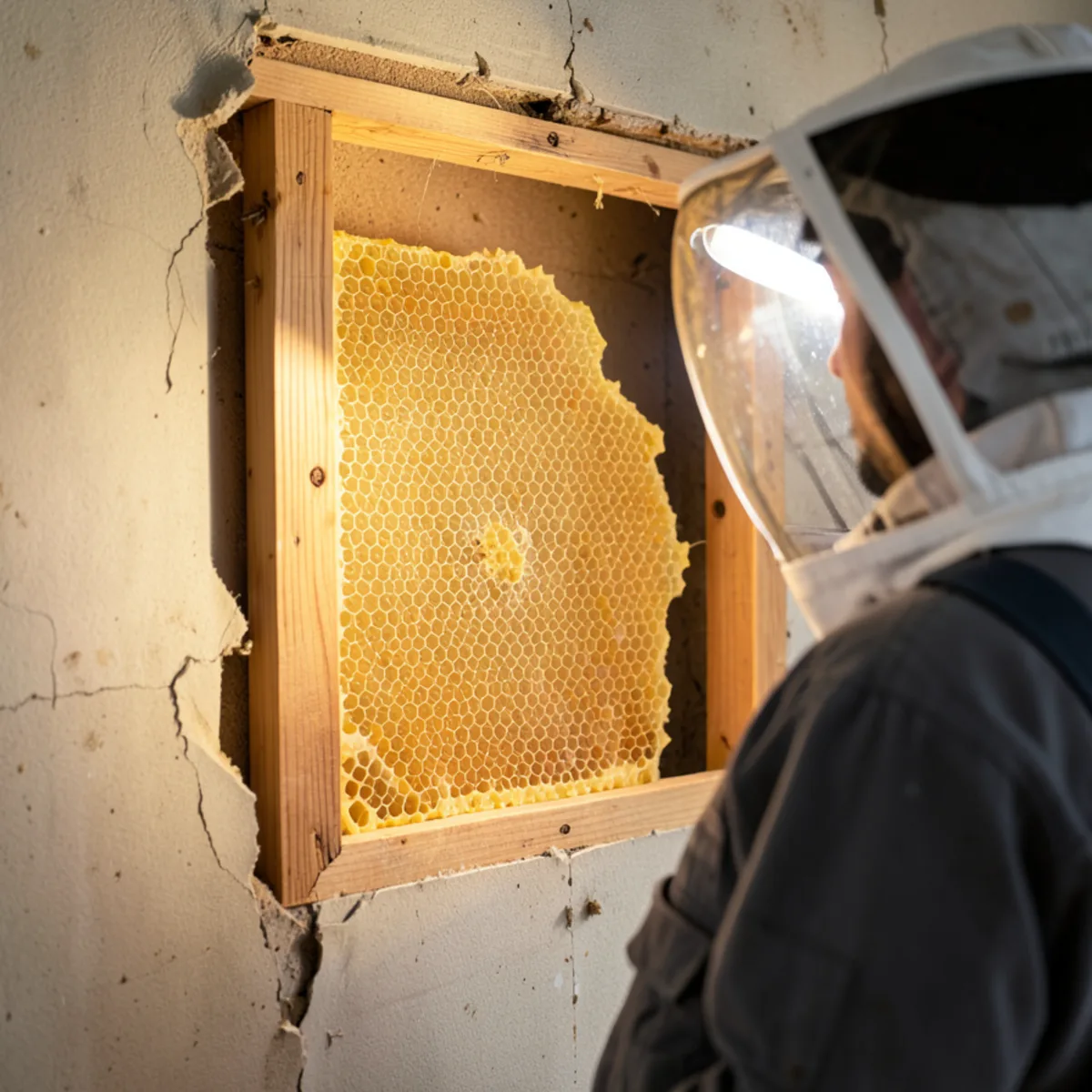
This is the step that surprises most people. Killing or moving the bees is only half the job. Comb left in a wall holds honey and wax with no bees left to tend it. In a Valley summer that can soften and leak, and it draws other pests, including new bees. The cavity also needs to be cleaned out and sealed, or the scent can attract another swarm. AZ1846 makes the same point: clean a removed colony's void out completely and seal the entry points, or new swarms will move in.
Timing matters too. The guide says not to seal or fill a hole while bees are moving in and out of it. Once a space is empty and clean, close off holes of about 1/8 inch or larger in walls and other structures with voids. Hollow block walls, attics and in-ground irrigation boxes are all spots it lists for colonies.
So when you compare options, ask about these points:
- Is the comb being removed, or just the bees?
- Who opens the wall, and who repairs it?
- How will the entry be sealed afterward?
- What do you do if bees return to the same opening?
- Where do the bees go if they are removed alive?
Free bee removal and other common questions
Some beekeepers will take a simple swarm at little or no charge. A structural colony takes hours of skilled, risky labor plus repairs, so expect it to be priced as a job. Cost depends on height, access, colony size and what has to be opened. University of Arizona Extension points people to the Arizona Beekeepers Association's list of beekeepers who may help. On private land the bill usually sits with you. Mesa, for one, says bees on private property are the owner's or occupant's responsibility.
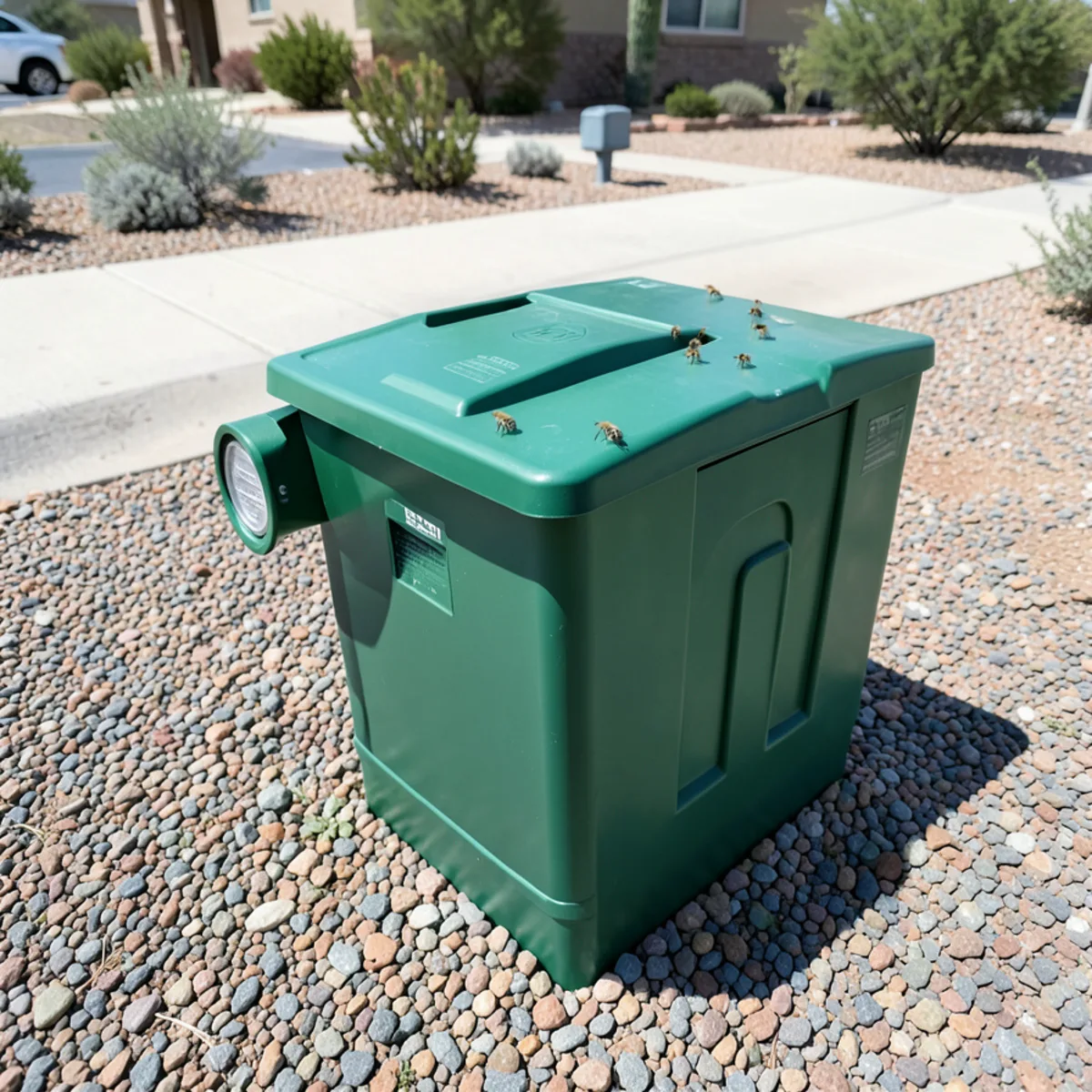
Meter boxes are a Valley classic, with shade, shelter and a nearby leak. See our page on meter box bee removal for what that job involves.
How Kai looks at a bee call
Kai's first questions cover the spot, how many weeks the bees have been there and who lives or works close by. A photo from a distance helps. Do not move closer to get it. He does bee removal work around Tempe and nearby cities such as Mesa, and by phone he can say what he would do with your particular colony, including whether relocating the bees is realistic or if a beekeeper would serve you better. He does not need to sell you the more expensive option.
Reviews mention clear explanations and prevention advice, which matters here since entry points need to be closed.
Before you call anyone, these steps keep the decision open:
- Move people and pets away, and keep the area off limits.
- Shut off mowers, blowers and other equipment nearby. Noise and vibration can irritate bees.
- Note where the bees are, how high, and when you first saw them.
- Look from a distance for one steady entry point, which points to a colony.
- Leave the opening alone. No spray, no water, no plugging it.
- Warn neighbors who share the wall or yard.
Keep kids and pets back, do not spray, and call (209) 563-1650 to talk through your options.
Sources
- University of Arizona Cooperative Extension: They Are Called Africanized Honey Bees
- University of Arizona Cooperative Extension: Wild Honey Bees in Community Environments (AZ1846)
- City of Mesa: Bees
- University of Arizona Community IPM: Stinging Pests
- University of Florida IFAS Extension: African Honey Bee, What You Need to Know
About the author
Kai Horner owns and runs Kekoa Pest Control, a family-owned pest and weed control business based in Tempe, AZ, serving the East Valley since 2022. More about Kai